
RecipesRecipe
Slow-Cooker Apple Butter: A Low-Effort Recipe for a Market Haul of Apples
Five pounds of market apples, a slow cooker, and an overnight simmer. This version skips the canner on purpose, so the jars go in the refrigerator or freezer, and the notes explain why that is not a step you can add back later.
 United Farmers Market Editorial Team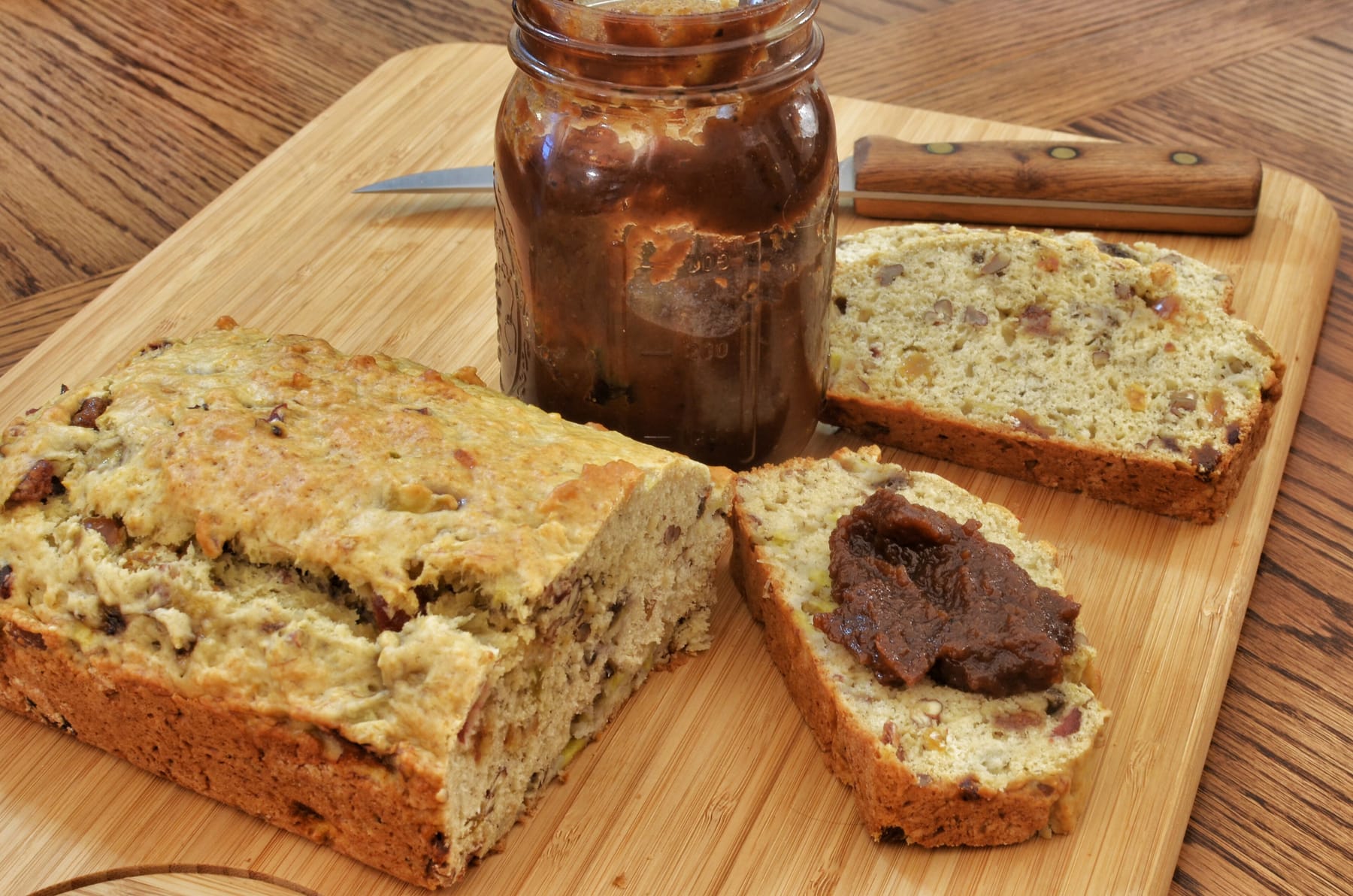
Recipe
Slow-Cooker Apple Butter (Refrigerator or Freezer)
A hands-off apple butter that simmers overnight in a 6-quart slow cooker. It borrows its apples, spices, and doneness test from the National Center for Home Food Preservation's tested recipe but uses less sugar and skips the canner, so it must be refrigerated or frozen.
- Yield
- About 4 to 5 cups (four or five half-pint jars)
- Prep
- 30 min
- Cook
- 11 hr
- Total
- 11 hr 30 min
Ingredients
Method
- 1Put the apple chunks in a 6-quart slow cooker. Pour the cider and vinegar over them, add both sugars, the cinnamon, cloves, allspice, and salt, and stir until the apples are coated. The cooker should be at least half full and no more than two-thirds full.
- 2Cover and cook on high for 1 hour, then switch to low and cook for 8 to 10 hours (overnight is fine), until the apples have collapsed, turned deep brown, and are sitting in syrupy liquid. Stir once or twice if you happen to be awake; otherwise leave the lid on.
- 3Puree the apples in the cooker with an immersion blender until completely smooth. If you only have a regular blender, let the apples cool for 15 minutes, then blend in batches, filling the jar no more than halfway and venting the lid with a towel over it.
- 4Prop the lid open a crack with a wooden spoon handle and cook on low for 1 to 2 hours more, stirring every 30 minutes, until the butter is glossy and noticeably darker.
- 5Test for doneness the way NCHFP does: hold a spoonful away from the steam for 2 minutes and see whether it stays mounded on the spoon, or drop a little onto a plate and watch for a rim of liquid separating around the edge. Mounded spoon and no rim means done. If liquid separates, cook 30 minutes longer and test again.
- 6Turn the cooker off and stir in the vanilla. Cool the butter quickly by setting the crock (or a bowl of butter) in a sink of cold water and stirring, then pack into clean jars or freezer containers, leaving 1/2 inch of headspace in pints and 1 inch in quarts for anything headed to the freezer. Refrigerate or freeze within 2 hours of turning the cooker off.
Notes
- This is a refrigerator and freezer recipe. It has not been tested for canning: do not process it in a water-bath canner or store it at room temperature. For shelf-stable jars, use the National Center for Home Food Preservation's tested apple butter recipe and a boiling-water canner.
- Refrigerated, use within 4 weeks. Frozen, use within 8 months and thaw in the refrigerator.
- Sugar is adjustable because the cold is doing the preserving. Start with the amounts listed, taste after pureeing, and add more only if the apples ran tart.
Editorial recipe developed from standard reference methods. Read our editorial technology policy for how recipes are produced and reviewed.
In this guide
You bought the second bag because it was cheap, and now a dozen pounds of apples are going soft on the counter. Applesauce is the fast answer. Apple butter is the better one, and in a slow cooker it costs about half an hour of peeling and then nothing until morning.
One thing first: this is an editorial recipe built from the standard reference method, not a tested canning recipe. The jars from this batch go in the refrigerator or the freezer, nowhere else.
What apple butter is, and why the slow cooker suits it
Penn State Extension defines a fruit butter as fruit pulp cooked with sugar to a thick consistency, and tells you to "simmer rather than boil." The National Center for Home Food Preservation's tested apple butter follows that shape: 8 pounds of apples cooked in cider and vinegar until soft, pressed through a food mill, then cooked again with sugar and spices, "stirring frequently," until a spoonful held away from the steam for 2 minutes stays mounded. Purdue Extension puts that second cook at 1 to 3 hours on the stove, depending on how juicy the apples are.
Those hours of stirring are what the slow cooker replaces. The USDA Food Safety and Inspection Service describes a slow cooker as cooking slowly at a low temperature, generally between 170 °F and 280 °F, and suggests the highest setting for the first hour, then low, with the lid in place except to stir or check for doneness. Colorado State University Extension adds a fill rule: no less than half full and no more than two-thirds full, so the heat stays even. The recipe follows that until the apples collapse; the lid comes off a crack only at the end, when evaporation is the point.
Choosing the apples
NCHFP's tested recipe names Jonathan, Winesap, Stayman, Golden Delicious, and McIntosh, and its apple preservation post adds Rome Beauty and Gravenstein for sauce and butter. The same post says Red Delicious "do not freeze or cook well." Leave those for the lunchbox.
Two extension rules do the rest. University of Illinois Extension says to "find a tasty balance by choosing a mixture of sweet and tart apple varieties," and Purdue gives applesauce a ratio worth borrowing: 1 to 2 pounds of tart apples for every 3 pounds of sweeter fruit, so about 3 pounds sweet and 2 pounds tart in this batch.
| Variety | Flavor | Role in the pot |
|---|---|---|
| Golden Delicious | Mild and sweet | Sweet base; NCHFP tested its reduced-sugar butter with it |
| Honeycrisp | Sweet, juicy | Sweet base; Illinois lists it for sauce and butter |
| McIntosh | Juicy, tangy, tart | Tart share; on NCHFP's list |
| Granny Smith | "Very tart" | Tart share; Illinois lists it for sauce and butter |
| Red Delicious | Sweet | Skip; NCHFP says it does not cook well |
Flavor notes are from K-State Research and Extension's variety guide. For heirlooms that are on nobody's list, ask the grower what they use for sauce; if it makes good sauce, it makes good butter. The apple buyer's guide and the fall produce guide cover the rest of the table this month.
Notes on the method
Peel or not. NCHFP leaves the skins on and mills them out afterward. Without a food mill, peel first; skins blended in leave flecks and a rougher texture. Five pounds is about 15 medium apples, and peeling them is the whole job.
Sugar. NCHFP's tested recipe uses 4 1/2 cups for 8 pounds of apples; ours uses 1 cup for 5 pounds. That works because sugar is not what keeps this jar safe; the refrigerator is. NCHFP even publishes a reduced-sugar apple butter sweetened with granular Splenda, which it says "does not provide preservative properties like sugar."
Vinegar. NCHFP uses 2 cups of vinegar to 2 cups of cider, which gives traditional apple butter its edge. Two tablespoons keeps this version from tasting flat without tasting pickled; lemon juice does the same job.
Doneness. Both tests in the recipe card are NCHFP's: a spoonful held away from the steam for 2 minutes that stays mounded, or a spoonful on a plate with no rim of liquid separating around it. They earn their place at the end of a long cook, when everything already looks done.
Storage: refrigerator or freezer, nothing else
Cool it fast. Illinois Extension cools applesauce for the freezer by setting the pot in a sink of cold water and stirring; FSIS wants slow-cooker leftovers in shallow covered containers and refrigerated within two hours.
In the refrigerator, plan on four weeks. That is the window Penn State gives for butters that cannot be processed safely, like pumpkin butter, and a butter that was never processed at all deserves no more. Keep it at 40 °F or below, use a clean spoon, and throw out anything with mold, fizz, or an off smell.
In the freezer, the FoodKeeper guide from USDA, Cornell, and the Food Marketing Institute gives cooked apples 8 months at 0 °F. Leave the headspace Illinois specifies for applesauce, 1/2 inch in pints and 1 inch in quarts, and thaw in the refrigerator, as Purdue advises.
For sellers
This recipe will not put jars on your market table. Cottage food laws differ on fruit butters, and refrigerated products face rules of their own.
Michigan is the clear case: the state agriculture department's allowed-foods list permits fruit jams and jellies but states plainly "no fruit or vegetable butters," naming apple butter. Texas has gone the other way. The Department of State Health Services' summary of SB 541 says allowable cottage foods now include any food outside a short excluded list (meat and poultry, seafood, ice products, low-acid canned goods, cannabinoid products, raw milk), that operations selling foods needing time and temperature control must register with DSHS and carry safe-handling labels. Local public health entities must comply beginning September 1, 2025. Our Texas and Michigan guides have the details.
Wherever you sell, a shelf-stable apple butter means a tested canning recipe and a canner, not this one; a refrigerated one means checking first that your state allows refrigerated cottage food at all. Start with what counts as cottage food, then confirm with your state agency, because these lists change. Our refrigerator quick pickles recipe draws the same line for vegetables.
Sources and further reading
- 1.Apple Butter · National Center for Home Food Preservation · accessed Sep 2, 2026 · Tested canning recipe: varieties Jonathan, Winesap, Stayman, Golden Delicious, McIntosh; 8 lb apples, 2 cups cider, 2 cups vinegar, 2 1/4 cups white plus 2 1/4 cups packed brown sugar; spoon and plate doneness tests; 5 min for half-pints and pints at 0 to 1,000 ft, 10 min at 1,001 to 6,000 ft
- 2.Apple Butter, Reduced Sugar · National Center for Home Food Preservation · accessed Sep 2, 2026 · Reduced-sugar version tested with Golden Delicious apples and granular Splenda; the FAQ on the page states 'Granular Splenda does not provide preservative properties like sugar'
- 3.Apples are Peaking! Choose the Best Preservation Method · National Center for Home Food Preservation · accessed Sep 2, 2026 · Varieties good for applesauce and apple butter: Golden Delicious, Rome Beauty, Stayman, Jonathan, Gravenstein, McIntosh; Red Delicious 'do not freeze or cook well'
- 4.Apples (Food Preservation) · University of Illinois Extension · accessed Sep 2, 2026 · 'Find a tasty balance by choosing a mixture of sweet and tart apple varieties'; Golden Delicious, Granny Smith, and Honeycrisp for sauce and butter; do not use a slow cooker to preserve canned food; freezing applesauce: cool quickly in ice water, 1/2-inch headspace for pints and 1 inch for quarts
- 5.Let's Preserve: Apples (HHS-809-W) · Purdue Extension · accessed Sep 2, 2026 · Applesauce ratio of 1 to 2 pounds tart apples to every 3 pounds sweeter fruit; apple butter takes 1 to 3 hours to cook to stage depending on juiciness; thaw frozen applesauce in the refrigerator
- 6.Fruit Butters · Penn State Extension · accessed Sep 2, 2026 · Fruit butters are 'made by cooking fruit pulp with sugar to a thick consistency'; 'Simmer rather than boil fruit butter'; butters that cannot be processed safely, such as pumpkin butter, 'should be refrigerated and used within four weeks'
- 7.Slow Cookers and Food Safety · USDA Food Safety and Inspection Service (revised February 2012) · accessed Sep 2, 2026 · Slow cookers run 'generally between 170 °F and 280 °F'; high for the first hour then low; keep the lid in place except to stir or check; store leftovers in shallow covered containers and refrigerate within two hours
- 8.Crockpot and Slow Cooker Food Safety · Colorado State University Extension · accessed Sep 2, 2026 · 'Fill the cooker no less than half full and no more than two-thirds full. This is to assure safe and even heat distribution and cooking.'
- 9.The FoodKeeper (2015 edition) · Food Marketing Institute with Cornell University and USDA Food Safety and Inspection Service · accessed Sep 2, 2026 · Cooked apples keep 8 months frozen; refrigerator at 40°F or below and freezer at 0°F or below
- 10.Apple Varieties Guide for Taste and Cooking · K-State Research and Extension, Johnson County · accessed Sep 2, 2026 · Granny Smith 'very tart' and suited to sauce; McIntosh juicy, tangy, tart, for applesauce; Golden Delicious mild and sweet; Honeycrisp sweet and suited to sauce
- 11.Which Apple to Use? · Iowa State University Extension and Outreach, AnswerLine · accessed Sep 2, 2026 · 'One pound of apples equals 2 large, 3 medium, or 4 to 5 small which would make about 3 cups peeled and cut-up fruit'
- 12.Cottage Food: What Can I Make? · Michigan Department of Agriculture and Rural Development · accessed Sep 2, 2026 · 'No canned fruits or vegetable butters like pumpkin or apple butter'; 'No fruit or vegetable butters'; cottage foods must not require refrigeration for safety
- 13.Texas Cottage Food Production · Texas Department of State Health Services · accessed Sep 2, 2026 · SB 541 summary: allowable foods now include any foods except meat, seafood, ice products, low-acid canned goods, cannabinoid products, and raw milk; operations selling TCS foods must register with DSHS and follow safe-handling labeling; public health entities comply beginning September 1, 2025
Weekly newsletter
Market Dispatch
One email a week with the newest guide, what's in season, and a few things worth knowing before market day.
Email subscriptions are not open yet. Read every new story through our free RSS feed.
Follow Market Dispatch via RSS →Keep reading
What's in Season in Fall: A Region-by-Region Guide to Autumn Produce
Fall at the market is four different seasons depending on where you stand. Here is what arrives in September, October, and November across the Northeast and Midwest, the South, the Pacific and Mountain West, and the Southwest, with buying and storage notes for the crops that define it.
· 11 min read
Refrigerator Quick Pickles: A Flexible Recipe for Almost Any Market Vegetable
One brine, one method, seven vegetables. A refrigerator pickle uses the same 5 percent vinegar as a canned pickle but skips the canner, which is exactly why it has to stay cold and get eaten within a couple of weeks.
· 5 min read
How to Store Farmers Market Produce So It Actually Lasts
Market produce is usually fresher than what the supermarket sells, and it still turns to slime in the wrong drawer. This reference, built from university extension storage bulletins and FDA handling advice, says where each item lives, whether to wash it first, and how many days to plan on.
· 12 min read
What to Sell: Choosing a Cottage Food Product Line That Works at the Market
You can probably make twenty things well. A market needs three or four you can make every week, that hold up on a folding table, that your state allows, and that nobody else in the tent row is already selling. Here is a set of filters for getting from twenty to four.
· 11 min read