
RecipesRecipe
Refrigerator Quick Pickles: A Flexible Recipe for Almost Any Market Vegetable
One brine, one method, seven vegetables. A refrigerator pickle uses the same 5 percent vinegar as a canned pickle but skips the canner, which is exactly why it has to stay cold and get eaten within a couple of weeks.
 United Farmers Market Editorial Team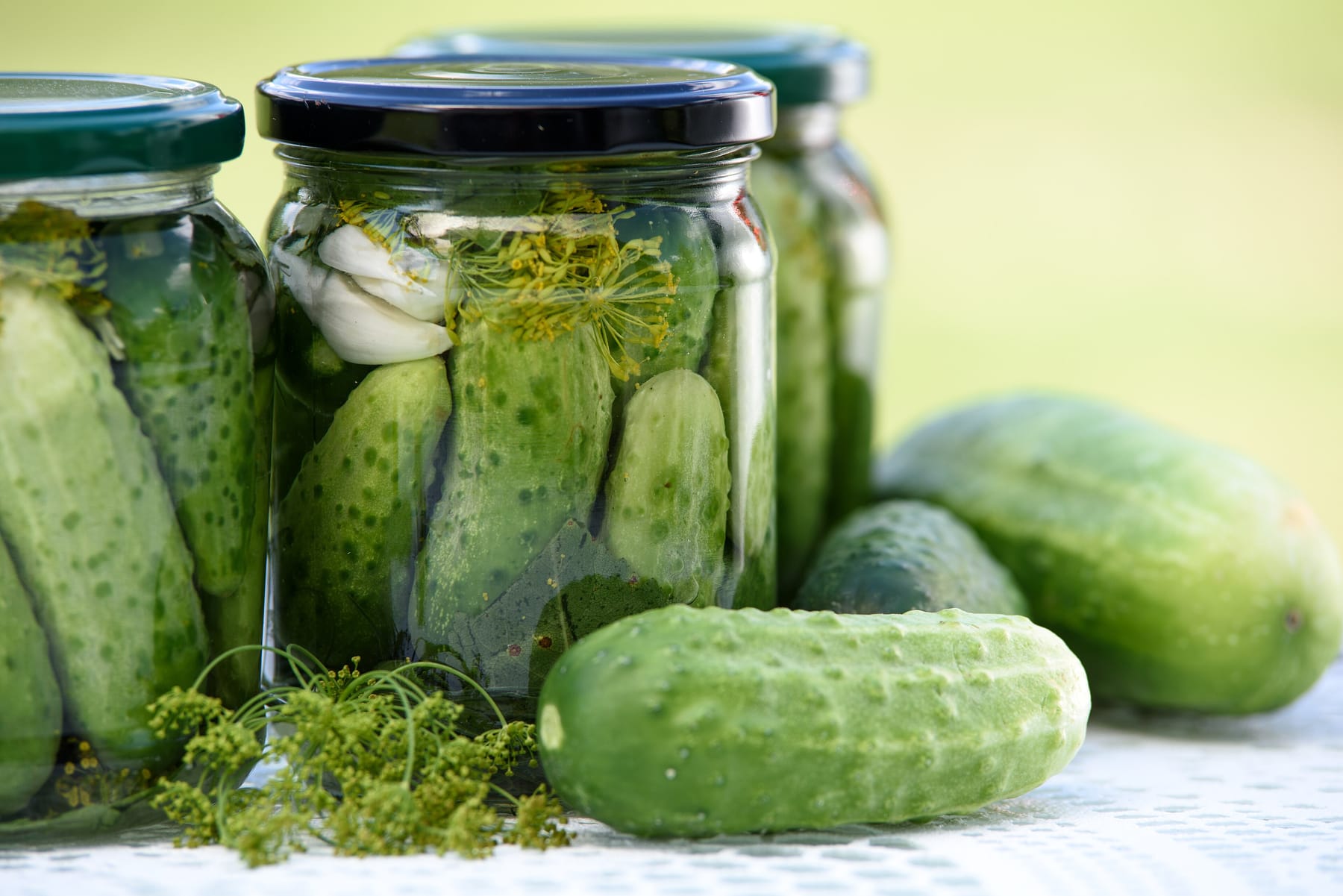
Recipe
Refrigerator Quick Pickles (Base Brine)
An equal-parts vinegar and water brine that turns one quart of almost any firm market vegetable into crisp refrigerator pickles in a day. Not a canning recipe: these must stay refrigerated.
- Yield
- 1 quart jar (about 1 pound of vegetables)
- Prep
- 20 min
- Cook
- 5 min
- Total
- 25 min
Ingredients
Method
- 1Wash a quart jar and its lid in hot soapy water and rinse well. Wash the vegetables and trim them according to the table. For cucumbers, cut a 1/16-inch slice from the blossom end and discard it; the blossom may carry an enzyme that softens pickles.
- 2If you are pickling carrots, green beans, or cauliflower, blanch the cut pieces in boiling water for 1 to 2 minutes, then drain and rinse under cold water. Skip this step for cucumbers, radishes, onions, and peppers.
- 3Put the garlic, whole spices, dill, and chile in the bottom of the jar. Pack the vegetables in tightly, standing spears upright, leaving about 1/2 inch of space below the rim.
- 4Combine the vinegar, water, salt, and sugar in a small saucepan. Bring to a boil and stir until the salt and sugar dissolve, about 1 minute.
- 5Pour the hot brine over the vegetables so they are fully covered. Press down anything that floats; add a splash more vinegar (not water) if you come up short.
- 6Let the jar sit on the counter until it is no longer hot to the touch, then cap it and refrigerate.
- 7Wait at least 24 hours before eating; flavor keeps improving through day 2. Keep refrigerated and eat within 2 weeks.
Notes
- Never dilute the brine below equal parts vinegar and water, and do not use vinegar of unknown or lower acidity.
- This recipe is not tested for canning. Do not process it in a canner or store it at room temperature.
- Table salt works in a pinch but the anti-caking agents can make the brine cloudy; canning or pickling salt keeps it clear.
Editorial recipe developed from standard reference methods. Read our editorial technology policy for how recipes are produced and reviewed.
In this guide
The market sends you home with more than you planned on: a second pound of pickling cucumbers because they were cheap by the flat, radishes that will go limp by Wednesday, green beans that never made it into dinner. A refrigerator pickle is the fastest honest answer. One brine, one clean jar, and by tomorrow night the vegetables are crisp, sour, and useful again.
This is a fresh-pack pickle, the kind the National Center for Home Food Preservation describes as "not fermented": raw vegetables covered with vinegar and seasonings. What separates this jar from a shelf-stable one is what happens after the lid goes on, which is why the safety rules below are not optional.
What a refrigerator pickle is, and what it is not
"Quick pickle" gets used for two different things. University of Minnesota Extension warns about exactly this: a tested quick-process pickle is heated in a boiling-water canner and is shelf-stable, while a recipe labeled "quick pickled" that skips that step is really a refrigerator pickle, and those are "not shelf-stable as they are not processed (canned)."
NCHFP's tested Quick Fresh-Pack Dill Pickles uses a brine of 5 percent vinegar, water, and salt, then processes pints for 10 minutes and quarts for 15 in boiling water at elevations up to 1,000 feet. That heat step, on top of a validated acid level, is what earns a jar a spot in the pantry. Our recipe skips it on purpose, so the jar lives in the refrigerator and never goes back on a shelf.
The base brine and how far you can bend it
The recipe card uses equal parts 5 percent vinegar and water with a tablespoon of canning salt per quart, the same vinegar, water, and salt ratio as NC State Extension's refrigerator pickle guide. (NC State adds a little sugar; ours makes it optional.) Three things about the brine matter more than the spices.
Vinegar strength. NCHFP recommends white distilled or cider vinegar at 5 percent acidity and says not to use vinegar of unknown acidity. Read the label: a vinegar that does not state its acidity, or states less than 5 percent, is not a substitute.
Ratio. Push the brine toward more vinegar, add sugar, or swap spices freely. What you should not do is add water beyond the equal-parts line or top up a short jar with water. NCHFP's rule for canning recipes, do not alter vinegar, food, or water proportions, is a good habit here too.
Salt. Canning or pickling salt dissolves clean; NCHFP notes that the noncaking additives in other salts can cloud the brine.
Seven market vegetables, one method
| Vegetable | Cut | Prep before packing | Best eating window |
|---|---|---|---|
| Cucumbers (pickling type) | Spears or 1/4-inch coins | Trim blossom end; no blanch | Day 1 to about day 10 |
| Carrots | Sticks or thin coins | Blanch 1 to 2 min | Day 2 to week 2 |
| Radishes | 1/8-inch coins | Trim tops and tails; no blanch | Day 1 to week 1 |
| Green beans | Whole, trimmed to fit | Blanch 1 to 2 min | Day 2 to week 2 |
| Onions (red or sweet) | Thin half-moons | No blanch | Hour 2 to week 2 |
| Peppers (sweet or hot) | Rings or strips | Seed; no blanch | Day 1 to week 2 |
| Cauliflower | Small florets | Blanch 1 to 2 min | Day 2 to week 2 |
Dense roots and stems get a short blanch; tender things go in raw. The blanch is our texture preference, not a safety step: NC State packs everything raw, and its starter list also includes asparagus, parsnips, and pea pods. Mixing is fine. Carrots, cauliflower, and pepper strips in one jar is the classic giardiniera shape. Beets bleed color into everything else, so give them their own jar.
"Best eating window" is about texture, not safety. Cucumbers and radishes lose their crunch first. Every jar falls under the same NC State rule: use within two weeks.
Storage and food safety
Keep the jar in the body of the refrigerator rather than the door, which the FDA notes runs warmer. Keep the vegetables under the brine, use a clean fork every time, and label the lid with the packing date.
Without a canner, nothing stops yeasts and molds except the acid and the cold. Film or fuzz on the surface, slimy or mushy vegetables, an off smell, or a bulging lid means the jar goes in the trash without a taste. NCHFP's problem chart puts it flatly: "If spoilage is evident, do not eat."
If you want jars that live in the pantry, that is a different project: a tested recipe from NCHFP or a state extension service, and a canner. For produce you would rather keep fresh than pickle, see how to store farmers market produce.
For sellers: why this is a home recipe, not a product
A jar of dilly beans on a market table sells itself. Cottage food laws treat pickled vegetables very differently from state to state, though, and where they are allowed, it is under conditions this recipe does not meet.
Texas writes the rule out. Under the 2019 amendments to Health and Safety Code Chapter 437, pickled fruit or vegetables (the statute names beets and carrots as examples) count as cottage food only when preserved "at an equilibrium pH value of 4.6 or less." Section 437.01951 then requires an operation selling pickled fruit or vegetables to use a recipe from a source approved by the state health department, tested by a certified lab, or approved by a process authority, or else to test every batch with a calibrated pH meter. Each batch gets a unique number, and a record of that number, the recipe, its source or test results, and the prep date must be kept for at least 12 months. Pickled cucumbers are exempt from that section, though not from the pH definition. Our Texas guide has the rest.
Minnesota draws a similar line, allowing home-canned pickles and vegetables only at a pH of 4.6 or below and only when made and sold in the state. Michigan goes the other way: its agriculture department lists pickled fruits or vegetables, from beets to cherry peppers, as not allowed for cottage food producers, noting that "pickled and acidified foods pose a risk of botulism."
This recipe has not been pH-tested and is built to be refrigerated, which does not fit how cottage food laws treat pickled goods. Make it for your own table. If you want to sell pickles, start with what counts as cottage food in your state, then read the food safety fundamentals before you price a single jar. Rules change; confirm with your state agency before selling anything acidified.
Sources and further reading
- 1.General Information on Pickling · National Center for Home Food Preservation · accessed Sep 2, 2026 · Fresh-pack pickles 'are not fermented'; 5 percent vinegar; do not use vinegar of unknown acidity or alter proportions; canning salt vs. noncaking additives; 1/16-inch blossom-end slice; spoilage from yeasts and molds
- 2.Quick Fresh-Pack Dill Pickles · National Center for Home Food Preservation · accessed Sep 2, 2026 · Tested canning recipe: 5 percent vinegar, water, and salt brine; boiling-water processing 10 minutes for pints and 15 for quarts at 0 to 1,000 feet
- 3.Causes and Possible Solutions for Problems with Pickled Foods · National Center for Home Food Preservation · accessed Sep 2, 2026 · 'If spoilage is evident, do not eat'; soft or slippery pickles from weak vinegar, low brine, or blossom ends
- 4.Preserving food at home: Pickling produce · University of Minnesota Extension · accessed Sep 2, 2026 · Refrigerator pickles 'are not shelf-stable as they are not processed (canned)'; note that some recipes labeled 'quick pickled' are really refrigerator pickles
- 5.How to Make Quick Refrigerator Pickles · NC State Extension · accessed Sep 2, 2026 · Sour brine of 3 cups vinegar, 3 cups water, 3 tablespoons canning salt, 2 tablespoons sugar; vegetables packed raw; 1 to 2 days to develop flavor; use within 2 weeks; starter list includes onions, cucumbers, asparagus, parsnips, radishes, pea pods
- 6.Food Preservation: Making Pickled Products (FN189) · NDSU Extension · accessed Sep 2, 2026 · 'A minimum, uniform level of acid throughout the mixed product' to prevent growth of botulinum bacteria; 5 percent vinegar; canning salt
- 7.Are You Storing Food Safely? · U.S. Food and Drug Administration · accessed Sep 2, 2026 · Refrigerator door is warmer than the body of the refrigerator
- 8.S.B. No. 572, 86th Legislature (enrolled) · Texas Legislature Online · accessed Sep 2, 2026 · Health and Safety Code 437.001(2-b)(A)(xiii): pickled fruit or vegetables, including beets and carrots, at an equilibrium pH of 4.6 or less; Sec. 437.01951 recipe source, pH meter, batch number, and 12-month record requirements; subsection (g) exempts pickled cucumbers; effective September 1, 2019
- 9.Cottage Food: What Can I Make? · Michigan Department of Agriculture and Rural Development · accessed Sep 2, 2026 · Pickled Products section: no canned pickled products, no pickled fruits or vegetables such as beets, cocktail onions, or cherry peppers; 'Pickled and acidified foods pose a risk of botulism'
- 10.Cottage Food Law Guidance · Minnesota Department of Agriculture · accessed Sep 2, 2026 · Home-processed and home-canned pickles, vegetables, or fruit allowed at pH 4.6 or below; acidified jarred or canned foods must be both made and sold in Minnesota
Weekly newsletter
Market Dispatch
One email a week with the newest guide, what's in season, and a few things worth knowing before market day.
Email subscriptions are not open yet. Read every new story through our free RSS feed.
Follow Market Dispatch via RSS →Keep reading
How to Store Farmers Market Produce So It Actually Lasts
Market produce is usually fresher than what the supermarket sells, and it still turns to slime in the wrong drawer. This reference, built from university extension storage bulletins and FDA handling advice, says where each item lives, whether to wash it first, and how many days to plan on.
· 12 min read
Slow-Cooker Apple Butter: A Low-Effort Recipe for a Market Haul of Apples
Five pounds of market apples, a slow cooker, and an overnight simmer. This version skips the canner on purpose, so the jars go in the refrigerator or freezer, and the notes explain why that is not a step you can add back later.
· 5 min read
What's in Season in Fall: A Region-by-Region Guide to Autumn Produce
Fall at the market is four different seasons depending on where you stand. Here is what arrives in September, October, and November across the Northeast and Midwest, the South, the Pacific and Mountain West, and the Southwest, with buying and storage notes for the crops that define it.
· 11 min read
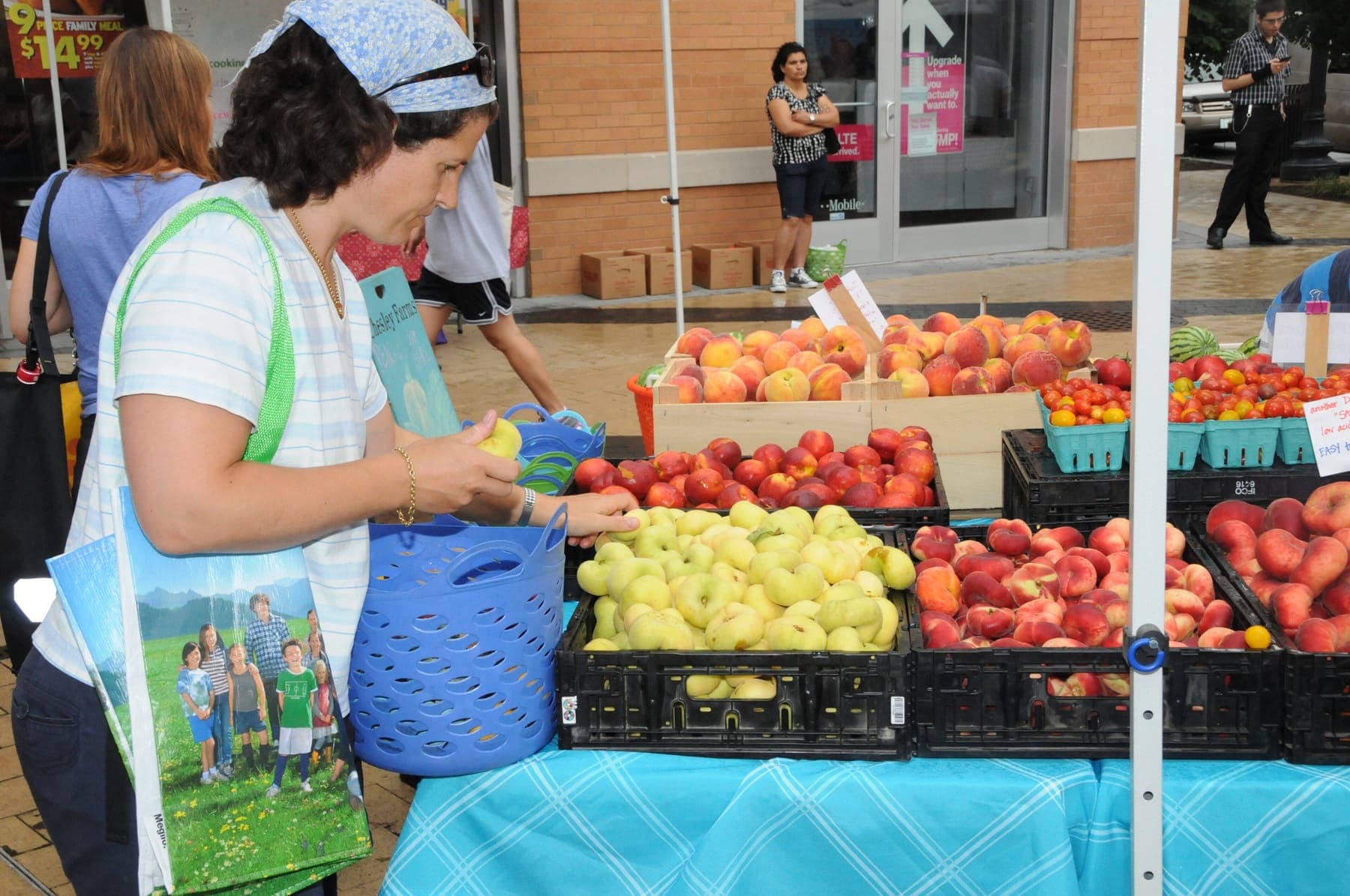
How to Shop a Farmers Market Like a Regular
Regulars don't spend more; they know the rhythm. When to arrive, what to carry, what to ask the grower, how to read a producer-only sign, where SNAP is handled, and the manners that keep you welcome at the table.
· 10 min read