
RecipesRecipe
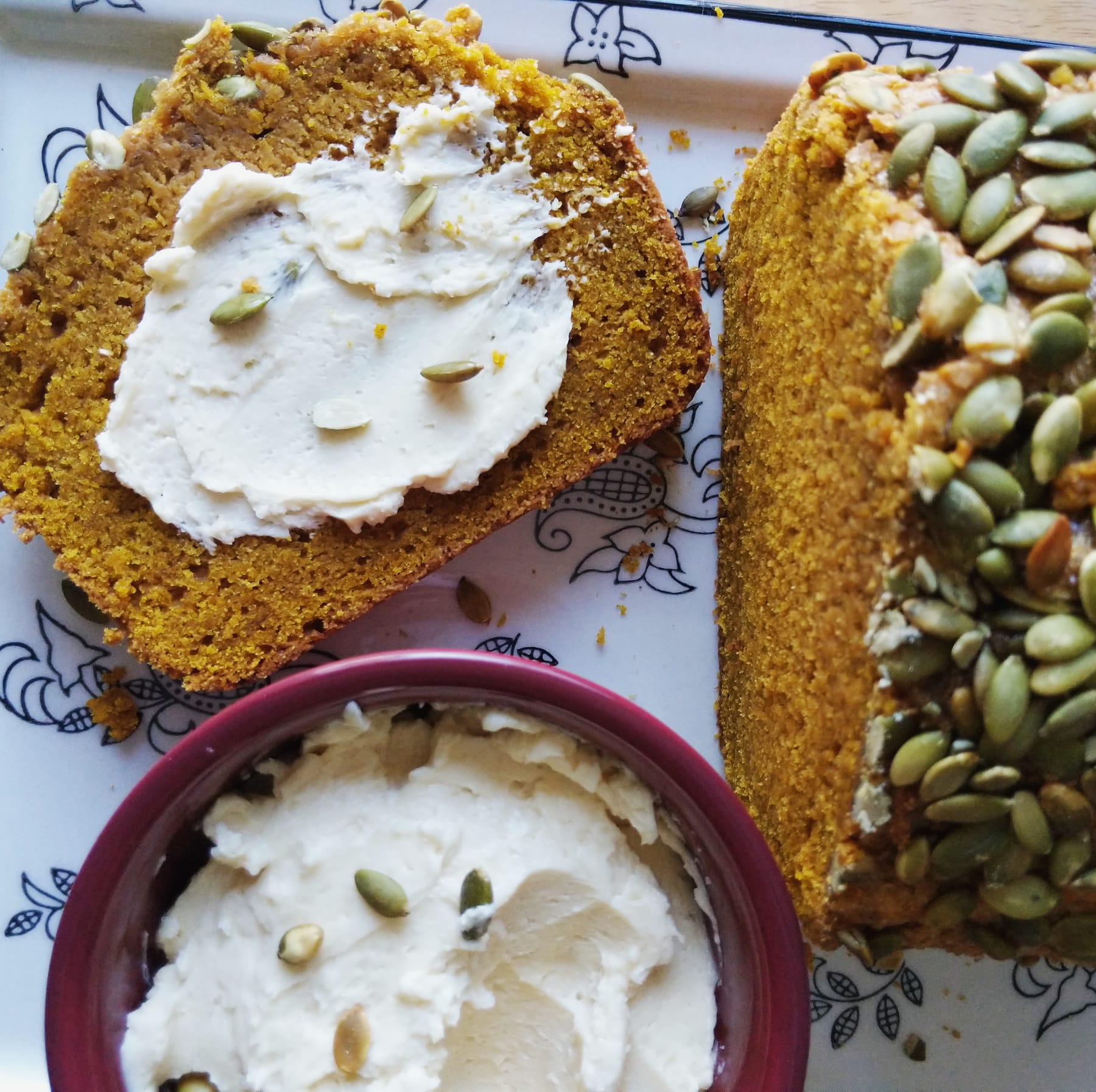
Market Pumpkin Bread With Toasted Pepitas
One 9-by-5 loaf, and one decision at the start: a can of puree, or squash you roasted yourself. They do not behave the same in a batter, and this recipe explains how to make either one work.
 United Farmers Market Editorial Team
Recipe
Market Pumpkin Bread With Toasted Pepitas
One 9-by-5 loaf of spiced pumpkin quick bread, made with canned puree or with winter squash you roasted and drained yourself, with toasted pepitas folded through the batter and scattered on top.
- Yield
- 1 loaf (about 12 slices)
- Prep
- 25 min
- Cook
- 1 hr 5 min
- Total
- 1 hr 30 min
Ingredients
Method
- 1Toast the pepitas first. Spread them in a dry skillet over medium heat and cook, shaking the pan often, for 3 to 5 minutes, until they puff, pop, and smell nutty. Tip them onto a plate to cool, because they keep cooking in a hot pan.
- 2Heat the oven to 350°F. Grease a 9-by-5-inch loaf pan and line it with a strip of parchment long enough to hang over both long sides.
- 3Whisk the flour, baking soda, baking powder, salt, cinnamon, ginger, nutmeg, and cloves together in a medium bowl.
- 4In a larger bowl, whisk both sugars into the eggs for about 30 seconds, until the mixture lightens. Whisk in the oil in a thin stream, then the puree and the vanilla, until smooth.
- 5Add the dry ingredients to the wet and fold with a spatula only until the last streaks of flour disappear. A few lumps are correct. Fold in the 2/3 cup of toasted pepitas.
- 6Scrape the batter into the pan, level the top, and scatter the remaining 2 tablespoons of pepitas over it. Bake for 60 to 70 minutes, until the loaf has domed and split down the center and a skewer pushed into the middle comes out with moist crumbs and no wet batter. If the top is browning hard at 45 minutes, lay a sheet of foil loosely over it.
- 7Cool in the pan on a rack for 15 minutes, then lift the loaf out by the parchment and let it cool completely before slicing.
Notes
- Homemade puree is often wetter than canned. Drain it in a fine-mesh sieve until it mounds on a spoon instead of slumping, then weigh out 340 g rather than measuring by volume.
- Wrapped whole at room temperature the loaf keeps three or four days. Slice it before freezing and it keeps months, ready one piece at a time.
- Cream cheese frosting is the usual finish and the wrong one for a market table: it needs refrigeration, and several states bar cottage foods that do.
Editorial recipe developed from standard reference methods. Read our editorial technology policy for how recipes are produced and reviewed.
In this guide
Pie pumpkins turn up on market tables in October next to the butternuts, and the grower can tell you which of them bakes best. The catch is that a squash you roast and a can of puree do not behave the same in a batter. The can arrives at a fixed thickness every time; your squash arrives at whatever thickness your oven and that particular fruit produced.
This is an editorial recipe built from standard quick-bread proportions and extension guidance on pumpkin puree, not a formula we tested in a kitchen. The notes below say what each choice does, so you can correct course when your puree runs wet.
What is actually in the can
Canned "pumpkin" is frequently squash, and has been for a long time. FDA's compliance policy guide on pumpkin labeling records that canned pumpkin has long been packed from "field pumpkin (Cucurbita pepo) or certain varieties of firm-shelled, golden-fleshed, sweet squash (Cucurbita maxima), or mixtures of these," and that since 1938 it has told canners it would not act over the name. NDSU Extension is blunter about the market leader: its puree comes from a Cucurbita moschata, and "thousands of acres of Libby's Select Dickinson butternut squash are grown near their processing plant in Illinois."
So roasting a butternut instead of a jack-o'-lantern pumpkin is not a compromise; it is closer to what the cannery does. Our winter squash guide and fall produce guide cover that table.
Moisture, with numbers
The received wisdom is that homemade puree is wetter than canned. USDA's FoodData Central says it depends on the cooking.
| Puree, per 100 g | Water |
|---|---|
| Pumpkin, canned | 90.0 g |
| Pumpkin, boiled and drained | 93.7 g |
| Winter squash, baked, all varieties | 89.2 g |
| Butternut squash, baked | 87.8 g |
Boiling waterlogs the flesh and lands you almost four points wetter than the can; roasting drives water off, and baked butternut finishes drier than canned pumpkin. So roast. University of Illinois Extension bakes pumpkin at "375 °F for 1 ½ hours, or until tender," after which you scoop, puree, and drain it in a sieve until it holds a shape.
Then weigh it, because volume is where a loose puree hides. Iowa State's AnswerLine treats "2 cups of puree" as one can's worth, a sensible freezer portion for the rest; Illinois gives fresh puree three days refrigerated or six months frozen.
What the batter wants
Utah State Extension defines a quick bread as one "leavened with baking powder or baking soda instead of yeast," quick because it skips the rise. Gluten has nothing useful to do here: "overmixing can cause the gluten in the flour to develop, resulting in a tough and chewy bread." Fold until the last streak of flour disappears, then stop.
Two habits matter more than any ingredient, both from Utah State: test the center with a skewer rather than the clock, and cool the loaf in its pan 10 to 15 minutes before turning it out, since a hot quick bread tears along its crumb. If the puree ran wet, give it another 5 to 10 minutes under loose foil rather than adding flour.
The pepitas
Bagged hulled pepitas want three to five minutes in a dry skillet over medium heat, shaken often, until they puff and smell nutty. Two thirds of a cup goes into the batter and the rest on top.
Seeds from the squash you just roasted are a longer project. The National Center for Home Food Preservation treats drying and roasting as separate steps: dry the washed seeds at 115 to 120°F for one to two hours, stirring "to avoid scorching," then toss with oil or salt and roast at 250°F for 10 to 15 minutes. Seeds straight from a squash keep their hulls, so expect something chewier than the bagged kind.
Storage
Wrap the loaf whole once it is cool; bread dries fastest at a cut face. The FoodKeeper guide from USDA, Cornell, and the Food Marketing Institute gives commercial cakes and muffins three to seven days in the pantry and six months in the freezer, and a home loaf carrying no preservatives belongs at the short end of that range.
For sellers
A quick bread is about as easy as cottage food gets, and pumpkin bread is still not legal everywhere. Michigan's list names it outright: "Quick breads and muffins (e.g., pumpkin or zucchini bread, blueberry muffins)" are allowed. New York's home processor exemption goes the other way. Approved breads there "may contain high acid fruits, commercially dried fruits and/or commercially dried herbs. Vegetables are prohibited," and the state explains itself: "Vegetable breads generally demonstrate a higher moisture content which requires refrigeration. Refrigerated products are prohibited as a registered home processor."
The same squash sits on either side of that line. FoodKeeper gives pumpkin pie two hours in the pantry and three to four days refrigerated, and Michigan's prohibited column lists pumpkin among the pies that "require refrigeration to assure safety." In a crust it is a refrigerated food with a two-hour clock on it; in a flour, sugar, and egg batter it is a shelf-stable loaf.
One more Michigan line travels well: no "cakes with glaze or frosting that requires refrigeration (e.g., no cream cheese frosting)." Cream cheese is the default finish on pumpkin loaves and the reason plenty cannot legally leave a home kitchen. Pepitas do the same visual work.
Read your state's list before you bake for a table. Start with what counts as cottage food and your state guide, such as Michigan, then confirm with the agency, because these lists get revised. If pumpkin bread clears, choosing a cottage food product line covers how a six-week seasonal item earns shelf space.
Sources and further reading
- 1.CPG Sec. 585.725 Pumpkin: Labeling of Articles Made From Certain Varieties of Squash · U.S. Food and Drug Administration · accessed Sep 2, 2026 · Canned pumpkin has long been packed from 'field pumpkin (Cucurbita pepo) or certain varieties of firm-shelled, golden-fleshed, sweet squash (Cucurbita maxima), or mixtures of these'; since 1938 FDA has advised canners it would not act solely over the 'pumpkin' designation
- 2.Dakota Gardener: The secret to great pumpkin pie · North Dakota State University Extension · accessed Sep 2, 2026 · 'Thousands of acres of Libby's Select Dickinson butternut squash are grown near their processing plant in Illinois'; Halloween pumpkin flesh described as thin, stringy and watery against butternut and buttercup as thick, smooth and rich in sugars
- 3.Pumpkin, canned, without salt (FDC ID 168450) · USDA FoodData Central, SR Legacy · accessed Sep 2, 2026 · Water 90.0 g per 100 g
- 4.Pumpkin, cooked, boiled, drained, without salt (FDC ID 168449) · USDA FoodData Central, SR Legacy · accessed Sep 2, 2026 · Water 93.7 g per 100 g
- 5.Squash, winter, all varieties, cooked, baked, without salt (FDC ID 170490) · USDA FoodData Central, SR Legacy · accessed Sep 2, 2026 · Water 89.2 g per 100 g; butternut, cooked, baked, without salt (FDC ID 169296) is 87.8 g
- 6.Three easy ways to make your own pumpkin puree · University of Illinois Extension · accessed Sep 2, 2026 · 'Bake pumpkin at 375 °F for 1 ½ hours, or until tender'; 'Fresh pumpkin puree can be refrigerated for up to three days or stored in the freezer for up to six months'
- 7.Preserve Pumpkin and Squash Safely · Iowa State University Extension and Outreach, AnswerLine · accessed Sep 2, 2026 · '2 cups of puree equals one can of pumpkin'; 'Canning pumpkin butter or mashed or pureed pumpkin/squash is NOT recommended'
- 8.What is Quick Bread? 6 Tips for Baking the Perfect Loaf Every Time! · Utah State University Extension · accessed Sep 2, 2026 · Quick bread is 'leavened with baking powder or baking soda instead of yeast'; 'Overmixing can cause the gluten in the flour to develop, resulting in a tough and chewy bread'; cool in the pan 10-15 minutes
- 9.Beware: Pumpkin Butter · National Center for Home Food Preservation · accessed Sep 2, 2026 · Reports 1995 University of Missouri testing that found home-canned pumpkin butters with 'pH values as high as 5.4'; 1970s University of Minnesota work found 'so much variability in viscosity among different batches of pumpkin purees' that no single processing recommendation could be calculated; USDA's 1994 directions carry 'Caution: Do not mash or puree'
- 10.Preserving Pumpkin Purée Safely at Home · Penn State Extension · accessed Sep 2, 2026 · 'Do not can mashed, puréed, or grated squash or pumpkin via pressure or boiling water bath'; only cubed squash has a tested pressure-canning process
- 11.Pumpkin Seeds · National Center for Home Food Preservation · accessed Sep 2, 2026 · Wash seeds to remove clinging fiber; dry in a dehydrator at '115-120ºF for 1 to 2 hours' or in a warm oven for 3 to 4 hours, stirring 'frequently to avoid scorching', then 'toss with oil and/or salt and roast in a preheated oven at 250ºF for 10 to 15 minutes'
- 12.The FoodKeeper (2015 edition) · Food Marketing Institute with Cornell University and USDA Food Safety and Inspection Service · accessed Sep 2, 2026 · Commercial cakes and muffins: 3-7 days pantry, 6 months freezer. Pies, pumpkin: 2 hours pantry, 3-4 days refrigerator
- 13.Cottage Food: What Can I Make? · Michigan Department of Agriculture and Rural Development · accessed Sep 2, 2026 · Allowed: 'Quick breads and muffins (e.g., pumpkin or zucchini bread, blueberry muffins)'. Not allowed: 'No pies or cakes that require refrigeration to assure safety like banana cream, pumpkin, lemon meringue or custard pies'; 'no cakes with glaze or frosting that requires refrigeration (e.g., no cream cheese frosting)'; 'No breads with fresh or frozen vegetables added'
- 14.Home Processing · New York State Department of Agriculture and Markets · accessed Sep 2, 2026 · New York excludes breads containing vegetables and foods requiring refrigeration from home processing. The page does not specifically name pumpkin, zucchini, or squash breads.
Weekly newsletter
Market Dispatch
One email a week with the newest guide, what's in season, and a few things worth knowing before market day.
Email subscriptions are not open yet. Read every new story through our free RSS feed.
Follow Market Dispatch via RSS →Keep reading
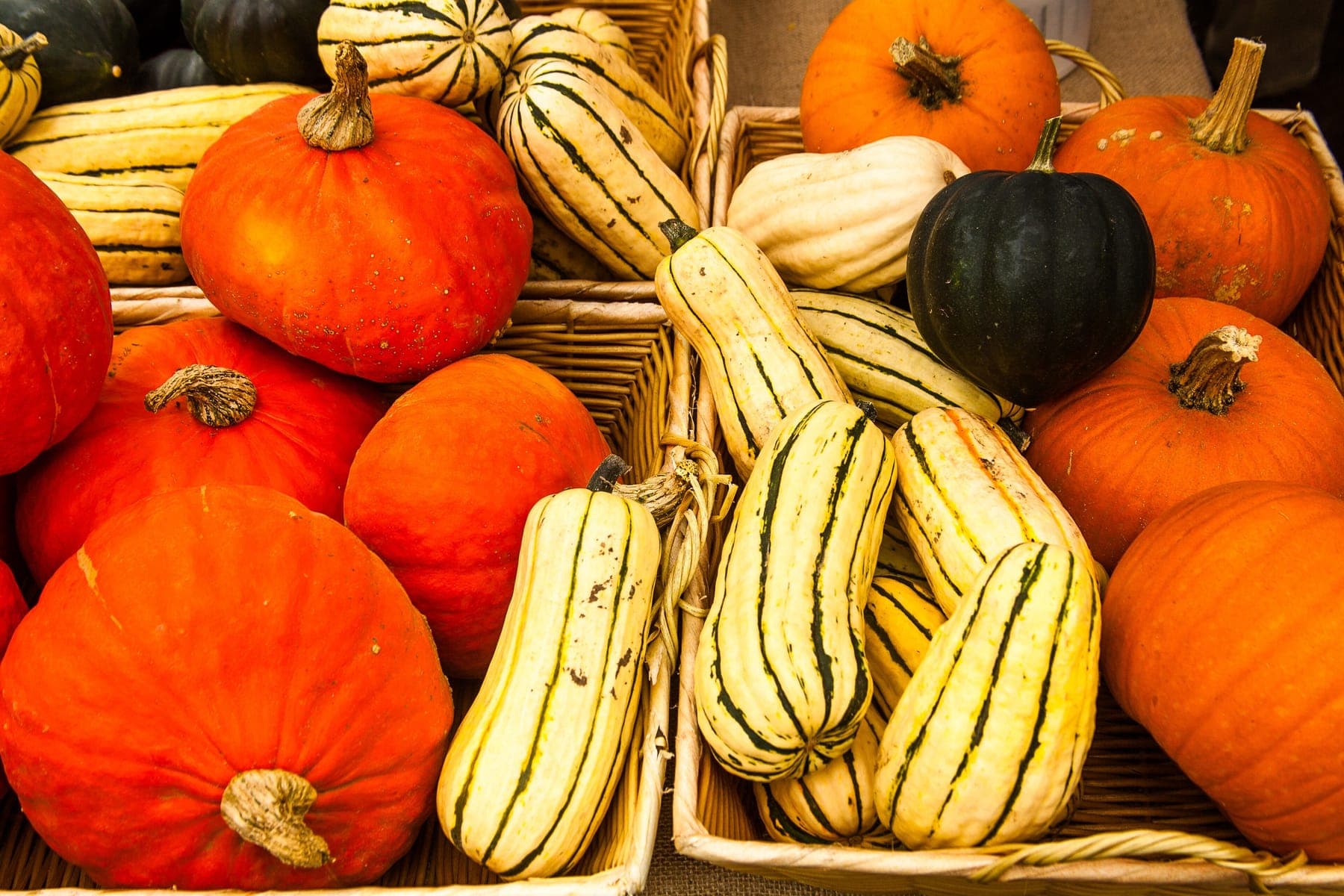
What's in Season in Fall: A Region-by-Region Guide to Autumn Produce
Fall at the market is four different seasons depending on where you stand. Here is what arrives in September, October, and November across the Northeast and Midwest, the South, the Pacific and Mountain West, and the Southwest, with buying and storage notes for the crops that define it.
· 11 min read
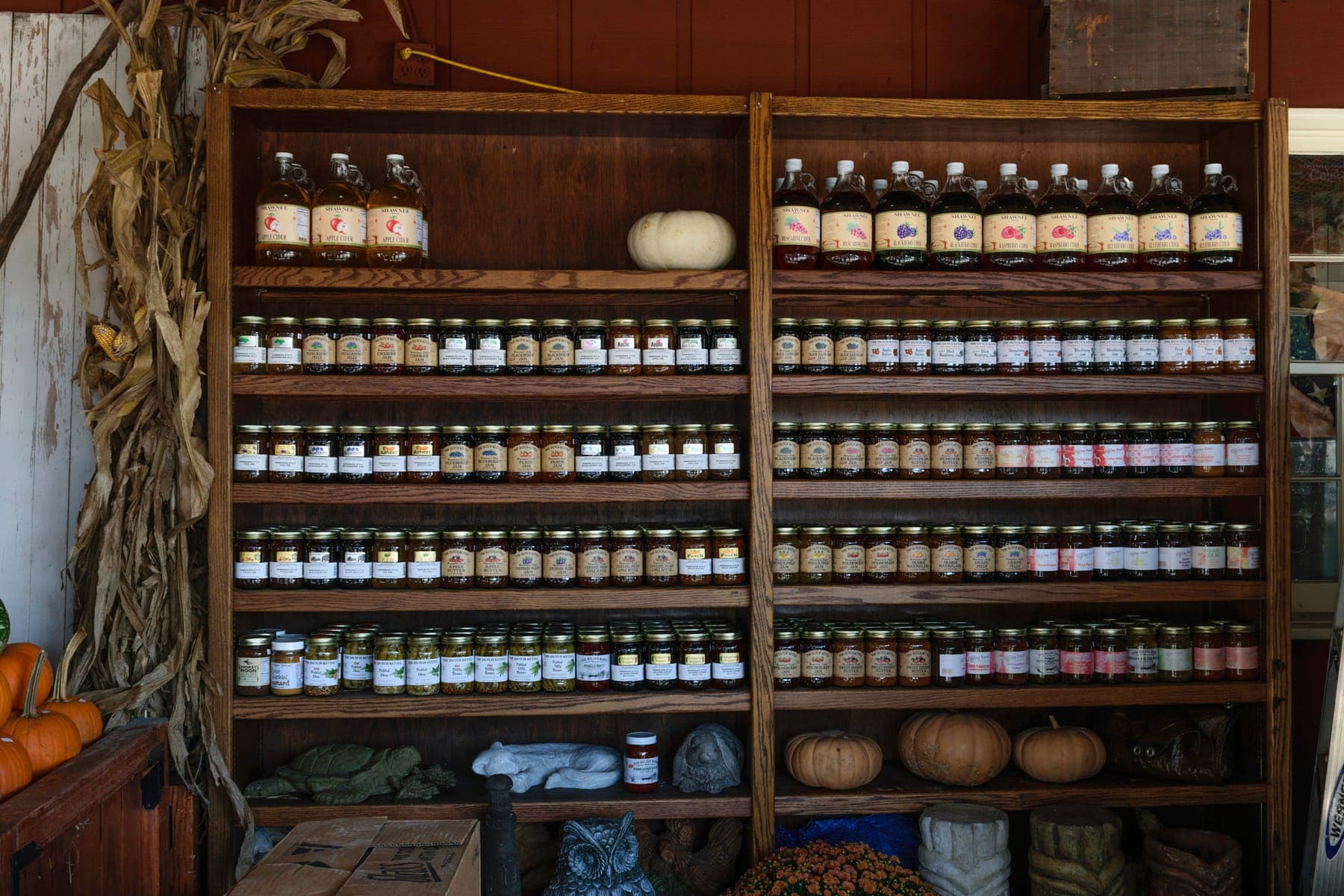
What to Sell: Choosing a Cottage Food Product Line That Works at the Market
You can probably make twenty things well. A market needs three or four you can make every week, that hold up on a folding table, that your state allows, and that nobody else in the tent row is already selling. Here is a set of filters for getting from twenty to four.
· 11 min read
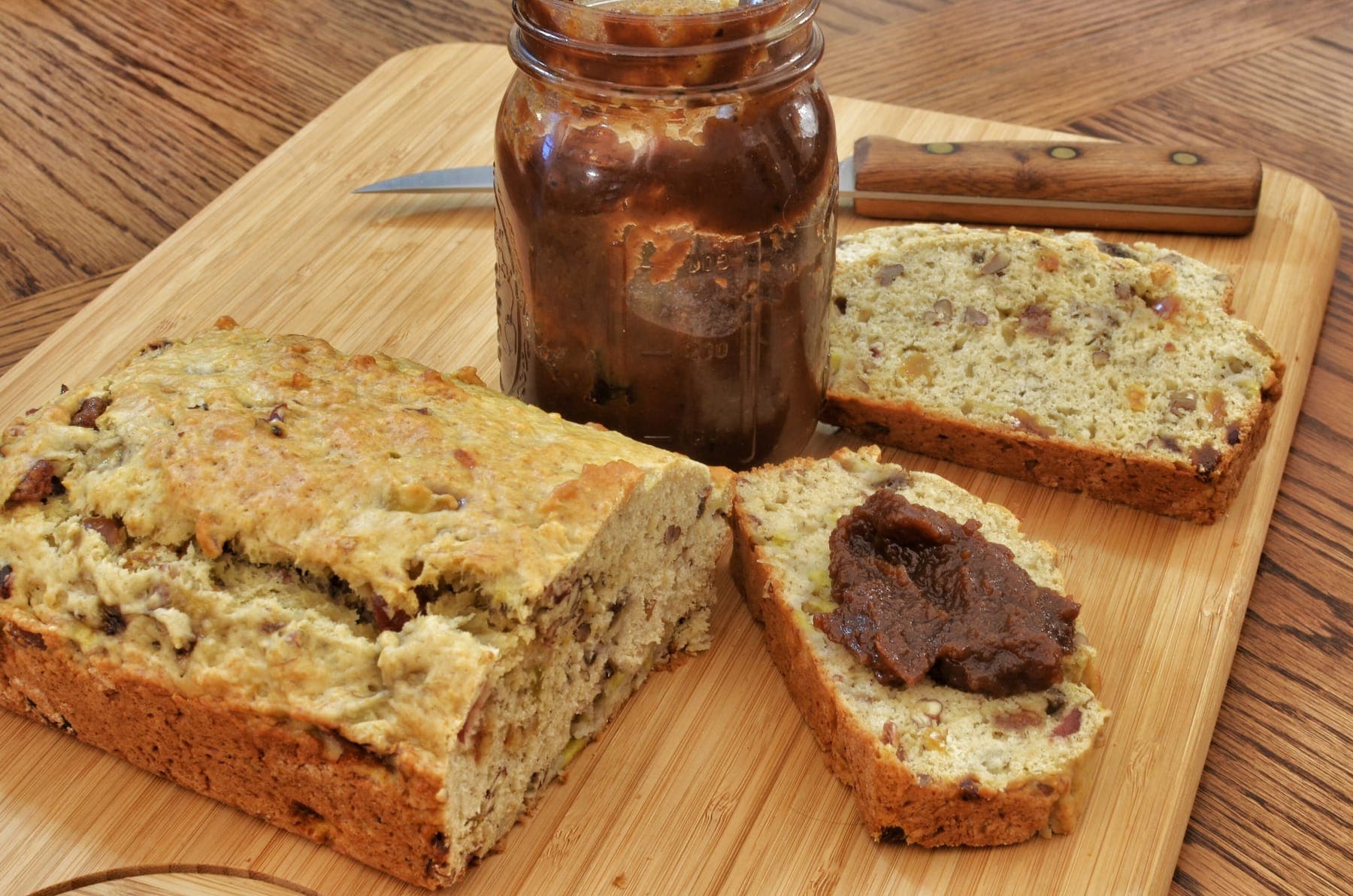
Slow-Cooker Apple Butter: A Low-Effort Recipe for a Market Haul of Apples
Five pounds of market apples, a slow cooker, and an overnight simmer. This version skips the canner on purpose, so the jars go in the refrigerator or freezer, and the notes explain why that is not a step you can add back later.
· 5 min read
Refrigerator Quick Pickles: A Flexible Recipe for Almost Any Market Vegetable
One brine, one method, seven vegetables. A refrigerator pickle uses the same 5 percent vinegar as a canned pickle but skips the canner, which is exactly why it has to stay cold and get eaten within a couple of weeks.
· 5 min read