
State guideMichigan
Michigan Cottage Food Law: What You Can Sell, Where You Can Sell It, and What the Label Says (2026 Guide)
Michigan rewrote its cottage food exemption in March 2026. There is still no license, no permit, and no state registration, but the cap moved to $50,000 (or $75,000 for high-priced items) and internet, mail, and delivery-app sales inside Michigan are legal for the first time.
 United Farmers Market Editorial Team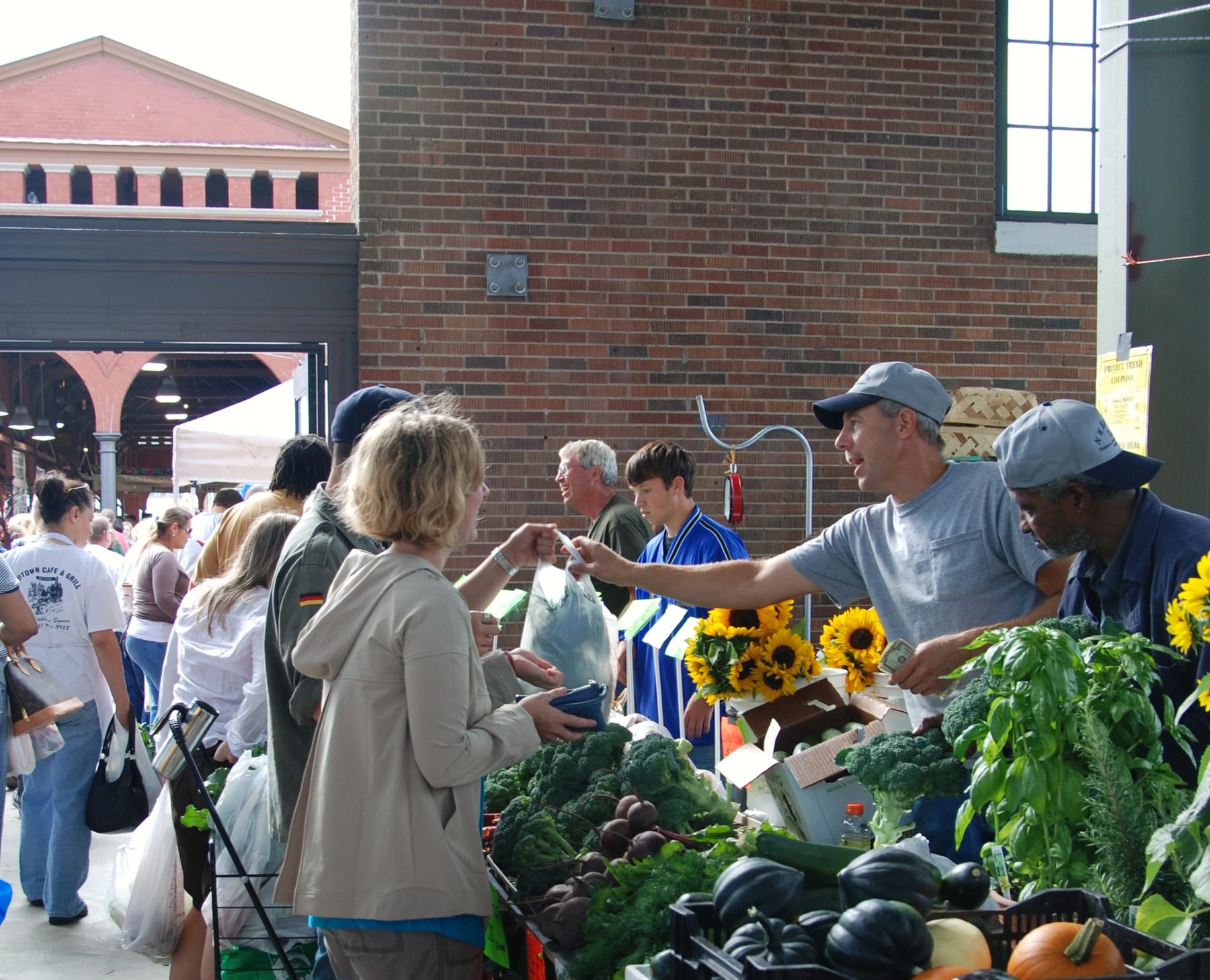
Michigan at a glance
Michigan Cottage Food Law (the cottage food exemption in the Michigan Food Law, 2000 PA 92), as amended by 2025 PA 51 (House Bill 4122) · MCL 289.4102, with the definitions of cottage food operation and cottage food product at MCL 289.1105(1)(j) and (k) · administered by Michigan Department of Agriculture and Rural Development (MDARD)
- Registration or permit
- No license, no permit, no state registration, and no application to file. MDARD's FAQ says plainly that there are no forms and no food license for a qualifying operation. Registering with the MSU Product Center is optional: the statute caps the one-time fee at $50, and the code it issues (format C-000000000) may be printed with your phone number in place of your home address.
- Sales limit
- $50,000 a year in gross sales, or $75,000 if you sell cottage food products at $250 or more per unit. Gross sales are counted per cottage food operator at a residence, so two operators in one household each get their own limit. Beginning October 1, 2026, MDARD may raise both figures annually using the Detroit Consumer Price Index; its pages still showed $50,000 and $75,000 on September 2, 2026.
- What you can sell
- Shelf-stable foods that need no time or temperature control for safety: breads, cookies, cakes, shelf-stable pies, fruit jams and jellies in glass jars, candy and confections, granola, popcorn, dry mixes, dried herbs, dried pasta, dehydrated fruit and vegetables, roasted coffee, vinegars, and extracts. Not allowed: anything needing refrigeration, canned or pickled goods, salsa, beverages, meat, fish, dairy, ice, cut melon or tomato, dietary supplements, CBD or cannabis, and pet treats.
- Where and how you can sell
- Direct from you to the consumer, inside Michigan only: farmers markets, farm stands, roadside stands, and similar venues, plus internet and mail orders and third-party delivery platforms, if the buyer had an opportunity to interact with you directly (a face-to-face meeting, or a virtual one with two-way audio or video) before the sale. No wholesale, no consignment, no sales to stores or restaurants, no donations to auctions or fundraisers.
- Labeling
- Every product is prepackaged and labeled before sale with the business name and address (or the name, phone number, and MSU registration number), product name, ingredients in descending order by weight, net weight or volume, allergen labeling, nutrition labeling if you make a nutritional claim, and, in at least 11-point type in a contrasting color, the statement: 'Made in a home kitchen that has not been inspected by the Michigan department of agriculture and rural development.'
- Training
- No training is required by law. MDARD funds an online cottage food training run by MSU Extension that covers safe food production, packaging and labeling, storing, and transportation. Check with MSU Extension for the current cost and format.
- Inspection
- No routine inspections. If a complaint is filed or an illness is traced to your food, MDARD will investigate, and may enter and inspect your production and storage areas, view and copy records, take photographs, seize product it suspects is adulterated, order label corrections, and require you to stop making unapproved products.
Reviewed September 2, 2026. Rules change; confirm with the agency before you sell.
In this guide
- What changed on March 24, 2026
- Do you qualify?
- What you can make
- Where you can sell, and to whom
- The label, line by line
- The money limit, and how it is counted
- Licensing, registration, and training
- What happens if someone complains
- Local rules, water, and the rest of the paperwork
- Open questions and things to watch
- Where to get official help
Michigan's cottage food exemption is short and easier to comply with than most. You do not apply for anything. You make shelf-stable food in your own kitchen, label it the way the statute says, sell it yourself to the people who eat it, and stay under a gross sales cap. What changed on March 24, 2026 matters even if you have been selling for years: the cap doubled, it is now counted per person rather than per household, and the flat ban on internet and mail order sales is gone.
What changed on March 24, 2026
House Bill 4122 became 2025 Public Act 51 when the governor signed it on December 23, 2025, and took effect on March 24, 2026. Here is what it changed in MCL 289.4102.
| Rule | Before March 24, 2026 | Now |
|---|---|---|
| Gross sales cap | $25,000 a year | $50,000, or $75,000 if units are priced at $250 or more |
| How the cap is counted | Per residence, never per person | Per cottage food operator at that residence |
| Internet and mail order | Prohibited outright | Allowed within Michigan, with an interaction condition |
| Delivery apps | Not addressed | Allowed within Michigan, same condition |
| Identity on the label | Name and address | Name and address, or name, phone, and an MSU registration number |
| Future increases | None written in | MDARD may adjust the caps each October 1, starting in 2026 |
The label statement came through word for word. The food definition was modernized rather than loosened: the old "potentially hazardous" language became "time/temperature control for safety," salsa is now excluded by name instead of by implication, and the list of banned categories was broken into numbered subparagraphs. Nothing moved from one side of that line to the other.
Do you qualify?
Michigan's definition is stricter about where you cook than about who you are. A cottage food operation is a person who produces or packages cottage food products only in the kitchen of that person's primary domestic residence in Michigan, and MDARD reads that literally:
- A house, apartment, condominium, or rental home counts. Group or communal housing such as a group home, sorority, or fraternity does not.
- A second home, a vacation cottage, or a motor home does not, because it is not your primary residence.
- A rented commercial kitchen does not, even a licensed one. Cook there and you need a food establishment license instead. Our comparison of a cottage food kitchen and a commercial kitchen covers that fork in the road.
- Nonprofits cannot qualify, because an organization has no single-family domestic residence.
- Producers whose home kitchen sits outside Michigan cannot use this exemption to sell here.
MCL 289.4102(6) also keeps the finished product in that residence, and MDARD extends the same rule to your ingredients. A kitchen, a spare room, or a basement free of dampness and pests is fine; a garage, shed, barn, or other outbuilding is not.
What you can make
The test is time and temperature control for safety. MCL 289.1105(1)(k) defines a cottage food product as a food that is not a TCS food, names jams, jellies, dried fruit, candy, cereal, granola, dry mixes, vinegar, dried herbs, and shelf-stable baked goods as examples, then excludes foods regulated under 21 CFR parts 108, 113, and 114 (salsa included), canned low-acid fruits and acidified vegetables, other canned foods apart from standardized jams, jellies, and preserves under 21 CFR part 150, meat and poultry, milk, beverages, and home-produced ice.
MDARD's category-by-category list is more useful than the statute at the workbench. A few places where people get caught:
- Frosting. Shelf-stable icings are fine, cream cheese frosting is not, and buttercream is allowed only from two lab-tested recipes MDARD names, followed exactly.
- Jams and jellies. Fruit jams and jellies in glass jars, as defined in 21 CFR part 150, only. No hot pepper jelly, no low-sugar or no-sugar versions, and no fruit butters, so no apple butter and no pumpkin butter.
- Breads. Herbs, nuts, shredded hard cheese, and finely chopped dried or freeze-dried fruit and vegetables can go into the dough before baking. Fresh or frozen vegetables, soft cheese, and large chunks of hard cheese cannot.
- Ferments and freeze-dried. Vinegar is allowed; kombucha, olives, and sourdough starter are not, dried or otherwise. Freeze-dried candy is fine. Anything that needed refrigeration before it went into the freeze dryer, ice cream and cheesecake included, is not.
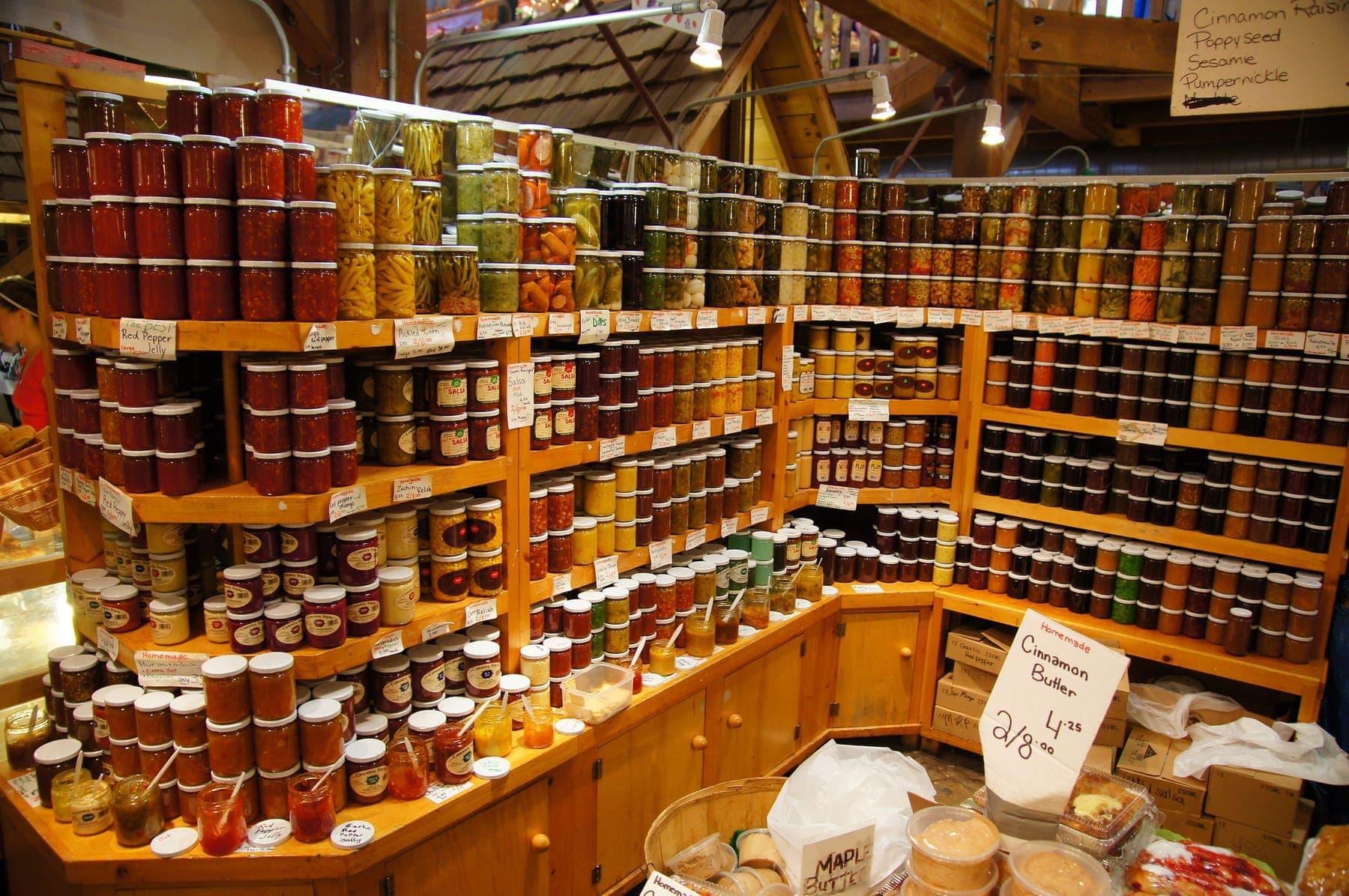
- Pickles and salsa. Nothing canned, pickled, or acidified. MDARD's stated reason is botulism risk.
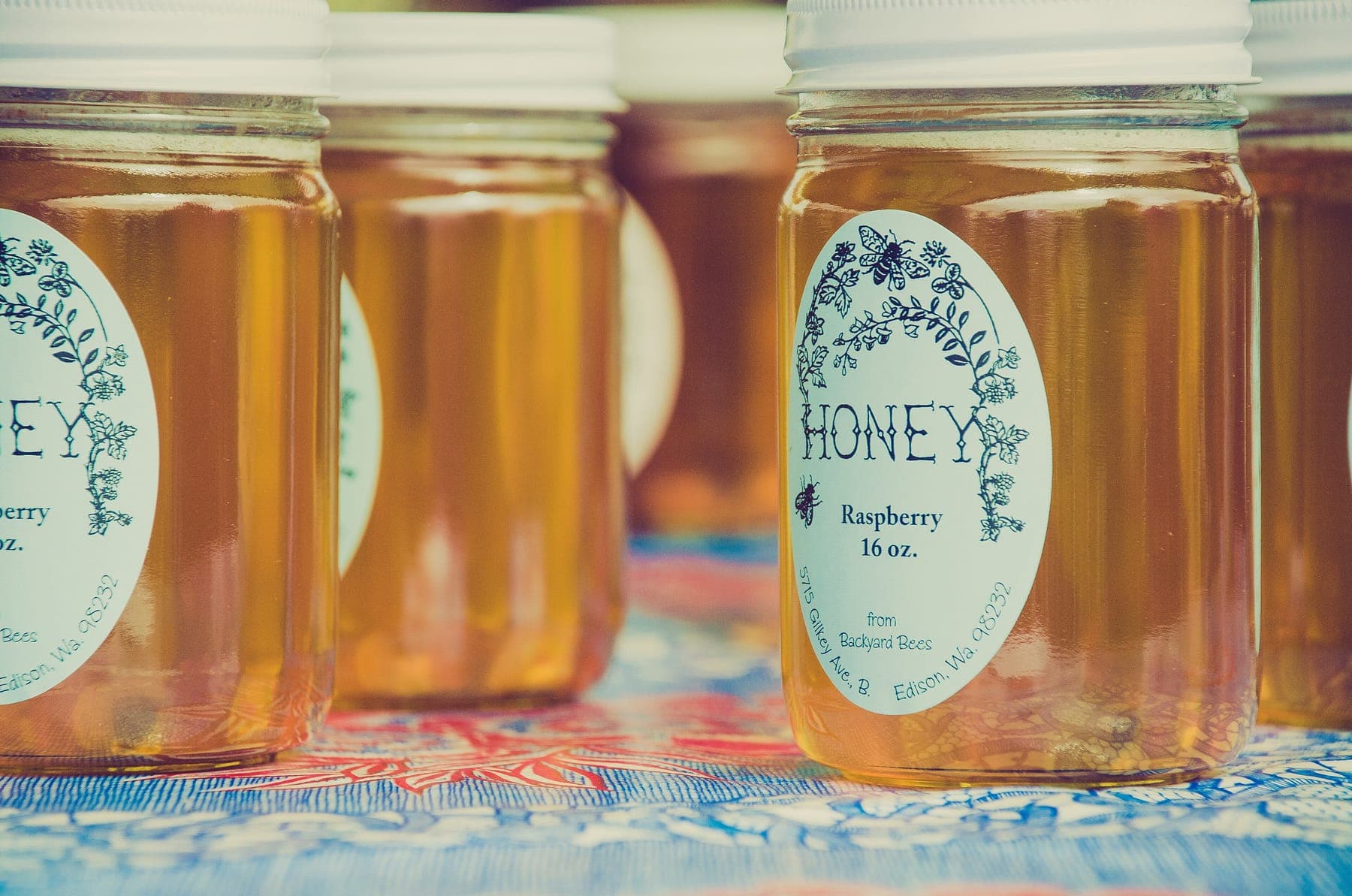
- Not cottage food at all. Beverages of any kind including cider and lemonade, dairy, meat and fish, dietary supplements, CBD and cannabis products, and pet treats. Honey and maple syrup have their own separate licensing exemptions rather than falling under this one.
For the general framework behind these lines, see what counts as cottage food.
Where you can sell, and to whom
Every sale runs directly from you to the person eating the food, and the food stays in Michigan. Inside those two walls, the 2026 amendment opened up a lot.
In person. Farmers markets, farm stands, roadside stands, and similar venues. MDARD is explicit that a market may still require a food establishment license or other conditions of its own even though the state does not, so read the vendor application before you count on the exemption. Our farmers market vendor guide covers those applications.
Online, by phone, by mail, and through delivery apps. MCL 289.4102(4) now permits internet and mail order sales and delivery through a third-party platform, on one condition: the operation "provides an opportunity for a consumer to directly interact with the cottage food operation before the cottage food product is sold." The statute defines that as a face-to-face meeting or a virtual meeting with two-way communication where the parties can see or hear each other, and anything sold this way must go to a consumer in Michigan. MDARD adds that you may advertise online and collect payment in person or through a pay app. An order taken online and handed over by you is still a direct sale, which is the model our related marketplace Local Cottage Foods runs on, but the interaction condition is worth confirming with MDARD for your own setup. More on the general question: can you sell cottage food online.
Never. Wholesale, consignment, brokers, distributors, restaurants, and grocery stores are all out. So are donations to a public auction, a fundraiser, or a soup kitchen, though you may give product away yourself at your own booth. MDARD has also closed the obvious workaround: a farm stop or retail market may not act as a third-party delivery platform by holding pre-sold cottage food for pickup, because holding food at a store is not delivering it to the consumer.
Samples are allowed if the sample itself stays non-TCS, which rules out, in MDARD's example, stirring a dry dip mix into sour cream. MDARD holds you to the same sampling standards as licensed vendors, set out in its guidelines for providing safe food samples at farmers markets.
The label, line by line
Products must be prepackaged and labeled before sale. MCL 289.4102(3) lists seven items, one of them conditional:
- Either the name and address of the cottage food business, or its name, telephone number, and MSU Product Center registration number.
- The name of the product.
- The ingredients, in descending order of predominance by weight, with sub-ingredients spelled out. MDARD's example: "soy sauce" alone is not acceptable, "soy sauce (wheat, soybeans, salt)" is.
- The net weight or net volume. MDARD says to include the metric equivalent.
- Allergen labeling as specified by federal requirements. MDARD's own labeling FAQ still gives the pre-2023 federal list and leaves sesame off it; federal law has treated sesame as the ninth major allergen since January 1, 2023, so declare it anyway. Name the specific tree nut rather than writing "nuts."
- Nutrition labeling to federal requirements, but only if you make a nutritional claim. Say nothing about calories or protein and this line does not apply to you.
- This statement, in at least the equivalent of 11-point type and in a color that contrasts with the background: "Made in a home kitchen that has not been inspected by the Michigan department of agriculture and rural development." (MCL 289.4102(3)(g))
Handwritten labels are acceptable if they are legible, in permanent ink, and large enough to match the type size. If a cake cannot practically carry a label, MDARD says the information goes on an invoice delivered with it. A P.O. box may not stand in for your home address, which is where the MSU registration number earns its fee. Our cottage food labeling guide has a layout checklist.
One inconsistency worth knowing: MDARD's own 03/2026 one-pager renders the sentence as "Made in a home kitchen not inspected by the Michigan Department of Agriculture and Rural Development," three words shorter than the statute. Print the statutory version.
The money limit, and how it is counted
$50,000 in gross sales a year, or $75,000 if you sell cottage food products at $250 or more per unit. Gross means everything the customer paid, not what you kept. MDARD can ask in writing for documentation to verify the figure, so keep sales records from day one; our recordkeeping basics piece covers a simple system.
The counting rule flipped in 2026. Gross sales are now computed on a per-person basis at a residence. MDARD's examples: a parent and a child in the same house who each run a cottage food business each get the full limit, and of three roommates with two businesses between them, the third roommate counts for nothing. A family of six does not get six caps. Only operators count.
The caps can also move. Beginning October 1, 2026, and each October 1 after that, MDARD may adjust them using a three-year average of the Detroit Consumer Price Index. That first possible adjustment lands weeks after this guide publishes, and no adjusted figure was published as of September 2, 2026, so check MDARD's page before assuming the number is still $50,000. For how Michigan's cap compares with other states, see cottage food sales limits explained.
Licensing, registration, and training
There is nothing to file. MDARD's FAQ says a qualifying operation completes no application forms, goes through no registration process, and obtains no food license or permit. There is no state fee and no required food safety course.
Two optional steps are still worth considering:
MSU Product Center registration. MCL 289.4102(8) lets the MSU Product Center run a voluntary registration program and charge a one-time fee of not more than $50. Registering buys you an assigned code you can print with your business name and phone number in place of your street address, which is the main reason to bother; MDARD's labeling page shows a sample label using one, in the C-000000000 format. Two things the statute adds: once you register, subsection (9) requires that number on your labels, and subsection (10) keeps the registration records out of FOIA, though MDARD may request them. The Product Center lists the current fee.
MSU Extension's cottage food training. MDARD funds an online training run by MSU Extension covering safe food production, packaging and labeling, storing, and transportation. Nothing requires it, and MSU rather than MDARD lists the price. Pair it with food safety fundamentals and a written production log.
What happens if someone complains
Cottage food operations are exempt from routine licensing and inspection, not from the Food Law itself, and MDARD still calls them food establishments. MCL 289.4102(1) keeps the department's enforcement authority intact. If a complaint is filed or an illness is linked to your product, MDARD investigates: inspectors may enter your production and storage areas, copy records, take photographs, seize product they suspect is adulterated, order label corrections, and require you to stop making an unapproved product.
Local rules, water, and the rest of the paperwork
MCL 289.4102(7) says the exemption does not affect any other state or federal law or any local ordinance. In practice that means:
- Zoning and home occupation rules. MDARD tells new operators to check with their local unit of government, so ask your city, village, or township before advertising pickup at your house.
- Business registration and taxes. A DBA may be required by your county, an LLC goes through LARA, and sales tax questions go to the Michigan Department of Treasury. MDARD notes that sales tax generally does not apply to prepackaged food that is not for immediate consumption.
- Private wells and septic systems. Food made with non-potable water counts as unsafe. MDARD advises testing well water at least annually for coliform bacteria and partial chemistry, and having your local health department evaluate the septic system before you start sending bakery wastewater into it.
- Market and event rules. Booth fees, insurance, and vendor applications are contracts, not regulations.
Open questions and things to watch
- The first inflation adjustment. October 1, 2026 is the first date MDARD may raise the caps. Watch the agency page rather than assuming.
- Guidance still catching up. MDARD's labeling FAQ was still using the pre-2023 federal allergen list on September 2, 2026, three years after sesame joined it, and its one-pager shortens the label statement. Where a state page and the law disagree, follow the law.
- Delivery platforms. The statute permits third-party delivery, but MDARD has already closed one variation on it. If your plan has anyone else holding the food, ask first.
Where to get official help
MDARD answers cottage food questions at MDARD-CottageFood@michigan.gov (include your ZIP code so it reaches the right inspector) or 800-292-3939. The department's cottage food pages hold the allowed foods list, labeling examples, and the printable one-pager, and the statute itself takes ten minutes to read at MCL 289.4102.
A sensible first week: confirm your product sits on the allowed side of the TCS line, call your township about zoning, draft a label with the statement at the right size, and decide whether the registration fee is worth keeping your address off it. The business steps that follow are in how to start a cottage food business, and our state guides show how differently the same idea gets written across a border.
Official resources for Michigan
Sources and further reading
- 1.MCL 289.4102, cottage food operation; exemption from licensing and evaluation provisions · Michigan Legislature · accessed Sep 2, 2026 · Label contents and the 11-point statement, the internet, mail order, and third-party delivery conditions, the $50,000 and $75,000 caps and the October 1, 2026 inflation adjustment, storage in the residence, and the MSU Product Center registration program.
- 2.MCL 289.1105, definitions; A to C · Michigan Legislature · accessed Sep 2, 2026 · Subsections (1)(j) and (1)(k): the primary domestic residence test, and the excluded foods (TCS foods, 21 CFR 108, 113, and 114 foods including salsa, canned foods other than standardized jams, jellies, and preserves, meat and poultry, milk, beverages, ice).
- 3.2025 Public Act 51 (enrolled House Bill 4122) · Michigan Legislature · accessed Sep 2, 2026 · Enrolled act amending MCL 289.1105, 289.1111, and 289.4102; approved by the governor December 23, 2025.
- 4.House Bill 4122 of 2025, as introduced (with struck text) · Michigan Legislature · accessed Sep 2, 2026 · Shows the repealed language: the $25,000 cap, gross sales computed per residence and 'not ... on a per-person basis', 'sold directly from the cottage food operation to the consumer only, and not by internet or mail order', and the old 'potentially hazardous' wording in the cottage food product definition.
- 5.House Bill 4122 of 2025 (Public Act 51 of 2025) bill history · Michigan Legislature · accessed Sep 2, 2026 · Approved by the governor and filed with the Secretary of State on December 23, 2025; assigned PA 51 of 2025.
- 6.Cottage Food · Michigan Department of Agriculture and Rural Development · accessed Sep 2, 2026 · Agency overview: exemption from licensing and inspection, non-potentially hazardous foods made in the kitchen of a primary domestic residence, in-state sales only, and the MDARD-funded MSU Extension training.
- 7.Cottage Food: Getting Started and FAQ · Michigan Department of Agriculture and Rural Development · accessed Sep 2, 2026 · No application or registration with MDARD, the single-family domestic residence test, no rented or licensed kitchens, local zoning, well and septic guidance, sales tax, per-operator counting of the cap, the 2026 changes, and the ruling that a farm stop cannot act as a third-party delivery platform.
- 8.Cottage Food: What Can I Make? · Michigan Department of Agriculture and Rural Development · accessed Sep 2, 2026 · Category-by-category allowed and not-allowed lists, including the two lab-tested buttercream recipes, the ban on hot pepper and low-sugar jellies, foraged mushroom proof of identification, and the separate maple syrup and honey exemptions.
- 9.Cottage Food: Labeling · Michigan Department of Agriculture and Rural Development · accessed Sep 2, 2026 · Required label elements, sample labels with and without an MSU registration number in the C-000000000 format, sub-ingredient and tree nut rules, the pre-2023 federal allergen list still shown in the FAQ, the ban on P.O. box addresses, hand-printed labels, and invoice labeling for wedding and specialty cakes.
- 10.Cottage Food: Selling and Samples · Michigan Department of Agriculture and Rural Development · accessed Sep 2, 2026 · Where sales are allowed and prohibited, advertising online and taking payment through a pay app, the no-donation and no-consignment rules, nonprofits and out-of-state producers, MDARD's complaint investigation powers, where ingredients and finished products may be stored, and sampling standards.
- 11.Michigan's Cottage Foods: Cottage Food Business Rules (03/2026 one-pager, PDF) · Michigan Department of Agriculture and Rural Development · accessed Sep 2, 2026 · One-page summary dated 03/2026 with the current caps, sales channels, the freeze-dried exclusions, and a shortened version of the label statement.
- 12.Food Allergies · U.S. Food and Drug Administration · accessed Sep 2, 2026 · Sesame became the ninth major food allergen under the FASTER Act, effective January 1, 2023.
Weekly newsletter
Market Dispatch
One email a week with the newest guide, what's in season, and a few things worth knowing before market day.
Email subscriptions are not open yet. Read every new story through our free RSS feed.
Follow Market Dispatch via RSS →Related guides
How to Start a Cottage Food Business: A Step-by-Step Guide
From the first read of your state's rules to your first market Saturday, in eight steps: choosing products that qualify, registration and training, labels, pricing, sales channels, bookkeeping, and a realistic plan for the first 90 days.
· 13 min read
Cottage Food Labels: What Most States Require and How to Design One That Looks Professional
Cottage food laws disagree about almost everything except the label. Here are the six elements nearly every state asks for, the exact disclaimer wording six states use, and how to build a label that survives a refrigerator and still reads as a brand.
· 10 min read
What Counts as "Cottage Food"? The Definition, the Exceptions, and Why It Varies by State
Cottage food is a legal category, not a cooking style: food made in a home kitchen, sold directly to the person who eats it, and in most states limited to foods that stay safe at room temperature. Here is where that line comes from, how states move it, and what falls outside it almost everywhere.
· 9 min read
Packaging for Cottage Food: Materials, Costs, and Presentation That Protects the Product
A bag or box has three jobs: keep the product safe and fresh, carry the label your state requires, and sell it from three feet away. Here is how to choose packaging by product type, what a unit really costs, and which states require sealed, labeled packages before you can sell.
· 12 min read