
SeasonalGuide
What's in Season in Fall: A Region-by-Region Guide to Autumn Produce
Fall at the market is four different seasons depending on where you stand. Here is what arrives in September, October, and November across the Northeast and Midwest, the South, the Pacific and Mountain West, and the Southwest, with buying and storage notes for the crops that define it.
 United Farmers Market Editorial Team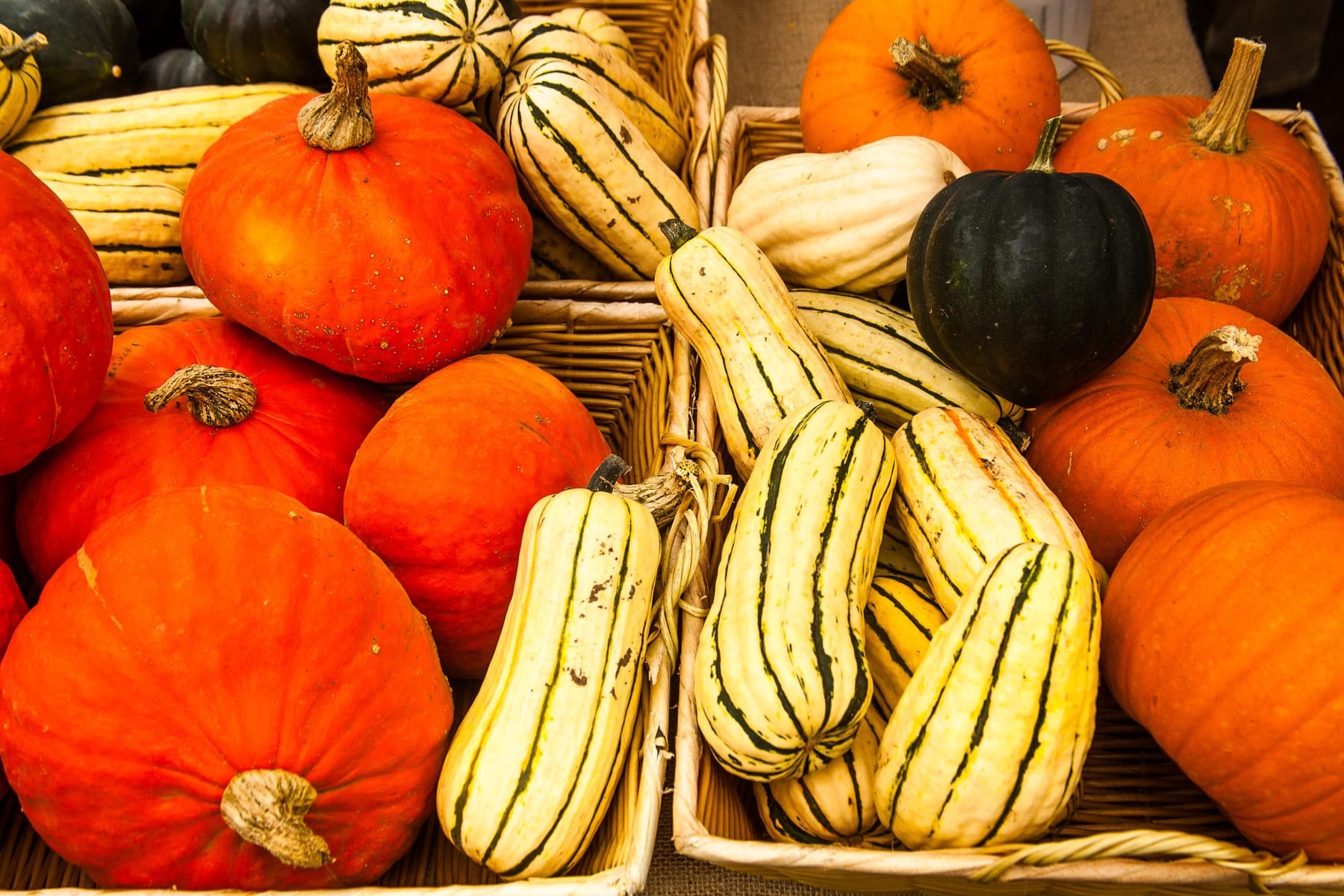
Regional note. Month ranges in this guide are approximate and drawn from state and extension charts for a handful of representative states. Coastal California, the Gulf Coast, and south Texas run weeks ahead of, or on an entirely different calendar from, the Upper Midwest and New England, and elevation shifts everything in the Mountain West. Your market's vendors know the local timing better than any chart.
In this guide
- Northeast and Midwest
- South
- Pacific Northwest and Mountain West
- Southwest and Texas
- Crop by crop: how to buy it and how to keep it
- Apples
- Pears
- Winter squash and pumpkins
- Brassicas
- Root vegetables
- The last tomatoes and peppers
- Greens
- Sweet potatoes
- Cranberries
- Persimmons
- Pomegranates
- Pecans
- Storage cheat sheet
- Before your next market trip
The first cold morning changes a market. Tomatoes get cheaper and softer, the squash pile grows taller than the person selling it, and somebody has a crate of apples with a name you have never seen on a grocery sticker. This guide covers that turn, region by region and month by month, then crop by crop.
One caveat first. Fall reaches Minnesota long before it reaches Houston, and the USDA's Seasonal Produce Guide says plainly that what is in season near you "will vary by growing conditions and weather." The ranges below come from state agriculture departments and university extension charts, all of which carry the same warning. Use them to know what to expect, then ask the person behind the table.
Northeast and Midwest
Most fall produce guides are quietly written about this region, and the charts show why. Penn State's harvest calendar for Pennsylvania runs apples from late July to the end of October, pears from mid-August to the third week of October, pumpkins through September and October, and winter squash into the first week of November. Beets, carrots, broccoli, and cabbage go to the end of November, and cauliflower returns for a second run in October and November. Michigan State's availability guide has a longer tail, with fall apples from September through December (and from storage in January and February), butternut and acorn squash from September into December, and Brussels sprouts and rutabagas through November. Minnesota Grown's chart puts Brussels sprouts, parsnips, turnips, and winter squash at peak in September and early October, with pumpkins peaking from late September into October.
| Month | Fruit | Vegetables |
|---|---|---|
| September | Early and mid-season apples, pears, grapes, plums | Late tomatoes and peppers, first winter squash, Brussels sprouts, beets, carrots, spinach |
| October | Peak apples, late pears, grapes | Pumpkins, winter squash, cauliflower's second run, cabbage, broccoli, parsnips, turnips |
| November | Storage apples | Cabbage, Brussels sprouts, rutabagas, carrots, beets, potatoes, onions, cured squash |
South
Southern fall is less a harvest than a second spring. UGA Extension's month-by-month guide for Georgia lists apples, muscadines, sweet potatoes, winter squash, tomatoes, and peppers straight through September and October, with tomatoes and peppers marked limited in November. Pears start in August, pecans and persimmons in September, and pumpkins run September through November; kale, mustard greens, turnips, and broccoli return in October. Georgia spans eight USDA hardiness zones, the guide notes, so the mountains and the coast disagree. NC State's Homegrown calendar for North Carolina has apples from August through the winter, muscadines August to October, persimmons in September and October, pecans in November and December, collards every month, and sweet potatoes year-round because they cure and store so well.
| Month | Fruit and nuts | Vegetables |
|---|---|---|
| September | Apples, muscadines, late figs, first persimmons | Sweet potatoes, okra, peppers, tomatoes, collards, winter squash |
| October | Pears, persimmons, pecans, last muscadines | Pumpkins, late tomatoes, turnips, kale, mustard greens, spinach, broccoli |
| November | Pecans, storage apples | Collards, cabbage, cauliflower, turnips, sweet potatoes |
Pacific Northwest and Mountain West
The Washington State Department of Agriculture's vegetable seasonality chart marks peak harvest for acorn and butternut squash from October through December and Hubbard from November into January, with pumpkins and sweet potatoes from September through November. Brussels sprouts run from September into the new year, kale peaks September through November, parsnips carry from September through March, and tomatoes and peppers stop in October. A federal regional produce list from the Administration for Community Living adds pears, grapes, plums, rutabagas, and leeks to the Northwest's fall column. Elevation is the story in the Mountain West: Utah State University's harvest schedule for the Wasatch Front lists winter squash from August through November, carrots, onions, and potatoes into November, peaches as late as October, peppers done by the end of September, and tomatoes a month later. Its chart for the higher Wasatch Back runs shorter on nearly every crop.
| Month | Fruit | Vegetables |
|---|---|---|
| September | Apples, pears, late peaches, grapes, plums | Tomatoes and peppers, first squash, beets, kale, carrots |
| October | Apples, pears, grapes | Winter squash, pumpkins, Brussels sprouts, cabbage, leeks, sweet potatoes |
| November | Storage apples and pears | Hubbard squash, parsnips, rutabagas, carrots, potatoes, onions |
Southwest and Texas
Fall is when the desert Southwest and Texas come into their own. The Texas Department of Agriculture's availability card lists pecans from October through January, persimmons from August through November, pumpkins from September through November, sweet potatoes from August into May, and the start of citrus, with oranges from September and grapefruit from October. Greens, beets, spinach, kale, and cauliflower begin in October or November and run through winter, while tomatoes hang on into November and sweet peppers into December. Pomegranates "ripen between September and December" in Arizona, according to University of Arizona Cooperative Extension. New Mexico's pecan harvest comes later than Georgia's or Texas's: NMSU's orchard schedule has it beginning in mid to late November and running through December. In California, UC's persimmon overview gives harvest from late October through November, and the federal list adds dates, figs, mandarins, almonds, and walnuts to the fall column for California, Nevada, Arizona, and Utah.
| Month | Fruit and nuts | Vegetables |
|---|---|---|
| September | Persimmons (Texas), early pomegranates, first oranges, apples | Last summer squash, peppers, tomatoes, pumpkins |
| October | Pecans (Texas), pomegranates, first grapefruit, persimmons | Pumpkins, greens, beets, sweet potatoes |
| November | Pecans (New Mexico), persimmons (California), citrus | Spinach, kale, cauliflower, late sweet peppers |
Crop by crop: how to buy it and how to keep it
Storage figures below come from two extension bulletins, the University of Nebraska–Lincoln's Storing Fresh Fruits and Vegetables and Iowa State's Storing Winter Storage Vegetables, unless noted. They assume a proper cold spot; a kitchen counter will not hit these numbers. For the everyday refrigerator version, see how to store farmers market produce.
Apples
Ask which apples are for eating this week and which are keepers; growers know, and the answer changes your order. Nebraska's bulletin puts apples at 30 to 40°F and about 90 percent humidity for 3 to 8 months, which is why Michigan lists fall apples again in January and February. The same bulletin warns that apples pass their odor to delicately flavored produce and give off ethylene that speeds ripening in whatever sits next to them, so bag them separately. Our apple buyer's guide sorts varieties by use, and a haul that gets ahead of you can become slow-cooker apple butter.
Pears
A hard, green pear at the market is normal. Penn State's pear ripening guide explains that European pears need chilling before they will ripen at all: a day or two in the refrigerator for Bartlett, 2 to 6 weeks for Anjou, Bosc, and Comice. Then ripen them on the counter at 65 to 75°F and check the neck; the pear is ready when the flesh just below the stem yields slightly. Cold-stored at 29 to 31°F, they hold 2 to 4 months.
Winter squash and pumpkins
A squash you buy in October has usually been cured already; Iowa State describes curing at 80 to 85°F and 80 to 85 percent humidity to harden the skin, for every type but acorn, which is stored uncured. Your job is a cool, dry, ventilated spot at 50 to 55°F, away from apples, pears, and other ripening fruit, whose ethylene shortens a squash's life. Keeping time varies: roughly 5 to 8 weeks for acorn, 2 to 3 months for butternut, 5 to 6 months for Hubbard. Buy the big Hubbard in November and the acorns as you need them. Our winter squash guide goes variety by variety.
Brassicas
Broccoli, cabbage, cauliflower, Brussels sprouts, and kale share a family, and the reason they taste better in October than August is cold. Penn State's fall vegetable guide describes winter sweetening: as temperatures drop, cold-hardy crops convert starches to sugars that act as antifreeze for their cells. Storage is cold and humid, 32°F and 90 to 95 percent, but the clock differs: Nebraska gives cabbage 3 to 4 months, Brussels sprouts 3 to 5 weeks, cauliflower 2 to 4 weeks, and broccoli or kale only 10 to 14 days.
Root vegetables
Carrots, beets, parsnips, turnips, and rutabagas get the same frost sweetening; Nebraska's bulletin says many people prefer their flavor after a frost, which is the argument for buying them after the first cold snap. Iowa State's instructions: trim the tops to about an inch, then hold the roots at 32 to 35°F with humidity in the 90s (a bag in the crisper is the home approximation). Carrots keep 4 to 6 months, turnips 4 to 5, parsnips 2 to 6, rutabagas 2 to 4, beets 1 to 3. If yours come with greens, cut them off at home and cook them; both bulletins call for topping roots before storage.
The last tomatoes and peppers
Penn State is blunt that the first fall frost "will kill lots of plants," and tomatoes and peppers are first on that list. Nebraska's bulletin tells growers to pick peppers before frost threatens, and the same logic empties tomato plants, which is why late-season tables carry pale, firm tomatoes. Mature-green tomatoes ripen at 55 to 70°F over 1 to 6 weeks, so a windowsill will finish them. Sweet peppers hold 2 to 3 weeks at 45 to 50°F, warmer than the rest of the refrigerator, and do not improve with waiting. Buy for the week, not the month.
Greens
Kale, collards, mustard, chard, and spinach are the workhorse crops of fall everywhere, and in the South they run through winter; Texas lists greens from October to April, and North Carolina has collards every month. They sweeten with cold like the brassicas most of them are, but they do not keep like cabbage: Nebraska gives kale and collards 10 to 14 days at 32°F and high humidity. Buy them last, so they ride home on top of the squash instead of under it.
Sweet potatoes
Sweet potatoes are dug in late summer and early fall and then cured, which Iowa State says heals cuts and bruises and converts some starch to sugar; commercial growers hold them at 85°F and high humidity for 7 to 10 days. Cured roots store at 55 to 60°F with 85 to 90 percent humidity for 4 to 6 months, warmer than a refrigerator and cooler than a kitchen; below 55°F they can develop off flavors. That is why North Carolina lists them every month of the year. Skip any with soft spots or shriveled ends, and handle the rest gently: Nebraska notes that sweet potatoes bruise easily and bruised roots do not store.
Cranberries
The National Center for Home Food Preservation's cranberry page puts harvest from September through November. Look for berries that are fully red or yellowish-red with glossy, firm skin. In the original bag in the crisper they keep up to 4 weeks, and frozen up to a year. Fresh local cranberries are regional: USDA's Economic Research Service forecast the 2025 U.S. crop at 8.13 million barrels, with Wisconsin at 5.3 million and Massachusetts at 1.75 million.
Persimmons
Two persimmons sit side by side at Southern and California markets, and confusing them is how people decide they hate persimmons. UC's overview describes Hachiya as acorn-shaped and "very astringent when firm"; it needs to ripen off the tree until soft and almost jelly-like. Fuyu is squat like a flattened tomato, not astringent, and eaten firm, though the flavor improves with a little softening. Georgia lists persimmons from September through November, North Carolina in September and October, Texas from August through November, and California from late October into November.
Pomegranates
Arizona's bulletin notes that pomegranates bruise easily, so treat them like eggs on the walk back to the car. Stored at 40 to 50°F they continue to develop flavor; at 32 to 40°F with 80 percent or higher humidity they keep for weeks to months. Heavy for its size is the buying rule, since the weight is juice.
Pecans
New-crop pecans arrive on different schedules: Georgia's guide lists them from September, Texas from October, North Carolina from November, and New Mexico's harvest begins in mid to late November. Buy them in the shell if you can wait to crack them. NMSU's pecan storage guide calls an unbroken shell "one of the best packages for kernels" and gives in-shell nuts 18 months in the refrigerator against 12 for shelled, with either lasting years in the freezer. Ask whether the nuts are this year's crop; that is the reason to buy them at a fall market.
Storage cheat sheet
| Crop | Store it | Keeps about |
|---|---|---|
| Apples | 30–40°F, about 90% humidity, bagged away from other produce | 3–8 months |
| Pears | 29–31°F, then ripen on the counter | 2–4 months |
| Winter squash | 50–55°F, dry, ventilated | Acorn 5–8 weeks; butternut 2–3 months; Hubbard 5–6 months |
| Sweet potatoes | 55–60°F, 85–90% humidity | 4–6 months |
| Carrots, turnips, parsnips, rutabagas | 32–35°F, humidity in the 90s, tops trimmed | Carrots 4–6 months; turnips 4–5; parsnips 2–6; rutabagas 2–4 |
| Cabbage | 32°F, 90–95% humidity | 3–4 months |
| Brussels sprouts | 32°F, 90–95% humidity | 3–5 weeks |
| Broccoli, kale, collards | 32°F, 90–95% humidity | 10–14 days |
| Cranberries | Refrigerator, original bag | Up to 4 weeks; frozen up to 1 year |
| Pomegranates | 32–40°F, 80%+ humidity | Weeks to months |
| Sweet peppers | 45–50°F | 2–3 weeks |
| Pecans, in shell | Refrigerator | Up to 18 months (shelled 12) |
Before your next market trip
Shop in the order things keep. Buy squash, roots, onions, and pecans in quantity once the piles get tall in late October and November; they will still be good in January. Buy greens, broccoli, and the last tomatoes for the week ahead and no longer. Keep apples in their own bag, and give sweet potatoes and squash a shelf instead of the crisper.
If you are new to shopping this way, how to shop a farmers market like a regular covers timing and etiquette, and the storage guide has the everyday refrigerator version of the numbers above. If a vendor tells you the squash is early this year or the persimmons are late, believe the vendor over this guide.
Sources and further reading
- 1.Seasonal Produce Guide · USDA Food and Nutrition Service, SNAP-Ed Connection · accessed Sep 2, 2026 · Fall produce list; states that seasonal produce 'will vary by growing conditions and weather'
- 2.Harvest Calendar · Penn State Extension · accessed Sep 2, 2026 · Pennsylvania harvest windows for apples, pears, pumpkins, winter squash, beets, carrots, broccoli, cabbage, cauliflower (two windows), tomatoes, peppers, grapes, plums, spinach
- 3.Michigan Availability Guide (CYFC063) · Michigan State University Extension (hosted by Michigan Department of Health and Human Services) · accessed Sep 2, 2026 · Fall apples Sep–Dec and Jan–Feb; butternut and acorn squash Sep–Dec; Brussels sprouts late Aug–Nov; rutabagas through Nov; season varies by year and area of the state
- 4.A Seasonal Look at Fresh Produce · Minnesota Grown (Minnesota Department of Agriculture program) · accessed Sep 2, 2026 · Average peak season bars for apples, Brussels sprouts, parsnips, turnips, winter squash, pumpkins, onions; availability bars into December
- 5.Georgia's Month-by-Month Produce Guide · University of Georgia Extension · accessed Sep 2, 2026 · Month columns for apples, muscadines, pears, pecans, persimmons, pumpkins, winter squash, sweet potatoes, tomatoes, peppers, kale, mustard greens, turnips, broccoli; chart by Dr. Daniel Remar; eight hardiness zones
- 6.N.C. Seasonal Produce Calendar (Homegrown) · NC State Extension · accessed Sep 2, 2026 · Apples, muscadines, figs, pears, pecans, persimmons, pumpkins, sweet potatoes, collards, kale, mustard greens, spinach, turnips by month
- 7.Texas Produce: Always in Season (produce commodity card) · Texas Department of Agriculture · accessed Sep 2, 2026 · Pecans Oct–Jan, persimmons Aug–Nov, pumpkins Sep–Nov, sweet potatoes Aug–May, oranges from Sep, grapefruit from Oct, greens Oct–Apr, tomatoes May–Nov, sweet peppers Aug–Dec
- 8.Washington Grown Vegetable Seasonality Chart · Washington State Department of Agriculture · accessed Sep 2, 2026 · Peak months for acorn, butternut, and Hubbard squash, pumpkins, sweet potatoes, kale; Brussels sprouts and parsnips into the new year; tomatoes and peppers end in October
- 9.Harvest Schedule: Wasatch Front and Wasatch Back (Create Better Health) · Utah State University Extension · accessed Sep 2, 2026 · Wasatch Front: winter squash Aug–Nov; carrots, onions, potatoes into Nov; peaches Aug–Oct; peppers Jul–Sep; tomatoes Jul–Oct; 'each growing season is different'
- 10.Seasonal Produce List by Region · Administration for Community Living, U.S. Department of Health and Human Services · accessed Sep 2, 2026 · Fall lists for the Northwest, Southwest, Southeast, and South Central regions
- 11.Pomegranates (Backyard Gardener #71) · University of Arizona Cooperative Extension, Yavapai County · accessed Sep 2, 2026 · Fruit ripens between September and December; bruises easily; store at 40–50°F, or 32–40°F with 80 percent or higher humidity for weeks to months
- 12.Pecan Orchard Management Schedule (Circular 544) · New Mexico State University Cooperative Extension Service · accessed Sep 2, 2026 · Harvest begins mid to late November and continues through December
- 13.Storing Pecans (Guide H-620) · New Mexico State University Cooperative Extension Service · accessed Sep 2, 2026 · Unbroken shell 'one of the best packages for kernels'; in-shell 18 months refrigerated versus 12 for shelled; 24–60 months frozen
- 14.Persimmon Overview · University of California Agriculture and Natural Resources, The Backyard Gardener · accessed Sep 2, 2026 · Hachiya astringent when firm and ripened soft; Fuyu not astringent and eaten firm; harvest late October through November
- 15.Using and Preserving Cranberries · National Center for Home Food Preservation · accessed Sep 2, 2026 · Harvest September through November; choose fully red or yellowish-red, glossy, firm berries; refrigerate up to 4 weeks; freeze up to one year
- 16.Cranberry production forecast to land near five-year average in 2025 (Chart of Note, Nov. 26, 2025) · USDA Economic Research Service · accessed Sep 2, 2026 · 2025 U.S. crop forecast 8.13 million barrels; Wisconsin 5.3 million; Massachusetts 1.75 million
- 17.Storing Fresh Fruits and Vegetables (G1264) · University of Nebraska–Lincoln Extension · accessed Sep 2, 2026 · Storage temperature, humidity, and storage life table; apples pass odor and ethylene to other produce; root crops sweeter after frost; pick peppers before frost; sweet potatoes bruise easily
- 18.Storing Winter Storage Vegetables · Iowa State University Extension and Outreach · accessed Sep 2, 2026 · Curing conditions for winter squash (acorn excepted) and sweet potatoes; storage temperatures and keeping times for squash, sweet potatoes, carrots, beets, parsnips, turnips, rutabagas
- 19.Ripening European Pears from the Home Orchard · Penn State Extension · accessed Sep 2, 2026 · Chilling requirement by variety; ripen at 65–75°F; ripe when flesh below the stem yields to pressure
- 20.Season Extenders and Growing Fall Vegetables · Penn State Extension · accessed Sep 2, 2026 · Winter sweetening: cold-hardy crops convert starches to sugars; first fall frost 'will kill lots of plants'
Weekly newsletter
Market Dispatch
One email a week with the newest guide, what's in season, and a few things worth knowing before market day.
Email subscriptions are not open yet. Read every new story through our free RSS feed.
Follow Market Dispatch via RSS →Keep reading
How to Store Farmers Market Produce So It Actually Lasts
Market produce is usually fresher than what the supermarket sells, and it still turns to slime in the wrong drawer. This reference, built from university extension storage bulletins and FDA handling advice, says where each item lives, whether to wash it first, and how many days to plan on.
· 12 min read
How to Shop a Farmers Market Like a Regular
Regulars don't spend more; they know the rhythm. When to arrive, what to carry, what to ask the grower, how to read a producer-only sign, where SNAP is handled, and the manners that keep you welcome at the table.
· 10 min read
Slow-Cooker Apple Butter: A Low-Effort Recipe for a Market Haul of Apples
Five pounds of market apples, a slow cooker, and an overnight simmer. This version skips the canner on purpose, so the jars go in the refrigerator or freezer, and the notes explain why that is not a step you can add back later.
· 5 min read
Refrigerator Quick Pickles: A Flexible Recipe for Almost Any Market Vegetable
One brine, one method, seven vegetables. A refrigerator pickle uses the same 5 percent vinegar as a canned pickle but skips the canner, which is exactly why it has to stay cold and get eaten within a couple of weeks.
· 5 min read