
Cottage FoodGuide
How to Start a Cottage Food Business: A Step-by-Step Guide
From the first read of your state's rules to your first market Saturday, in eight steps: choosing products that qualify, registration and training, labels, pricing, sales channels, bookkeeping, and a realistic plan for the first 90 days.
 United Farmers Market Editorial Team
In this guide
- Step 1: Read your state's rules before you spend money
- Step 2: Pick two or three products that fit the definition
- Step 3: Do the paperwork in the right order
- Step 4: Set up the kitchen and the habits that matter
- Step 5: Build a label that would pass in your state
- Step 6: Price for profit before the first sale
- Step 7: Choose your first two sales channels
- Step 8: Keep books from the first dollar
- Your first 90 days
- Before your first sale
You have something people keep asking to buy: a sourdough your neighbors request by name, or a jam you have made every July for a decade. The question is how to get from "I'll bring some Saturday" to a business that sells legally and covers its costs without quietly taking over your kitchen and your weekends.
In most states the legal side is more paperwork than obstacle: cottage food laws let you make certain low-risk foods at home and sell them without renting a commercial kitchen. What differs, sometimes sharply, is what you must do before the first sale, which is why the order of these steps matters. Your state decides which products qualify, whether anyone inspects your kitchen, what goes on the label, and where you can sell. Read the rules first and every later decision gets easier.
Step 1: Read your state's rules before you spend money
Cottage food laws share a premise: breads, cookies, jams, dried goods, and similar foods that do not need refrigeration are safe enough to make in a home kitchen and sell without a commercial license. Past that premise, states diverge on exactly the questions a beginner has. Do I register with someone? Does anyone inspect my kitchen? Can I ship? Is there a sales cap?
Broadly, states fall into three patterns.
| Pattern | Examples | What it means for you |
|---|---|---|
| No registration, no inspection | Florida, Michigan | You can start as soon as your products and labels comply. Florida requires no food permit for operations with up to $250,000 in annual gross sales; Michigan exempts cottage food operations from licensing and inspection. |
| Register or get a permit, usually without a routine inspection | Texas, California (Class A) | Texas requires registration with DSHS only if you sell refrigerated foods or want an ID number on your label instead of your home address. A California Class A operation registers with its local environmental health agency and submits a self-certification checklist. |
| Register and pass a kitchen inspection first | Pennsylvania | A Limited Food Establishment submits its application at least 60 days before operating, pays a $35 fee, and has a department inspector visit the kitchen before the registration is issued. |
Start with our state guides (Texas, California, Florida, Pennsylvania, Michigan, and more), which summarize registration, sales limits, allowed foods, channels, labeling, and training, with links to each statute. Then open the agency's own page and read it end to end. Extension programs are the other reliable source: University of Illinois Extension, for example, publishes a cottage food guide with the state health department, updated for 2026 and available in Spanish.
Step 2: Pick two or three products that fit the definition
The line that runs through nearly every state law is refrigeration. Foods that must be kept cold to stay safe (custards, cheesecakes, most cream fillings, fresh salsas) are "time and temperature control for safety" foods, and most states either exclude them from cottage food or attach extra conditions. Our explainer on what counts as cottage food walks through the categories and the exceptions.
Florida publishes a list of what is allowed that runs from loaf breads, rolls, cakes, and cookies through candies, honey, jams and jellies, fruit pies, dried fruit, dry herbs and seasonings, pasta, granola and trail mix, nuts, vinegar, and popcorn. Texas flipped the approach with SB 541 and now allows any food except a short list (meat and poultry, seafood, ice and frozen desserts, low-acid canned goods, raw milk, and products containing CBD or THC), with refrigerated foods permitted for operators who register. California keeps an approved cottage food list maintained by CDPH, and anything not on it is out.
Once you know your options, resist the full menu. Two or three products you can make identically every week beat eight you make well on a good day, and fewer products means fewer labels to get right and fewer ingredients to cost. Pickled and fermented foods deserve caution: Texas, for instance, requires a unique batch number on every jar and has a determination process for acidified products, so read the rules for that category before you commit. Our guide to choosing a product line covers the trade-offs between margin, shelf life, and what sells on a market morning.
Step 3: Do the paperwork in the right order
Do these in order: zoning, then registration or permit, then training, then the business basics. Backwards means printing labels you have to reprint.
Zoning. Penn State Extension's advice for Pennsylvania applies almost anywhere: contact your municipal planning office before you invest and ask for written confirmation that a home food business is allowed at your address. Some states, Texas among them, bar local governments from requiring a cottage food permit, but that is not the same as a zoning ordinance about home businesses, deliveries, or customer traffic.
Registration or permit. This is where your state's pattern from Step 1 turns into a form and possibly a fee. California registers and permits cottage food operations through county and city environmental health agencies, not the state, so fees vary by county. Orange County, as one example, charged $225 for an initial review covering up to ten product labels, $128 for a Class A renewal, and $384 for a Class B renewal in its 2025 to 2026 fee year, with Class B operations also receiving a yearly inspection. Pennsylvania's registration fee is $35, due again at each annual renewal. Florida and Michigan charge nothing because there is nothing to file.
Training. Texas requires the operator to complete an accredited basic food handler course, and accepts a food manager certification in its place. California operators must take an approved food safety class within 90 days of registering, renewed every three years, according to the Orange County program page. Michigan's cottage food page lists no training requirement but points to an MDARD-funded MSU Extension course on production, labeling, storage, and transport. Even where nothing is required, a short course is cheap and worth an afternoon.
Business basics. University of Maryland Extension's fact sheet on launching a cottage food business frames the decisions well: know why you are doing this, understand the law including packaging and labeling, settle your business structure and liability exposure, and pick your outlets. Sole proprietorship or LLC is a question for an accountant who knows your state. Two things are worth doing regardless: open a separate bank account so the books in Step 8 stay simple, and ask your state revenue department whether your products are subject to sales tax and whether you need a seller's permit.
Insurance. None of the state rules reviewed for this guide require it, but the market you want to sell at might. The Farmers Market Legal Toolkit from Vermont Law and Graduate School notes that markets may require vendors to carry commercial general liability and product liability coverage, and may ask to be named a certificate holder or additional insured, which some insurers charge $30 to $50 for. Ask the market manager before you apply so the cost is in your prices, not a surprise.
Step 4: Set up the kitchen and the habits that matter
You do not need a second kitchen. You need a plan for using the one you have. California's operational requirements for all cottage food operations are a good template anywhere: no family cooking, dishwashing, or laundry while you are producing; no infants, small children, or pets in the kitchen during preparation and packaging; food-contact surfaces washed, rinsed, and sanitized before each use; no smoking; no pests. Pennsylvania goes further for its registered kitchens, according to Penn State Extension's guidance: no animals in the home at all, children out of the kitchen during processing, and private-well water tested for coliform and nitrate before registration.
In practice that means production hours when the house is quiet, business ingredients in labeled, sealed containers separate from family food, and a batch log. Recording the date, product, quantity, and ingredient lots takes two minutes and answers most questions a customer or inspector could ask later. Our food safety fundamentals for home producers covers handwashing, temperatures, allergen cross-contact, and how to think about risk in each product category.
Step 5: Build a label that would pass in your state
Labels are the easiest place to get caught, because the rules are specific and the penalty for getting them wrong is reprinting everything. The cottage food labeling guide goes element by element; here is the shape of it.
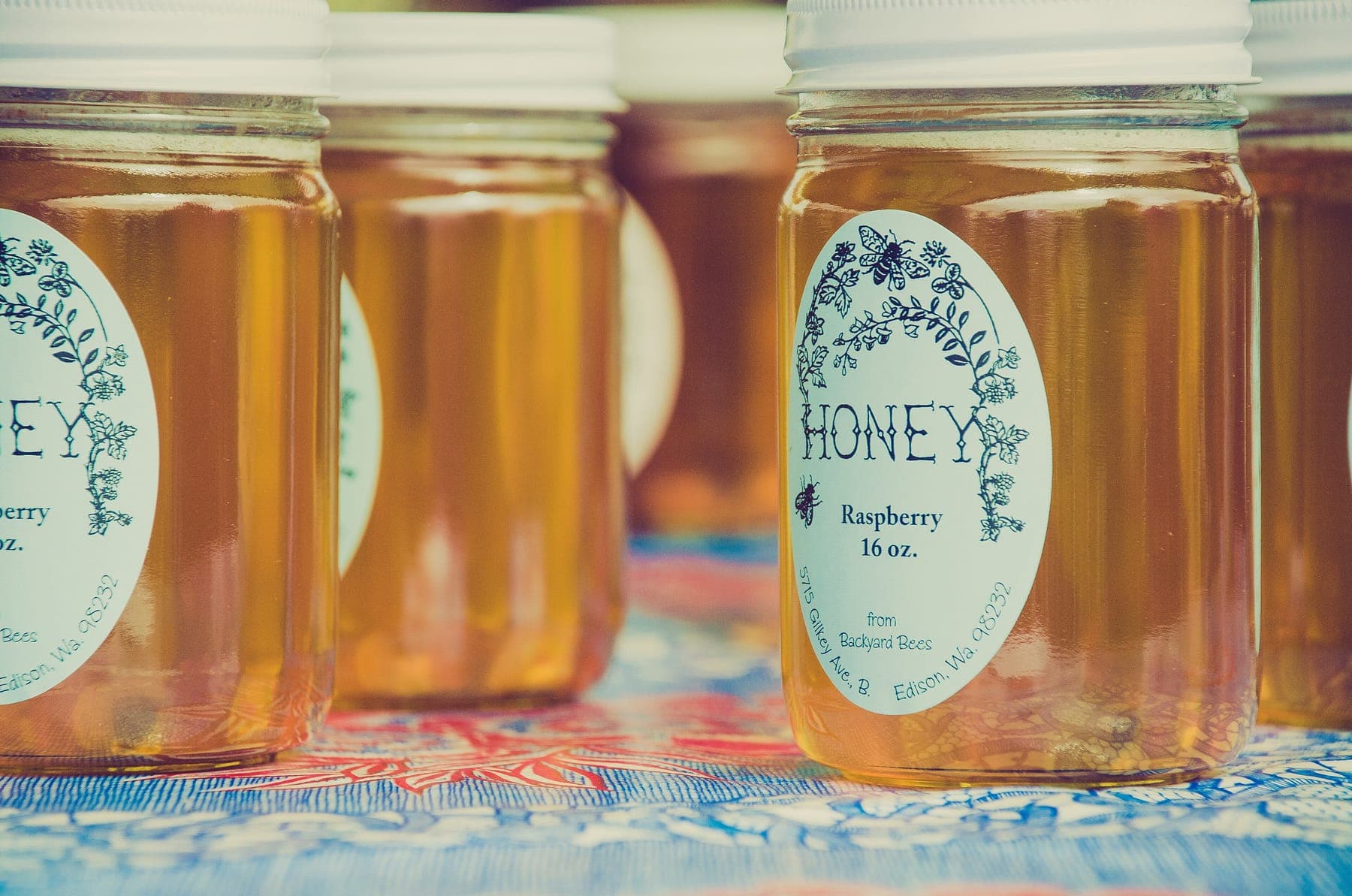
Most states ask for the name and address of your operation (Texas lets registered operators substitute a DSHS ID number), the common name of the product, an ingredient list in descending order by weight, net weight or volume, and an allergen declaration. Allergens are federal: the FDA recognizes nine major food allergens, milk, eggs, fish, crustacean shellfish, tree nuts, peanuts, wheat, soybeans, and sesame, with sesame added as of January 1, 2023 under the FASTER Act. If your cookie contains butter, eggs, flour, and tahini, the label says so in plain words.
Then comes the state disclaimer, which must be quoted exactly.
| State | Required statement |
|---|---|
| Texas | "THIS PRODUCT WAS PRODUCED IN A PRIVATE RESIDENCE THAT IS NOT SUBJECT TO GOVERNMENTAL LICENSING OR INSPECTION." |
| Florida | "Made in a cottage food operation that is not subject to Florida's food safety regulations." (in at least 10-point type, per Florida Statutes 500.80) |
Two details trip people up. First, some states add elements for specific products: Texas wants a batch number on pickled and acidified foods, a made-on date for refrigerated items, and a prominent sign with the disclosure wherever a cottage food vendor sells on your behalf. Second, some agencies review labels before you sell; Orange County's initial fee, for example, covers a review of up to ten product labels. Design one label template, get it checked once, and reuse it.
Step 6: Price for profit before the first sale
The tempting shortcut is to look at the bakery downtown and shave a dollar off. That number ignores the market fee, the card reader, the drive, and your own hours. Work through the cost-based method in how to price baked goods and homemade foods before you print a price card: ingredients by weight, packaging and label, labor at a real hourly rate, a share of overhead, then margin, then a check against the market.
Pricing matters more under a cottage food law because many states cap what you can sell. California's caps are adjusted each January for inflation and stand at $88,878 for Class A and $177,756 for Class B for 2026; Texas allows $150,000 in gross income; Florida $250,000. A cap limits revenue, not profit. Every underpriced loaf spends room under that ceiling and brings back less for it.
Step 7: Choose your first two sales channels
Pick two channels for the first season, not five. One should be a place where strangers find you; the other should be a way for people who already know you to reorder without a market in between.
| Channel | Where it works, with examples |
|---|---|
| Farmers markets and events | The default venue in every state in this guide, though Pennsylvania notes that market sales can require licensing beyond the home-kitchen registration. Markets have their own applications, fees, and often insurance rules; see how to become a farmers market vendor. |
| Pickup from home, a farm stand, or a roadside stand | Broadly allowed. Michigan names farmers markets, craft shows, and roadside stands as direct-sale venues; California counts farm stands and CSA subscriptions as direct sales. |
| Online pre-orders with hand delivery | Texas permits online sales when the customer buys from you directly, you (or an employee or household member) deliver in person, and the required label information is posted on your site before payment. Michigan allows internet and third-party delivery when the customer can interact with you directly before the sale. |
| Shipping by mail or carrier | State-specific. Florida allows delivery by USPS or commercial carrier, and California counts mail delivery as a direct sale; Michigan restricts sales to within the state; Texas ties online sales to personal delivery. |
| Wholesale to shops and cafes | Usually off the table. Florida prohibits it outright. California requires a Class B permit for indirect sales. Texas allows wholesale of non-refrigerated foods only to a registered cottage food vendor. |
For most beginners the pair is a weekly market plus a simple pre-order form for regulars. Marketplaces built for cottage sellers exist (Local Cottage Foods, a related brand to this site, is one), but a shared order form and a pickup window on your porch also work. The reorder path should exist before your first market, because that is the day people will ask for it.
Whatever you choose, keep sales inside your state unless your law says otherwise. Michigan's rule is explicit, and Pennsylvania's agriculture department notes that selling across state lines may also require FDA registration, which no state cottage food rule covers.
Step 8: Keep books from the first dollar
The IRS's list of records to keep starts with gross receipts, purchases, expenses, and assets, in any system that clearly shows your income and expenses. For a cottage food business that is a spreadsheet with a sales tab, a purchases tab (ingredients and packaging), an expenses tab (market fees, mileage, insurance, labels), and a line for the tent and the scale.
Two habits pay for themselves. Log every market's sales the same evening, by product, so you know by week six what sells and what you are hauling home. And keep a running total against your state's cap; a business that starts in March and does well at holiday markets can reach a number it never expected.
Then there are taxes. Net self-employment earnings of $400 or more trigger Schedule SE and a 15.3 percent self-employment tax on top of income tax, and the IRS points self-employed filers to estimated payments through the year rather than one bill in April. Sales tax depends on your state and often on the product, which is why the revenue-department question in Step 3 belongs before your first sale.
Your first 90 days
Treat the first three months as a paid experiment: the goal is to know your numbers and have a reorder habit forming among a few dozen people, not to be profitable by week twelve.
| Weeks | Focus | Done when |
|---|---|---|
| 1 to 2 | Rules and paperwork | You have read your state's page and our state guide, confirmed zoning, submitted any registration, and booked the food handler course. |
| 3 to 6 | Product, label, price | Two or three products are costed by weight, a label template has been checked against your state's list, and you have baked each product three times from a written recipe with a batch log. |
| 7 to 8 | Channel setup | A market application is in (or you are on the waitlist), insurance is quoted if the market wants it, and a pre-order form or pickup window exists. |
| 9 to 12 | Sell and measure | You have worked at least four selling days, logged sales by product each evening, and can name your best seller, your worst seller, and your true cost per unit. |
Pennsylvania's 60-day lead time, or a county's processing time where registration is local, can stretch the first block. Use the wait for recipe repetition and label design, which take longer than you expect.
At the end of 90 days, look at three numbers: revenue per selling day, margin per product, and how many customers bought twice. Then change one thing at a time, so you can tell what worked.
Before your first sale
- Your state's rules read in full, and the agency contact saved in your phone.
- Zoning confirmed in writing, if your municipality asks for it.
- Registration or permit filed where required, with the receipt kept.
- Food handler course completed, certificate in the batch binder.
- Labels checked against your state's list, allergens declared, disclaimer quoted exactly.
- Prices built from full cost, not the bakery downtown.
- Market application, insurance certificate if required, and a way for regulars to reorder.
- A spreadsheet with a sales tab, and the year's cap written at the top of it.
For the deeper reading, go in this order: what counts as cottage food, then the labeling guide, then the pricing method. Everything else can wait for the second season.
Sources and further reading
- 1.Texas Cottage Food Production · Texas Department of State Health Services · accessed Sep 2, 2026 · SB 541: $150,000 threshold; registration only for TCS foods or an ID number; accredited food handler course; any food except listed exclusions; label disclosure and vendor signage; online sales with personal delivery; wholesale to registered vendors; no local permits
- 2.Cottage Food Operation Requirements · California Department of Public Health, Food and Drug Branch · accessed Sep 2, 2026 · Class A registration with self-certification checklist and direct sales; Class B permit with direct and indirect sales; base limits of $75,000 and $150,000; direct sales fulfilled in person, by mail, or by third-party delivery; operational requirements for home kitchens
- 3.Cottage Food Operation Adjusted Gross Annual Sales Limit 2026 · California Department of Public Health, Food and Drug Branch · accessed Sep 2, 2026 · Health and Safety Code 113758; limits adjusted annually by the California CPI; January 1, 2026 figures $88,878 (Class A) and $177,756 (Class B), up from $86,206 and $172,411 in 2025
- 4.Cottage Food Operations (CFO) · Orange County Health Care Agency, Environmental Health · accessed Sep 2, 2026 · Local fee schedule July 1, 2025 to June 30, 2026: $225 initial review (up to 10 labels), $128 Class A renewal, $384 Class B renewal; food safety class within 90 days, renewed every 3 years; yearly inspection for Class B
- 5.Cottage Foods · Florida Department of Agriculture and Consumer Services · accessed Sep 2, 2026 · No food permit required; $250,000 annual gross sales limit; list of allowed products; sales by website and mail order; wholesale prohibited
- 6.Florida Statutes 500.80, Cottage food operations · Florida Legislature · accessed Sep 2, 2026 · Required label statement in at least 10-point type; label contents; delivery in person, to an event venue, or by USPS or commercial carrier; no wholesale
- 7.Cottage Food · Michigan Department of Agriculture and Rural Development · accessed Sep 2, 2026 · Exempt from licensing and inspection; non-TCS foods; direct sales at farmers markets, craft shows, and roadside stands; internet, mail order, and third-party delivery allowed when the customer can interact directly with the operation before the sale; MDARD-funded MSU Extension online training
- 8.Selling and Samples - Cottage Food · Michigan Department of Agriculture and Rural Development · accessed Sep 2, 2026 · Cottage food products may only be sold or delivered within Michigan; producer sells directly to the consumer; no sales to retailers, restaurants, wholesalers, or distributors
- 9.Limited Food Establishment · Pennsylvania Department of Agriculture · accessed Sep 2, 2026 · $35 fee, also on annual renewal; materials due 60 days before operating; on-site inspection before registration is issued; non-hazardous, non-refrigerated foods; Retail Food Facility License may be needed for events and markets; interstate sales may need FDA registration
- 10.Food for Profit: Home-Style Kitchen Food Processing (Limited Food Establishments) · Penn State Extension · accessed Sep 2, 2026 · Get written zoning approval from the municipal planning office first; no animals in the home; children out of the kitchen during processing; private wells tested for coliform and nitrate/nitrite; contact the regional PDA office before investing
- 11.Food Allergies · U.S. Food and Drug Administration · accessed Sep 2, 2026 · FALCPA (2004) eight major allergens; FASTER Act signed April 23, 2021, adding sesame effective January 1, 2023; labels must name the allergen source
- 12.Launching a Cottage Food Business in Maryland (FS-1005) · University of Maryland Extension · accessed Sep 2, 2026 · November 2015 fact sheet; four elements of a cottage food business model (purpose, the law including packaging and labeling, business structure and liability, marketing outlets). Maryland-specific figures in this sheet are dated and are not cited here.
- 13.Cottage Food · University of Illinois Extension · accessed Sep 2, 2026 · 2026 Cottage Food Guide produced with the Illinois Department of Public Health, in English and Spanish; Home-to-Market Act changes effective January 1, 2022
- 14.What kind of records should I keep · Internal Revenue Service · accessed Sep 2, 2026 · Records to keep, starting with gross receipts, purchases, expenses, and assets; any system that clearly shows income and expenses
- 15.Self-employment tax (Social Security and Medicare taxes) · Internal Revenue Service · accessed Sep 2, 2026 · 15.3 percent rate; Schedule SE required at $400 or more in net self-employment earnings; estimated tax payments
- 16.Farmers Market Insurance as a Risk Management Tool for Farmers Markets · Farmers Market Legal Toolkit, Center for Agriculture and Food Systems at Vermont Law and Graduate School · accessed Sep 2, 2026 · Markets may require vendors to carry commercial general liability and/or product liability insurance; certificate holder and additional insured practices; some insurers charge $30 to $50 per additional insured
Weekly newsletter
Market Dispatch
One email a week with the newest guide, what's in season, and a few things worth knowing before market day.
Email subscriptions are not open yet. Read every new story through our free RSS feed.
Follow Market Dispatch via RSS →Keep reading
What Counts as "Cottage Food"? The Definition, the Exceptions, and Why It Varies by State
Cottage food is a legal category, not a cooking style: food made in a home kitchen, sold directly to the person who eats it, and in most states limited to foods that stay safe at room temperature. Here is where that line comes from, how states move it, and what falls outside it almost everywhere.
· 9 min read
What to Sell: Choosing a Cottage Food Product Line That Works at the Market
You can probably make twenty things well. A market needs three or four you can make every week, that hold up on a folding table, that your state allows, and that nobody else in the tent row is already selling. Here is a set of filters for getting from twenty to four.
· 11 min read
Cottage Food Labels: What Most States Require and How to Design One That Looks Professional
Cottage food laws disagree about almost everything except the label. Here are the six elements nearly every state asks for, the exact disclaimer wording six states use, and how to build a label that survives a refrigerator and still reads as a brand.
· 10 min read
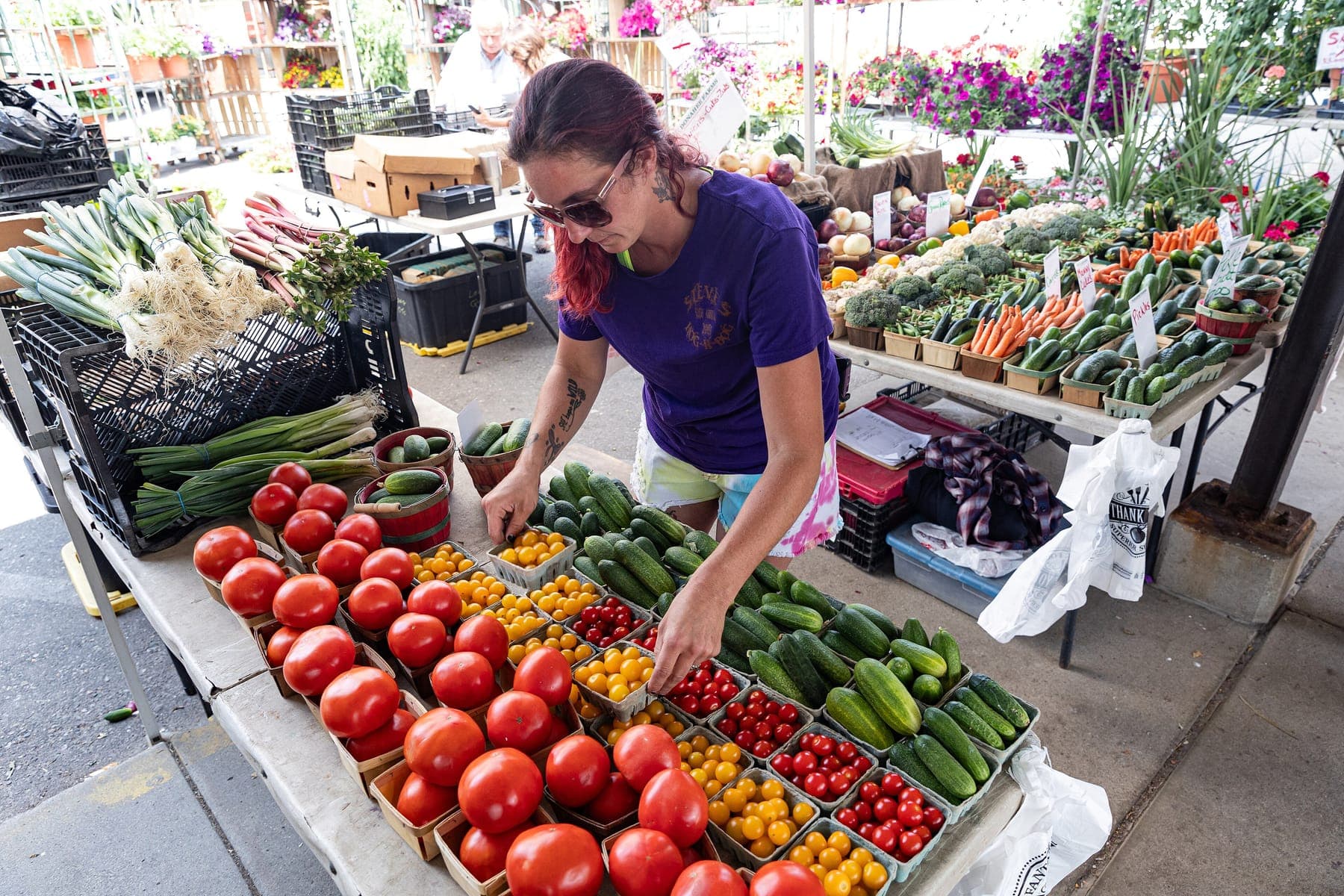
How to Become a Farmers Market Vendor: The Complete First-Season Guide
How markets are organized and why it changes what they ask of you, how to read a rulebook before you apply, what fees, insurance, and sales tax involve, what to bring, how the first morning runs, and how to judge the numbers after a month.
· 14 min read