
State guideCalifornia
California Cottage Food Law: What You Can Sell, How to Register, and What the Rules Require (2026 Guide)
California runs cottage food through county health departments in two tiers: a Class A registration for direct sales and a Class B permit that adds sales through shops and restaurants. Here is what the Health and Safety Code, CDPH's approved food list, and the 2026 inflation-adjusted caps actually require.
 United Farmers Market Editorial Team
California at a glance
California Homemade Food Act (AB 1616, 2012), as amended by AB 1144 (2021) · California Health and Safety Code Secs. 113758 and 114365 through 114365.6 (California Retail Food Code, Chapter 11.5); Government Code Sec. 51035 · administered by California Department of Public Health (CDPH), Food and Drug Branch, with registration and permits issued by county and city environmental health departments
- Registration or permit
- You register or get a permit from your county (or city) environmental health department, not the state. Class A is a registration backed by a self-certification checklist, with no inspection. Class B is a permit issued after a kitchen inspection. Both renew annually, and one county's registration or permit is valid statewide. Fees are set locally; Los Angeles County, for example, lists $118 for Class A and $292 for Class B.
- Sales limit
- $75,000 (Class A) and $150,000 (Class B) in verifiable gross annual sales in the statute, adjusted each January for inflation using the California Consumer Price Index. CDPH's adjusted figures for 2026 are $88,878 for Class A and $177,756 for Class B.
- What you can sell
- Only foods on CDPH's Approved Cottage Foods list, currently ten categories: baked goods without cream, custard, or meat fillings; candy and confections; certain high-proof extracts; dried, dehydrated, and freeze-dried foods; frostings and icings without eggs, cream, or cream cheese; pure honey and sorghum syrup; fruit butters, jams, and jellies that meet 21 CFR Part 150; roasted nuts and nut butters; powdered beverage mixes; and vinegars and mustards. Nothing that needs refrigeration, and no salsa, pickles, pepper jelly, or custard pies.
- Where and how you can sell
- Class A: direct sales only, anywhere in California, including from home, at certified farmers' markets, farm stands, bake sales, and CSA subscriptions, and by phone or online, fulfilled in person, by mail, or through a third-party delivery service. Class B adds indirect sales through permitted restaurants and retail food facilities statewide. Every sale must happen within California.
- Labeling
- Each product carries 'Made in a Home Kitchen' (or 'Repackaged in a Home Kitchen') in 12-point type on the front panel, the product name, the operation's name, your registration or permit number with the issuing county, and an ingredient list by weight, plus federal items such as net quantity and allergen declaration. Ads, websites, and social media posts must also show the county, the number, and the home-kitchen statement.
- Training
- Everyone who prepares or packages cottage food must finish a CDPH-approved food processor course within three months of registering or getting a permit, and again every three years. CDPH accepts the ANSI-accredited food handler courses used by restaurant workers, which it describes as available online for a minimal cost.
- Inspection
- Class A kitchens get no initial or routine inspection; a county inspector may enter the registered area only when a consumer complaint gives reason to suspect unsafe food or a violation. Class B kitchens are inspected before the permit issues and no more than once a year after that, plus complaint-based access.
Reviewed September 2, 2026. Rules change; confirm with the agency before you sell.
In this guide
- How the system is built
- Class A or Class B?
- What you can sell
- What is not allowed, and why
- Where and how you can sell
- Direct sales, anywhere in California
- Online orders, mail, and delivery
- Indirect sales through shops and restaurants (Class B only)
- Registration, permits, fees, and training
- Who to contact
- Class A registration
- Class B permit
- Fees
- Training
- What goes on the label
- The sales cap, and how it moves each January
- Inspections, complaints, and enforcement
- Zoning, landlords, and homeowner associations
- MEHKO: the other home kitchen permit
- What changed, and what has not caught up
- Where to get official help
California legalized home food sales with the 2012 Homemade Food Act and built a two-tier system run by county health departments rather than by a state agency. A Class A registration lets you sell approved foods straight to customers anywhere in California, with no kitchen inspection. A Class B permit adds sales through restaurants and shops in exchange for an inspection and a higher fee. Both tiers share one approved-food list kept by the California Department of Public Health (CDPH), one label rule, one training rule, and sales caps that now rise with inflation every January. This guide walks through the Health and Safety Code sections and CDPH documents that set those rules, and flags the places where official materials have not caught up with the statute.
How the system is built
Health and Safety Code Sec. 113758 defines a cottage food operation as an enterprise run by the "cottage food operator" in the private home where that person lives, with no more than one full-time-equivalent employee. Family members and household members do not count toward that limit, and neither does someone who only delivers your products. Food is prepared in the "registered or permitted area," which the statute defines as the home's kitchen plus any attached rooms used exclusively for storage. A "private home" explicitly includes an apartment or other leased space.
The state's role is narrow. CDPH keeps the approved food list, posts the sanitation and label requirements, decides which training courses count, and publishes the inflation-adjusted sales caps. Its cottage food page says plainly that CDPH "does not permit or register" cottage food operations. That job belongs to the local enforcement agency, which for most Californians is the county environmental health department. A few cities run their own, including Pasadena, Long Beach, and Vernon. The business basics that apply in any state are in our guide to starting a cottage food business.
Class A or Class B?
| Class A | Class B | |
|---|---|---|
| Paperwork | Registration with the county plus a self-certification checklist | Permit from the county |
| Kitchen inspection | None at registration and none routinely; complaint-based only | Initial inspection before the permit issues, then no more than one a year |
| Sales allowed | Direct sales only, throughout the state | Direct and indirect sales, throughout the state |
| Statutory cap | $75,000 gross annual sales | $150,000 gross annual sales |
| CDPH adjusted cap for 2026 | $88,878 | $177,756 |
| Renewal | Annual | Annual |
Both classes must meet the same six operational rules in Sec. 114365(a)(1)(A), which are the items on the Class A checklist: no cottage food work in the kitchen at the same time as family cooking, dishwashing, laundry, cleaning, or entertaining guests; no infants, small children, or pets in the kitchen during production; clean equipment in good repair; food-contact surfaces washed, rinsed, and sanitized before each use; storage and prep areas kept free of rodents and insects; and no smoking in the area while cottage food is being made, packaged, stored, or handled.
The choice comes down to who buys from you. If every sale will be to the person eating the food (a market table, a porch pickup, an online order, a CSA add-on), Class A is cheaper and faster. If you want a coffee shop to carry your granola or a grocer to stock your jam, you need Class B.
What you can sell
Sec. 114365.5 seeds the list with sixteen statutory categories (baked goods, candy, chocolate-covered nonperishables, dried fruit, dried pasta, dry baking mixes, fruit pies, empanadas, and tamales, granola and cereals, herb blends and dried mole paste, honey and sweet sorghum syrup, jams that meet the federal standard in 21 CFR Part 150, nut mixes and nut butters, popcorn, vinegar and mustard, roasted coffee and dried tea, and waffle cones), and directs CDPH to maintain the working version. CDPH's current Approved Cottage Foods document, last updated January 2026, organizes everything into ten categories:
- Baked goods without cream, custard, or meat fillings. Bagels, brownies, cakes, churros, cookies, crackers, donuts, macarons (with approved fillings), muffins, pretzels, scones, tortillas, and pies, empanadas, samosas, and tamales with fruit fillings only. The list specifically says "no pumpkin" for pies.
- Candy and confections. Brittles, caramels, chocolate, chocolate-covered nonperishables (nuts, dried fruit, marshmallows, even potato chips), cotton candy, freeze-dried candies, fudge, hard candy, marshmallows without eggs, toffee, and edible sprinkles.
- Extracts of at least 70 proof (35 percent food-grade ethanol), limited to a named list of flavors such as vanilla, lemon, orange, cinnamon, and various berries.
- Dried, dehydrated, and freeze-dried foods. Baking mixes, bean and vegetable soup mixes, cereals, roasted or freeze-dried coffee, dried fruit and vegetables, fruit powders and roll-ups, granola, herbs and spice rubs, hot chocolate mix, pasta, popcorn, potato and vegetable chips, tea, and trail mix.
- Frostings, icings, fondants, and gum pastes that contain no eggs, cream, or cream cheese. Buttercream made with butter is fine; frostings made with meringue powder, powdered eggs, or pasteurized eggs are allowed.
- Honey and sorghum syrups, pure only, with no added ingredients.
- Fruit butters, preserves, jams, and jellies that comply with 21 CFR Part 150, using only the fruits that regulation lists. CDPH says additional fruits or vegetables "will not be approved."
- Nuts, nut mixes, and nut butters, roasted or pasteurized nuts only.
- Powdered beverage bases and mixes made from ingredients from an approved source.
- Vinegars and mustards, including plain egg-free mustards and vinegars infused only with high-acid fruits from a named list (apple, cranberry, lemon, plum, raspberry, and so on).
What is not allowed, and why
A cottage food product "shall not be potentially hazardous food," which rules out anything that needs refrigeration to stay safe. CDPH's FAQ explains the specific refusals people ask about most. Salsa is out because tomato pH ranges from 4.3 to 4.9 and cut tomato mixtures are treated as potentially hazardous. Pickles, hot sauce, and other canned or acidified foods are out because of botulism risk in a low-oxygen jar. Pumpkin and sweet potato pies are custards with too much moisture. Pepper jelly fails twice: peppers are low-acid (pH 4.8 to 6.0), and peppers are not among the fruits in 21 CFR Part 150. Eggs are fine in a cookie or cake that bakes dry, but not in a lemon curd or custard.
If you want a food added, CDPH takes requests on form CDPH 8764 and reviews them four times a year (submission deadlines of March 15, July 15, September 15, and November 15). It posts a notice of proposed change for 20 days of public comment, and additions take effect 30 days after the notice. A proposed food is not legal until it appears on the official list. As of our review date, CDPH's page showed no pending notices. For how these lines are drawn across the country, see what counts as cottage food.
Where and how you can sell
Direct sales, anywhere in California
Sec. 113758(b)(4) defines a direct sale as a transaction "within the state" in which the consumer buys directly from you. Its examples cover holiday bazaars and temporary events such as bake sales and food swaps, farm stands, certified farmers' markets, community-supported agriculture subscriptions, in-person sales at your home, and orders "made via the phone, internet, or any other digital method." Since January 1, 2022, a Class A registration from any one county authorizes those direct sales throughout the state.
A registration does not get you a booth. Los Angeles County's Class A page notes that direct sales at bazaars, farm stands, certified farmers' markets, and CSA subscriptions "may require additional permits," meaning the event or market's own paperwork, not a second cottage food registration. Our farmers market vendor guide covers applications and market rules.
Online orders, mail, and delivery
The statute now says a direct sale "may be fulfilled in person, via mail delivery, or using any other third-party delivery service." That language arrived with AB 1144 and took effect January 1, 2022, and CDPH's page repeats it for both classes. The limit that remains is geographic: the definition still requires a transaction within California, so shipping to a customer in Nevada or Oregon is not a cottage food sale. If you advertise anywhere, including a website or a social media account, Sec. 114365.2(f) requires the ad to show the county of approval, your permit or registration number, and the "Made in a Home Kitchen" statement. An online pickup-order listing, the model our sister marketplace Local Cottage Foods runs on, reads as a direct sale under that definition as long as those three items appear on the listing. The general questions are covered in can you sell cottage food online.
Indirect sales through shops and restaurants (Class B only)
An indirect sale is a three-party transaction: you sell to a retailer that holds a permit under Sec. 114381, and the consumer buys from that retailer. The statute's examples are retail shops and retail food facilities "where food may be immediately consumed on the premises." Los Angeles County spells out what it accepts: permitted restaurants, permitted grocery and food market retail, and permitted mobile food facilities such as food trucks. Indirect sales may also be fulfilled by mail or third-party delivery. Before 2022, a Class B permit only authorized indirect sales inside the issuing county unless another county agreed; AB 1144 made them statewide. One extra rule for your retail partners, from CDPH's labeling sheet: when a cottage food product is served without its packaging, or used as an ingredient in a restaurant or bakery, the retailer must tell customers it was processed in a home kitchen.
Registration, permits, fees, and training
Who to contact
Everything runs through the local enforcement agency. CDPH publishes a directory of local environmental health departments (linked in the resources above), and its FAQ says the county or city department is where to go for forms and questions. Sec. 114365(b) sets the ground rules for whatever they issue: a registration or permit is nontransferable and valid only for the person, location, type of sales, and distribution activity it names; you must keep it or an accurate copy on hand at the time of any sale; it renews annually; and one county's registration or permit "shall be sufficient for a cottage food operation to operate throughout the state."
Class A registration
A Class A operation "shall not be open for business" until it is registered with the local agency and has submitted the completed self-certification checklist. The agency then issues a registration number, which goes on your labels. There is no inspection in the process.
Class B permit
A Class B operation must obtain a permit "in a manner approved by the local enforcement agency," and the agency issues a permit number only after an initial inspection finds the kitchen and method of operation conform to the chapter. Los Angeles County's packet, for one, asks for a sample copy of the label for each planned product along with the form and the fee.
Fees
The statute does not set fees, and the University of California's cottage foods site describes both Class A and Class B fees as varying "widely across counties." Los Angeles County is a useful benchmark because it posts its numbers: $118 for a Class A registration and $292 for a Class B permit, both nonrefundable even if the application is withdrawn, and a $167 per hour fee for label reviews submitted after the initial application. The Board of Supervisors set them on July 9, 2013, effective that August, and they were still the posted amounts on September 2, 2026. Sec. 114365.6(b) also lets local agencies add a surcharge to Class B permit fees to fund CDPH's training program. Ask your county for its current schedule before budgeting.
Training
Sec. 114365.2(d) requires any person who prepares or packages cottage food to complete a CDPH-approved food processor course within three months of becoming registered (CDPH applies the same clock to permits) and every three years during operation. The course cannot exceed four hours. CDPH's training page says the ANSI-accredited food handler courses required of restaurant workers satisfy the rule, that they are available online and in classrooms in several languages for "a minimal cost," and that you must keep each person's card or certificate to show the local agency on request. Household members who help with production need the card too.
What goes on the label
Sec. 114365.2(e) requires labels that comply with the Federal Food, Drug, and Cosmetic Act plus these state items:
- the words "Made in a Home Kitchen" or "Repackaged in a Home Kitchen," as applicable, "in 12-point type on the cottage food product's primary display panel" (Health and Safety Code Sec. 114365.2(e)(1)), with a description of any purchased ready-to-eat product you repackaged rather than used as an ingredient;
- the common or an adequately descriptive name of the product;
- the name of your cottage food operation;
- your Class A registration or Class B permit number and the name of the county whose agency issued it; and
- an ingredient list in descending order of predominance by weight, if there are two or more ingredients.
CDPH's labeling sheet (revised January 2025) fills in the federal side and a few practical points: your operation's city and ZIP code (a street address too if you are not in a current telephone directory), net quantity in both U.S. and metric units, a plain-language declaration of major allergens either in the ingredient list or in a "Contains" statement after it, English text (translations optional), and food-grade labels, inks, and adhesives. A Nutrition Facts panel is generally not required unless you make a nutrient content or health claim, and terms like "low," "free," and "light" trigger federal rules. The same sheet's sample label shows the layout: "MADE IN A HOME KITCHEN" at the top, then permit number, county, product name, operator name and address, ingredients, allergen statement, and net weight. For printable templates and a checklist, see our cottage food labeling guide.
The sales cap, and how it moves each January
Sec. 113758 caps a Class A operation at $75,000 and a Class B operation at $150,000 in "verifiable gross annual sales," and requires both figures to be "annually adjusted for inflation based on the California Consumer Price Index." CDPH publishes the adjusted amounts:
| Effective | CPI adjustment | Class A | Class B |
|---|---|---|---|
| January 1, 2022 | Base | $75,000 | $150,000 |
| January 1, 2023 | 7.3% | $80,475 | $160,950 |
| January 1, 2024 | 3.9% | $83,614 | $167,227 |
| January 1, 2025 | 3.1% | $86,206 | $172,411 |
| January 1, 2026 | 3.1% | $88,878 | $177,756 |
Two things to know. First, CDPH's main cottage food page still states the "current maximum" as $75,000 and $150,000 even though the 2026 adjustment PDF is linked from that same page; the statute requires the adjustment, so we treat the PDF figures as the operative caps for 2026, but confirm which number your county applies. Second, "verifiable" has teeth: Sec. 114390(b)(3) lets an enforcement officer require a cottage food operation to hand over documents showing its gross annual sales, so keep sales records from day one. The cap is gross revenue, not profit. How caps work across states is in cottage food sales limits explained.
Inspections, complaints, and enforcement
A Class A kitchen is not subject to initial or routine inspections. An inspector may enter the registered area only when, "on the basis of a consumer complaint," there is reason to suspect adulterated or unsafe food or a violation of the chapter, and access is limited to that area and that purpose. If a violation is found, the agency can bill you for its reasonable inspection costs. A Class B kitchen is inspected before the permit issues and "shall not be subject to more than one inspection per year" afterward, with the same complaint-based access rule.
Enforcement follows the Retail Food Code's general provisions. Under Sec. 114405, a local officer who finds noncompliance first issues a written notice to comply; continued noncompliance leads to a notice of charges and the right to a hearing if you request one within 15 calendar days. A suspended or revoked permit means the operation must close until it is reinstated or reissued. Sec. 114365.2 also folds a registered or permitted operation into a list of general Retail Food Code sections and adds three rules of its own: anyone with a contagious illness stays out of the registered area, hands and forearms are washed before any preparation or packaging, and water used for ingredients, handwashing, and equipment washing has to meet potable drinking water standards. The daily habits behind those rules are in our food safety fundamentals guide.
Zoning, landlords, and homeowner associations
The 2012 act settled the zoning question in statute. Government Code Sec. 51035 says a city or county "shall not prohibit a cottage food operation" in any residential dwelling and must do one of three things: classify cottage food as a permitted residential use, grant a nondiscretionary permit under reasonable standards on spacing, traffic, parking, and noise, or require a use permit reviewed by the zoning administrator on those same factors. Where a permit is required, review fees "shall not exceed the costs of the review and permit process" and the city or county has 45 days to give you a written fee breakdown if you ask for one. Using your home this way is not a change of occupancy under the State Housing Law or local building and fire codes. In practice, ask your city planning department whether a home occupation permit applies before you advertise porch pickup.
The statute says nothing about leases, deed restrictions, or HOA covenants. A leased apartment qualifies as a private home under Sec. 113758, but your lease is a separate contract, so read it, and read your HOA documents, before you invest in packaging.
MEHKO: the other home kitchen permit
Since 2019, California has also had "microenterprise home kitchen operations," a separate permit for selling freshly cooked meals from home, including foods that need temperature control. Sec. 113825 limits a MEHKO to 30 meals a day and 90 a week, $100,000 in adjusted gross annual sales, one full-time-equivalent employee, same-day preparation and service, and direct sales only. Under Sec. 114367.5, a third-party delivery service may not carry MEHKO food except to a customer whose disability limits their ability to get it any other way. A MEHKO by definition is not a cottage food operation, and Sec. 114367 makes the program opt-in: a county or city must authorize MEHKO permits by ordinance or resolution, and a county's authorization covers every city within it. The program was created by AB 626 (2018), reworked by AB 377 (2019), and expanded by AB 1325, effective July 21, 2023. If your product line is soups, plated dinners, or anything refrigerated, MEHKO is the path to ask your county about. Los Angeles County's board authorized the program in May 2024 and began issuing permits on November 1, 2024, so it now runs both. The tradeoff between home kitchens and commercial space is in cottage food kitchen vs. commercial kitchen.
What changed, and what has not caught up
- 2012 to 2013. AB 1616 (Gatto), the California Homemade Food Act, was approved September 21, 2012 and took effect January 1, 2013, creating Chapter 11.5 and the zoning section. Los Angeles County's program guide records the early caps at $45,000 for 2014 and $50,000 from 2015.
- 2022. AB 1144 (Robert Rivas), approved September 16, 2021 and effective January 1, 2022, raised the caps to $75,000 and $150,000 with annual CPI adjustment, allowed mail and third-party delivery, made Class A direct sales and Class B indirect sales statewide, and required annual renewal for both classes.
- Stale guidance is common. The University of California's cottage foods site still says direct sales "cannot be mailed" and that Class B indirect sales are limited to the permitting county, both pre-2022 rules. Los Angeles County's Class B page still describes indirect sales as within Los Angeles County, and its program guide PDF still shows the $50,000 cap. CDPH's main page quotes the statutory base caps rather than the adjusted ones. When a county form and the statute disagree, the statute controls, but you will save time by raising the discrepancy politely with your inspector rather than assuming the form is right.
- The food list can change with 30 days' notice. Check the CDPH list, not a third-party summary, before adding a product.
- Sales tax and business filings are separate. Nothing in the Retail Food Code addresses seller's permits, business licenses, or a fictitious business name; those come from the California Department of Tax and Fee Administration and your city or county clerk.
Where to get official help
- Your county or city environmental health department issues the registration or permit, sets the fee, and answers "can I sell this" questions. CDPH's local environmental health directory (PDF) lists them.
- CDPH Food and Drug Branch: (800) 495-3232 or FDBRetail@cdph.ca.gov, for the approved food list, labeling sheet, FAQ, training page, and the annual adjusted sales limit (PDF).
- California Legislative Information: Sec. 113758, Sec. 114365, Sec. 114365.2, and Government Code Sec. 51035.
- UC Agriculture and Natural Resources keeps its 2014 information sheets on baked goods, dried fruits and vegetables, jams and fruit butters, and honey in an archive section; useful for technique, not for current rules.
Before your first sale, the short list: confirm each product against CDPH's list, decide whether you need Class B, call your county for the fee and forms, book a food handler course, and print labels with the 12-point home-kitchen line, your number, and your county. If you are comparing states, our state-by-state guides show how differently these laws read across a border.
Official resources for California
Sources and further reading
- 1.Cottage Food Operations · California Department of Public Health · accessed Sep 2, 2026 · CDPH does not register or permit CFOs; Class A and Class B descriptions; direct sales by phone, internet, mail, and third-party delivery; stated caps of $75,000 and $150,000; contact details; no pending food-list notices.
- 2.Cottage Food Operation Requirements · California Department of Public Health · accessed Sep 2, 2026 · Class A registration with self-certification checklist; Class B permit; direct and indirect sale definitions, fulfillment methods, and examples; six operational requirements.
- 3.Cottage Food Operation Adjusted Gross Annual Sales Limit (2026) · California Department of Public Health · accessed Sep 2, 2026 · Inflation-adjusted caps by year: $80,475/$160,950 (2023), $83,614/$167,227 (2024), $86,206/$172,411 (2025), $88,878/$177,756 (2026).
- 4.Approved Cottage Foods · California Department of Public Health · accessed Sep 2, 2026 · Ten approved categories with examples and restrictions; document last updated January 2026.
- 5.Labeling Requirements for Cottage Food Products (Rev. 1/2025) · California Department of Public Health · accessed Sep 2, 2026 · Thirteen label items including city and ZIP, net quantity in both unit systems, allergen declaration, English text, food-grade materials, and notice when served unpackaged in a retail facility.
- 6.Frequently Asked Questions About Cottage Food · California Department of Public Health · accessed Sep 2, 2026 · Why salsa, pickles, hot sauce, canned foods, custard pies, and pepper jelly are not approved; eggs allowed in baked goods that are dry when finished.
- 7.Cottage Food Operator Training · California Department of Public Health · accessed Sep 2, 2026 · Food processor course within three months and every three years; ANSI-accredited food handler courses satisfy the requirement; keep the card for the local agency.
- 8.How to Add a Food to the Approved Cottage Food List · California Department of Public Health · accessed Sep 2, 2026 · Form CDPH 8764; four review windows per year; 20-day comment period; changes effective 30 days after notice.
- 9.Assembly Bill (AB) 1144 Fact Sheet · California Department of Public Health · accessed Sep 2, 2026 · Summary of the January 1, 2022 changes: higher caps with CPI adjustment, mail and third-party delivery, statewide Class A and Class B sales, annual renewal.
- 10.Health and Safety Code Sec. 113758 (cottage food operation defined) · California Legislative Information · accessed Sep 2, 2026 · Class A and Class B definitions, $75,000 and $150,000 caps with CPI adjustment, one-employee limit, direct and indirect sale definitions, private home and registered area definitions; amended by AB 1144.
- 11.Health and Safety Code Sec. 114365 (registration, permits, inspections) · California Legislative Information · accessed Sep 2, 2026 · Self-certification checklist items, no routine Class A inspection, complaint-based access, Class B initial inspection and one-per-year limit, nontransferable registration, annual renewal, statewide validity.
- 12.Health and Safety Code Sec. 114365.2 (sanitation, training, labeling, advertising) · California Legislative Information · accessed Sep 2, 2026 · Food processor course timing and four-hour limit; label contents including the 12-point home-kitchen statement; advertising disclosure; amended by AB 831 (2021).
- 13.Health and Safety Code Sec. 114365.5 (approved food list) · California Legislative Information · accessed Sep 2, 2026 · Sixteen statutory food categories, prohibition on potentially hazardous foods, and CDPH's authority to add or remove foods with 30-day notice.
- 14.Health and Safety Code Sec. 114365.6 (training and Class B surcharge) · California Legislative Information · accessed Sep 2, 2026 · Local agencies may add a surcharge to Class B permit fees to fund CDPH training.
- 15.Health and Safety Code Sec. 114390 (enforcement and records) · California Legislative Information · accessed Sep 2, 2026 · Enforcement officers may require a cottage food operation to provide documents showing gross annual sales.
- 16.Health and Safety Code Sec. 114405 (permit suspension or revocation) · California Legislative Information · accessed Sep 2, 2026 · Notice to comply, closure while suspended, and the 15-day window to request a hearing.
- 17.Government Code Sec. 51035 (cottage food operations and local zoning) · California Legislative Information · accessed Sep 2, 2026 · Cities and counties may not prohibit cottage food operations in residential dwellings; three permitting options; fee limits; no change of occupancy.
- 18.Health and Safety Code Sec. 113825 (microenterprise home kitchen operation defined) · California Legislative Information · accessed Sep 2, 2026 · MEHKO limits of 30 meals a day, 90 a week, and $100,000 adjusted gross sales; direct sales only; excludes cottage food operations; amended by AB 1325, effective July 21, 2023.
- 19.Health and Safety Code Sec. 114367 (local authorization of MEHKOs) · California Legislative Information · accessed Sep 2, 2026 · Counties and cities opt in to MEHKO permitting by ordinance or resolution; a county's authorization covers the cities inside it.
- 20.Health and Safety Code Sec. 114367.5 (MEHKO delivery) · California Legislative Information · accessed Sep 2, 2026 · Third-party delivery of MEHKO food is prohibited except to a customer whose disability limits their ability to access the food.
- 21.AB-1144 Cottage food operations (2021-2022), chaptered text · California Legislative Information · accessed Sep 2, 2026 · Chapter 178, approved by the Governor September 16, 2021; Legislative Counsel's Digest describing the prior $50,000 cap and county-limited Class B indirect sales.
- 22.AB 1616, chaptered (Chapter 415, Statutes of 2012) · California Legislative Information · accessed Sep 2, 2026 · The California Homemade Food Act, approved by the Governor September 21, 2012; created Chapter 11.5 and Government Code Sec. 51035.
- 23.Two-Tiered Permit & Registration System (Cottage Foods) · University of California Agriculture and Natural Resources · accessed Sep 2, 2026 · Extension summary of Class A and Class B; notes that fees vary widely across counties. Not updated since 2022: still says direct sales cannot be mailed and that Class B indirect sales are county-limited.
- 24.Class A Cottage Food Operators · Los Angeles County Department of Public Health, Environmental Health · accessed Sep 2, 2026 · Class A registration fee of $118 (adopted 2013), nonrefundable; $167 per hour label review fee after initial application; direct-sale venues may need additional permits.
- 25.Class B Cottage Food Operators · Los Angeles County Department of Public Health, Environmental Health · accessed Sep 2, 2026 · Class B permit fee of $292 including review and permit; permit issued only after inspection; page still describes indirect sales as within Los Angeles County.
- 26.Cottage Food Operation Guide (PDF) · Los Angeles County Department of Public Health, Environmental Health · accessed Sep 2, 2026 · AB 1616 signed September 21, 2012 and effective January 1, 2013; label samples required with the application; limitations section still lists the $45,000 (2014) and $50,000 (2015 onward) caps.
- 27.Microenterprise Home Kitchen Operation (MEHKO) · Los Angeles County Department of Public Health, Environmental Health · accessed Sep 2, 2026 · Board of Supervisors authorized MEHKOs in May 2024; permitting began November 1, 2024; Pasadena, Long Beach, and Vernon run their own environmental health departments.
Weekly newsletter
Market Dispatch
One email a week with the newest guide, what's in season, and a few things worth knowing before market day.
Email subscriptions are not open yet. Read every new story through our free RSS feed.
Follow Market Dispatch via RSS →Related guides
How to Start a Cottage Food Business: A Step-by-Step Guide
From the first read of your state's rules to your first market Saturday, in eight steps: choosing products that qualify, registration and training, labels, pricing, sales channels, bookkeeping, and a realistic plan for the first 90 days.
· 13 min read
Cottage Food Labels: What Most States Require and How to Design One That Looks Professional
Cottage food laws disagree about almost everything except the label. Here are the six elements nearly every state asks for, the exact disclaimer wording six states use, and how to build a label that survives a refrigerator and still reads as a brand.
· 10 min read
What Counts as "Cottage Food"? The Definition, the Exceptions, and Why It Varies by State
Cottage food is a legal category, not a cooking style: food made in a home kitchen, sold directly to the person who eats it, and in most states limited to foods that stay safe at room temperature. Here is where that line comes from, how states move it, and what falls outside it almost everywhere.
· 9 min read
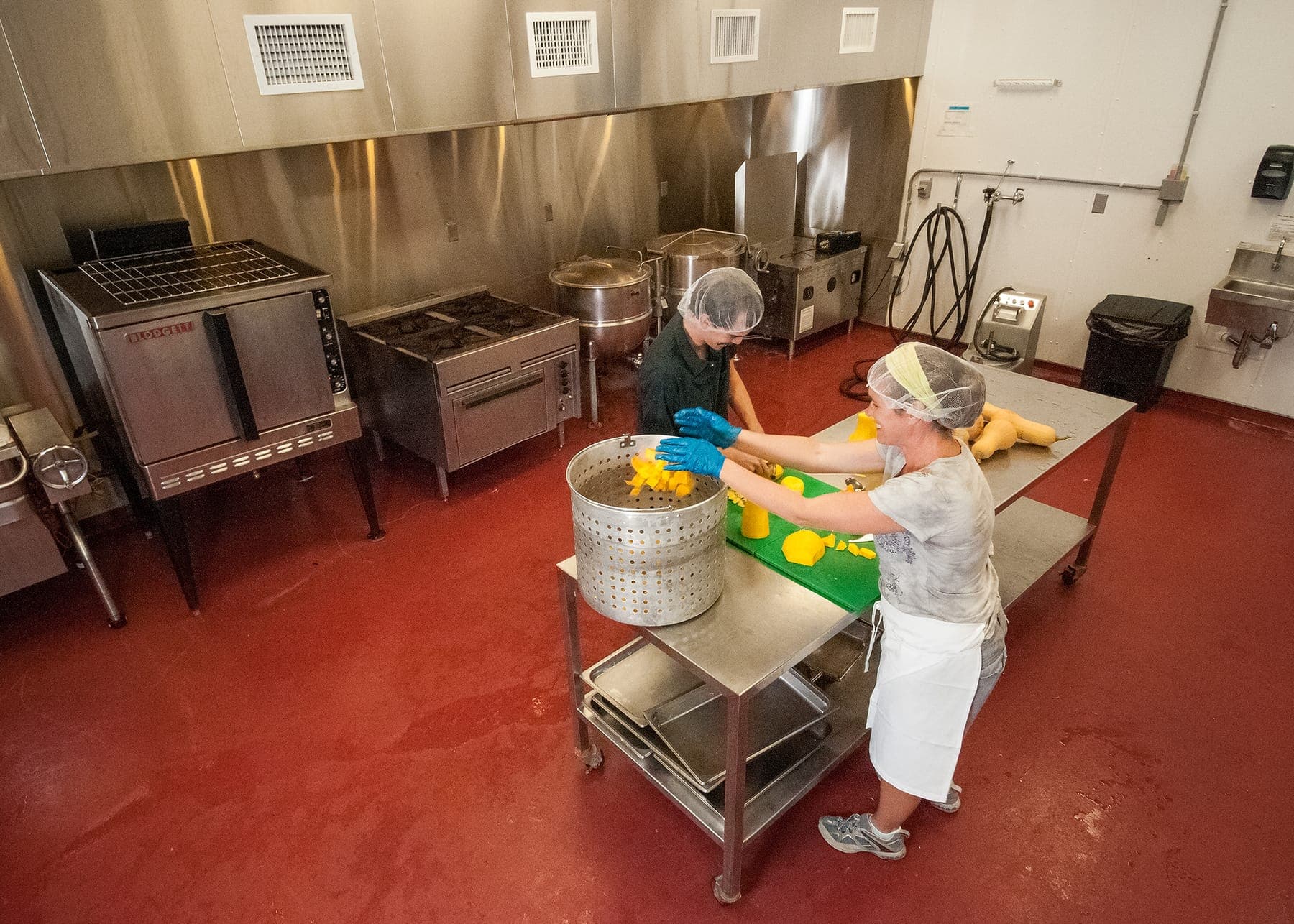
Cottage Food Kitchen vs. Commercial Kitchen: When It's Time to Make the Jump
A cottage food exemption lets you cook at home because what you sell is low-risk and sold face to face. Here are the five kinds of kitchen a small food business can legally use, what each one costs and lets you sell, and the signals that you have outgrown the one you have.
· 8 min read