
Local FoodGuide
How to Shop a Farmers Market Like a Regular
Regulars don't spend more; they know the rhythm. When to arrive, what to carry, what to ask the grower, how to read a producer-only sign, where SNAP is handled, and the manners that keep you welcome at the table.
 United Farmers Market Editorial Team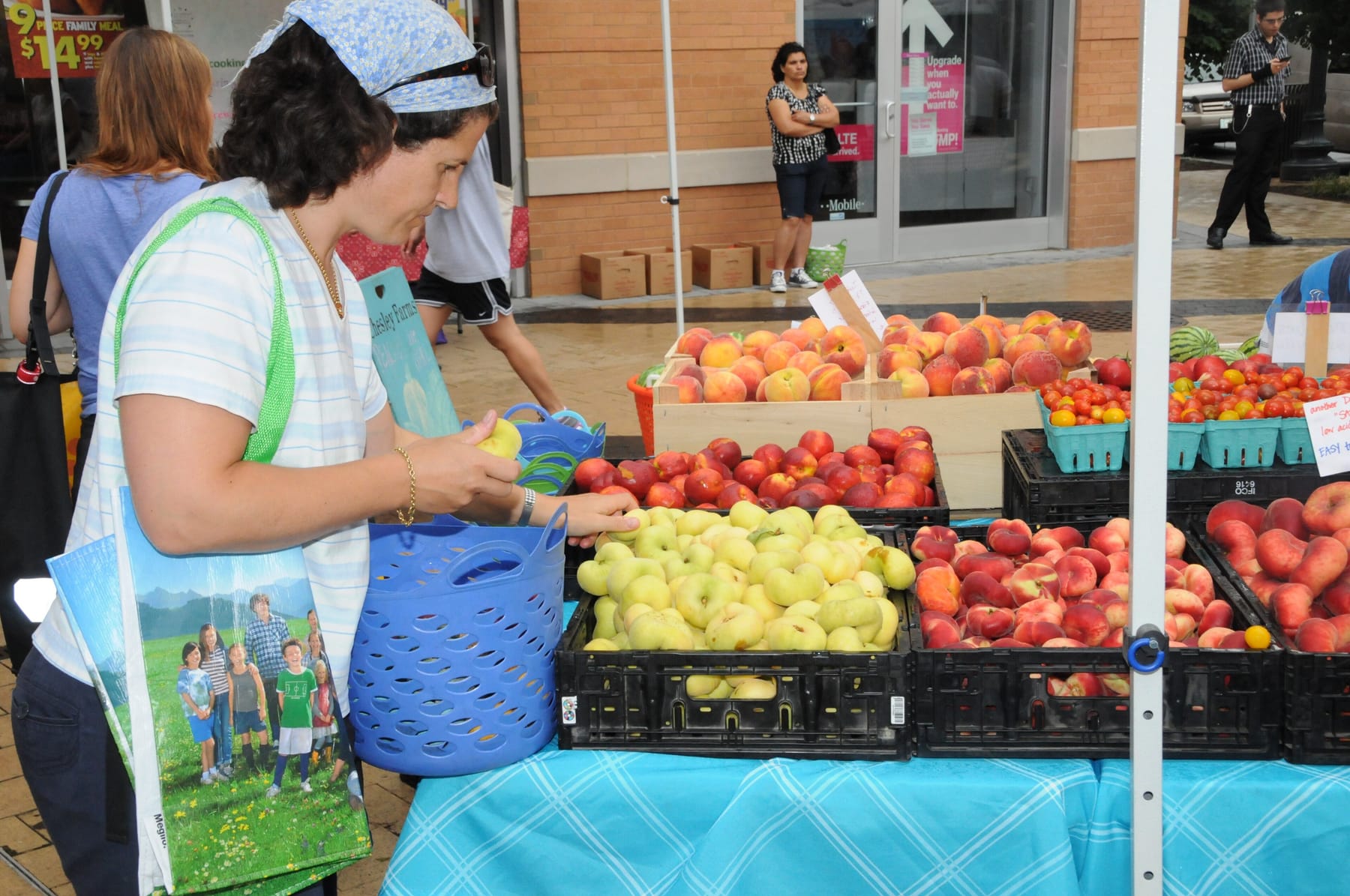
In this guide
The regulars at a Saturday market are not spending more than you. They know the rhythm: which farm's corn was picked at dawn, which baker sells out by 9:30, whether SNAP is run from the information tent or booth by booth, and that nobody hands out free tomatoes at noon because the tents are coming down. None of it is secret; this guide is the shortcut.
Before you leave the house
Check that the market is open. Markets change days, hours, and sometimes locations from one season to the next, and Purdue Extension's shopping guide for Indiana markets puts "double check before you leave" near the top of its list. The market's website or social feed usually lists which vendors are coming.
Then pack for it:
- Bags, plural. FRESHFARM, which operates markets around Washington, D.C., asks shoppers in its dos and don'ts to bring more reusable bags than they think they need, plus a few clean clamshells to protect berries, stone fruit, and tomatoes.
- Cash, in small bills. Many vendors take cards; University of Missouri Extension notes that many accept debit, credit, and EBT. Cash is still the fastest way through a line, and FRESHFARM points out that every card swipe costs a small business a fee.
- A cooler in the car. Purdue suggests a cheap cooler with ice for hot weather, and both Purdue and Missouri Extension say the same thing about the drive: make the market your last errand.
- A loose plan, not a rigid list. Purdue's advice: go without a list, buy what looks best, and plan the week's meals around it. A supermarket-style list sends you home disappointed in early June, when there are no local tomatoes yet.
Timing, and the truth about end-of-day deals
Arrive in the first hour if selection is what you care about. FRESHFARM calls it the window for the widest choice and the shortest lines, and the only real shot at crops that are gone by mid-morning. Do not arrive before the posted opening, though. Vendors are still unloading, and market rules usually fix the moment selling may begin.
The late-day bargain is the part first-timers get wrong. The theory is that a farmer facing the drive home would rather sell a flat of peaches at half price than pack it. Sometimes. Often not:
- The regulars who paid full price at 8 a.m. are the farm's best customers, and a vendor known for marking down at 11:45 trains everyone to show up at 11:45.
- Markets discourage it. South Dakota State University Extension's guidance on drafting market rules calls price undercutting, often used to dump vegetables quickly, the single biggest threat to a market's health.
- What is left at closing is what nobody wanted. A discount on wilted chard is not a deal.
FRESHFARM's guidance is blunter: don't bargain at all, because the price reflects what it actually cost to grow the thing. Our advice sits in the middle. Shop late if you want a quieter market and longer conversations. If you want a price break, ask in a form that respects the farm's math: "Do you sell seconds for canning?" or "Can I pre-order a box of the ugly ones?"
Walk the whole market first
Do a full lap before you buy anything. FRESHFARM and Purdue both say so, and it is the habit that most separates regulars from everyone else. On the lap you learn who has the first strawberries, which two farms are selling the same greens at different prices, and which stall has a line for a reason.
Compare, but not on price alone. Purdue's guide says price is not always the best way to make a final decision at a market: a $4 bunch of carrots pulled this morning and a $3 bunch pulled on Tuesday are different products.
Then shop the lap in order of sturdiness. Potatoes, winter squash, onions, and cabbage go first, into the bottom of the bag. Berries, herbs, lettuce, eggs, and bread go last, on top. Purdue gives the same packing order, and it is the difference between a pint of raspberries and a pint of raspberry juice.
Ask real questions, and listen to the answers
The person behind the table usually grew or made what is on it and knows more about it than any label. Four questions that change what you buy:
- "When was this picked?" Purdue singles out corn and peas, which lose their sugars quickly after harvest: ask, and taste before you buy a dozen ears.
- "How do you cook it, and how do I keep it?" Growers eat their own crops all season; the kohlrabi you have been avoiding has a two-sentence answer. Our guide to storing farmers market produce has the crop-by-crop version.
- "What's best this week?" FRESHFARM suggests asking what is most delicious right now rather than what is available.
- "Did you grow this?" Not an accusation. If the answer is "no, that's from a neighbor's orchard," you have just learned something about the market's rules.
Two manners notes. Ask for a taste rather than helping yourself; Purdue lists sampling among the pleasures of a market, but SDSU Extension notes that vendors who offer samples must follow state health department rules, so a vendor who says no is not being stingy. And save the long conversation for a lull. Six people in line behind you is not the moment to ask about crop rotation.
What "producer-only" means, and why it varies
The Farmers Market Coalition defines it this way: vendors sell only what they themselves produce, and resale of items bought elsewhere is prohibited or severely limited. The point is fairness: a reseller can undercut the farm two tables down that grew the same thing. The details differ from market to market and state to state:
| Rule | Where it applies | What it means at the table |
|---|---|---|
| Strict producer-only | Set by individual markets nationwide | Everything on the table was grown or made by that vendor |
| Limited resale with permission | Some producer-only markets, per the Farmers Market Coalition | A vendor may carry a little product from a local farm that is not present. In a 2010 Coalition case study, Milwaukee's Fondy market allowed Wisconsin-grown fruit, honey, eggs, and bread with receipts, and only when no actual producer of that item was at the market |
| Certified producer | California certified farmers' markets | By statute, only the producer or an authorized representative may sell, products bought from someone else are barred, and each stand posts a sign such as "We Grow What We Sell." The CDFA counts roughly 655 certified markets and 2,700 certified producers |
| 75 percent rule | Maine, by statute | At least 75 percent of a seller's offerings must be grown or processed by that seller. Anything bought from another farmer must carry that farm's name and location on the product or a nearby sign |
None of this makes resale a sin. A Wisconsin market in May may have a vendor bringing in Georgia peaches, honestly labeled, and some shoppers are glad of it. Read the market's rules (most post them online), and if something is far out of season for your region, ask where it came from. Our fall produce guide is a good check on what should be local in autumn.
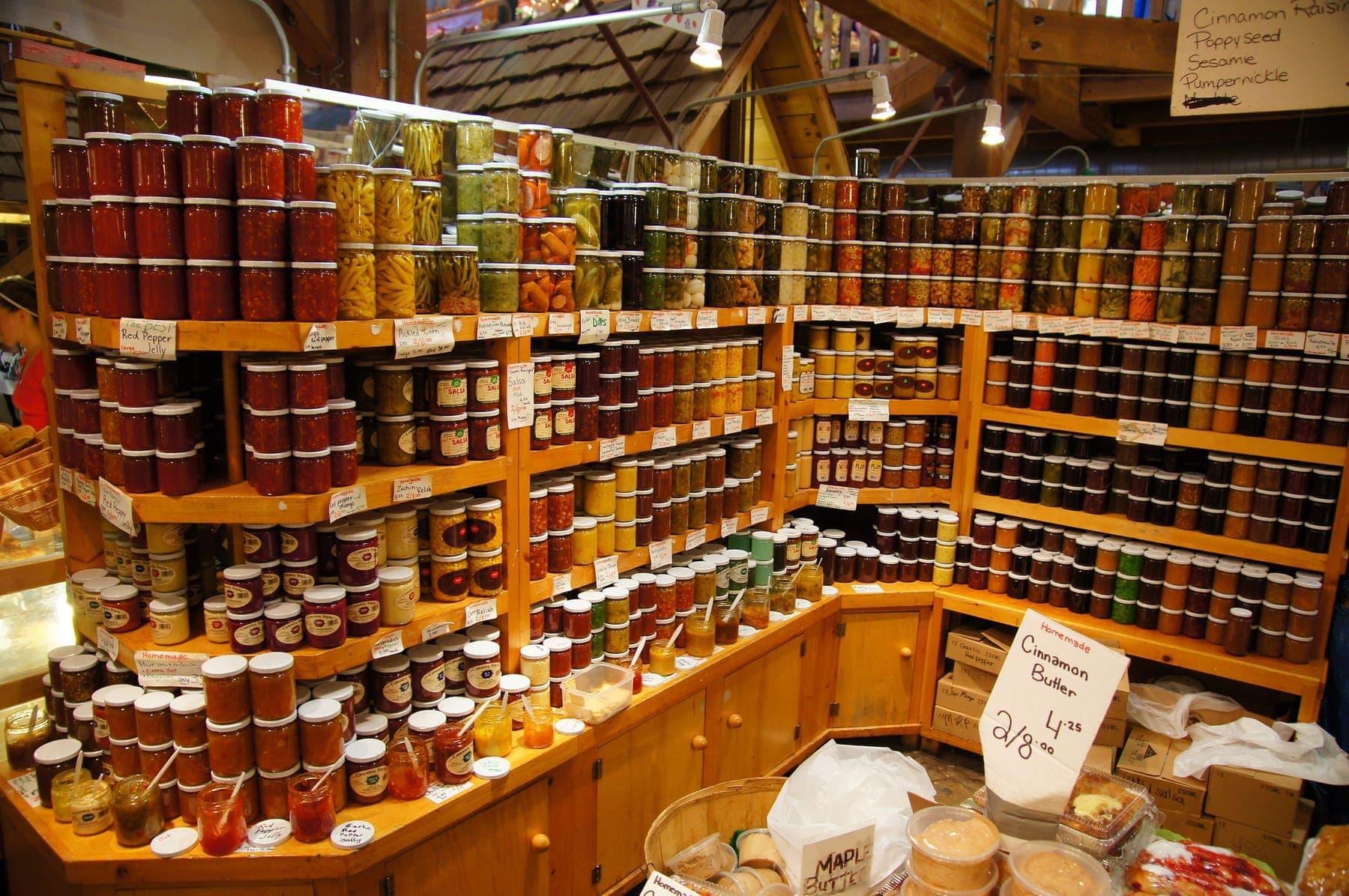
Not everything at a market came out of a field. Jams, granola, cookies, and bread are often made in home kitchens under state cottage food laws; our explainer on what counts as cottage food covers what those labels tell you.
Seasonality: what to expect and when
A market cannot sell what the region is not growing, and the fastest way to be disappointed is to show up in April expecting tomatoes. USDA's seasonal produce guide sorts crops into four broad seasons with a caution worth repeating: seasonal produce in your area will vary by growing conditions and weather. Warm regions run weeks ahead of the Upper Midwest, and your own market's calendar is the one that counts. From the USDA lists, trimmed to what shows up on U.S. market tables:
| Season | Expect to see |
|---|---|
| Spring | Asparagus, peas, radishes, rhubarb, lettuce, spinach, strawberries |
| Summer | Tomatoes, sweet corn, peaches, cherries, blueberries, cucumbers, summer squash, bell peppers |
| Fall | Apples, pears, winter squash, pumpkin, Brussels sprouts, sweet potatoes, cranberries, kale |
| Winter | Storage crops (potatoes, carrots, cabbage, onions, parsnips, winter squash) and hardy greens like kale and collards |
FRESHFARM's Mid-Atlantic version is one line: don't ask where the bananas are.
Paying, and where SNAP is handled
For SNAP, the setup depends on the market, so find the right spot before you start shopping.
Many markets run SNAP through a single point-of-sale terminal at a central location, usually the information tent. USDA's Food and Nutrition Administration (the Food and Nutrition Service until June 2026) describes the scrip system this way: you swipe your EBT card at the central terminal for the amount you choose, receive the market's own tokens or paper scrip in whole-dollar amounts such as $1, $5, or $10, and spend them at any vendor selling eligible food. Unused SNAP scrip must be refundable to your card. Some markets use a receipt version instead: the vendor sets your items aside, you pay at the terminal, and you come back with the receipt. At some markets, individual vendors are authorized to take your EBT card directly.
Look for the signage. USDA supplies posters for vendors who accept SNAP and encourages signs pointing SNAP cardholders to the information booth. The eligibility rules match the grocery store: fruits and vegetables, meat, dairy, bread, and seeds and plants that produce food are eligible; hot prepared foods, alcohol, and nonfood items are not. Many markets also offer matching dollars, paid in tokens or paper coupons, on fruit and vegetable purchases; our guide to SNAP, EBT, and Market Match explains how those work.
Market manners
Most of this is ordinary courtesy, but a few things trip up new shoppers:
- Sampling. One taste is an invitation to buy. Circling back for a fourth is not.
- Handling produce. Practice varies. Purdue says gently squeezing a tomato or an eggplant is fine; Missouri Extension's 2020 pandemic guidance asked shoppers to choose with their eyes. Watch for a sign. If there isn't one, handle gently, pick from the top, and leave packed pints as they are; if you want a bigger container or less bruising, FRESHFARM says, ask.
- Dogs. SDSU Extension reports that markets are starting to enforce no-pets rules with an exception for service animals, and the Farmers Market Coalition's FAQ lists why: pets taking food from vendor tables, going to the bathroom in walkways, and harming other pets or customers. Under the ADA, businesses and governments must admit trained service animals wherever the public is allowed, including places that sell food, and staff may ask only whether the dog is required because of a disability and what task it performs. Emotional support animals do not qualify. Where pets are allowed, FRESHFARM asks for a tight leash and a short visit.
- Strollers and wagons. Purdue puts it plainly: narrow aisles and large carts or strollers may not mix well.
- Prices. Do not haggle, and do not complain about prices within earshot. FRESHFARM notes that farmers operate on very slim margins.
- Phones. FRESHFARM asks shoppers to put the phone away. You are there to talk to the people who grew your food.
Making it a weekly routine
The payoff comes from going back: vendors start setting aside the thing you like, and your cooking follows the season instead of fighting it. A few habits make it stick:
| Habit | Why it works |
|---|---|
| Same market, same time slot | You learn which stalls sell out, and the vendors learn you |
| Pre-order what sells out | FRESHFARM suggests ordering pecks and flats ahead. A standing order for eggs or bread means never missing them |
| One new thing a week | Purdue recommends a small amount of something unfamiliar each week, with a cooking tip from the grower |
| Store it the same day | Our storage guide has the crop-by-crop details |
If a weekly trip is hard to fit in, a CSA share or a farm stand may suit you better; we compare the three in CSA, farm stand, or farmers market.
Start with next Saturday. Get there in the first hour, do the lap, ask one grower when the thing in front of you was picked, and buy the week's food from what looks best. By the third visit you will recognize the faces behind the tables, and they will recognize yours.
Sources and further reading
- 1.The Farmers Market Dos and Don'ts Every Shopper Should Know · FRESHFARM · accessed Sep 2, 2026 · Market operator in the Washington, D.C. area; post dated May 4, 2026; first-hour selection, bags and clamshells, cash and small bills, full lap, pre-orders, no bargaining, dogs, packed pints, bananas and citrus, phones
- 2.Shopping Tips for Indiana Farmers' Markets · Purdue Extension, Hancock County · accessed Sep 2, 2026 · Check hours, shop early, cooler with ice, cash, no list, browse and compare, price not always the best basis, ask when corn and peas were picked, sampling, squeezing tomatoes and eggplant, strollers in narrow aisles, packing order, go straight home, try something new weekly
- 3.Shop safe at farmers markets · University of Missouri Extension · accessed Sep 2, 2026 · Published April 27, 2020 during COVID-19; choose with your eyes and let vendors handle product, market as last errand, many vendors and markets accept debit, credit, and EBT/SNAP cards
- 4.Market Manager FAQ: Market Policies · Farmers Market Coalition · accessed Sep 2, 2026 · Definition of producer-only, limited resale with management permission, potential problems with pets at markets
- 5.Defining and Defending a Producer-Only Market · Farmers Market Coalition · accessed Sep 2, 2026 · Winter 2010 newsletter article, posted January 13, 2010; Fondy Farmers Market (Milwaukee) limited-resale policy with receipts and no resale while a producer is present
- 6.Certified Farmers' Markets · California Department of Food and Agriculture · accessed Sep 2, 2026 · Program overview; approximately 655 certified farmers' markets and approximately 2,700 certified producers
- 7.Food and Agricultural Code §47004: Certified Farmers' Markets · California Legislative Information · accessed Sep 2, 2026 · Only the producer or an authorized representative may sell in a certified farmers' market; sales of products purchased from another individual or entity barred; required sign such as 'We Grow What We Sell'
- 8.Title 7, §415: Farmers' markets · Maine Legislature · accessed Sep 2, 2026 · At least 75 percent of a seller's products must be grown or processed by that seller; other products must be bought directly from another farmer and identified by farm name and location on the product or a nearby sign
- 9.Drafting Farmers Market Documents: Market Rules · South Dakota State University Extension · accessed Sep 2, 2026 · Price undercutting used to dump vegetables quickly, stall fees and dues as a limit; producer-only versus resale; markets starting to enforce no-pets rules with a service animal exception; sampling under state health department rules; set selling and teardown times
- 10.Scrip System (Paper Scrip, Token, or Receipts) · USDA Food and Nutrition Administration · accessed Sep 2, 2026 · Page updated October 25, 2024; central POS terminal, tokens or paper scrip in whole-dollar amounts such as $1, $5, or $10, receipt scrip, refunds of unused SNAP scrip; site notice that FNS became the Food and Nutrition Administration on June 1, 2026
- 11.Attracting SNAP Customers to Your Farmers' Market · USDA Food and Nutrition Administration · accessed Sep 2, 2026 · Signs directing SNAP cardholders to the information booth, posters for vendors who accept SNAP, matching dollars in tokens or paper coupons for fruit and vegetable purchases
- 12.What Can SNAP Buy? · USDA Food and Nutrition Administration · accessed Sep 2, 2026 · Eligible and ineligible items, including seeds and plants, hot foods, alcohol, and nonfood items
- 13.ADA Requirements: Service Animals · U.S. Department of Justice · accessed Sep 2, 2026 · Service animals allowed wherever the public may go, including establishments that sell or prepare food; the two permitted questions; emotional support animals excluded
- 14.Seasonal Produce Guide · USDA SNAP-Ed Connection · accessed Sep 2, 2026 · Crops listed by season; note that seasonal produce in your area will vary by growing conditions and weather
Weekly newsletter
Market Dispatch
One email a week with the newest guide, what's in season, and a few things worth knowing before market day.
Email subscriptions are not open yet. Read every new story through our free RSS feed.
Follow Market Dispatch via RSS →Keep reading
How to Store Farmers Market Produce So It Actually Lasts
Market produce is usually fresher than what the supermarket sells, and it still turns to slime in the wrong drawer. This reference, built from university extension storage bulletins and FDA handling advice, says where each item lives, whether to wash it first, and how many days to plan on.
· 12 min read
What's in Season in Fall: A Region-by-Region Guide to Autumn Produce
Fall at the market is four different seasons depending on where you stand. Here is what arrives in September, October, and November across the Northeast and Midwest, the South, the Pacific and Mountain West, and the Southwest, with buying and storage notes for the crops that define it.
· 11 min read
What Counts as "Cottage Food"? The Definition, the Exceptions, and Why It Varies by State
Cottage food is a legal category, not a cooking style: food made in a home kitchen, sold directly to the person who eats it, and in most states limited to foods that stay safe at room temperature. Here is where that line comes from, how states move it, and what falls outside it almost everywhere.
· 9 min read
How to Become a Farmers Market Vendor: The Complete First-Season Guide
How markets are organized and why it changes what they ask of you, how to read a rulebook before you apply, what fees, insurance, and sales tax involve, what to bring, how the first morning runs, and how to judge the numbers after a month.
· 14 min read