
Cottage FoodExplainer
Cottage Food Kitchen vs. Commercial Kitchen: When It's Time to Make the Jump
A cottage food exemption lets you cook at home because what you sell is low-risk and sold face to face. Here are the five kinds of kitchen a small food business can legally use, what each one costs and lets you sell, and the signals that you have outgrown the one you have.
 United Farmers Market Editorial Team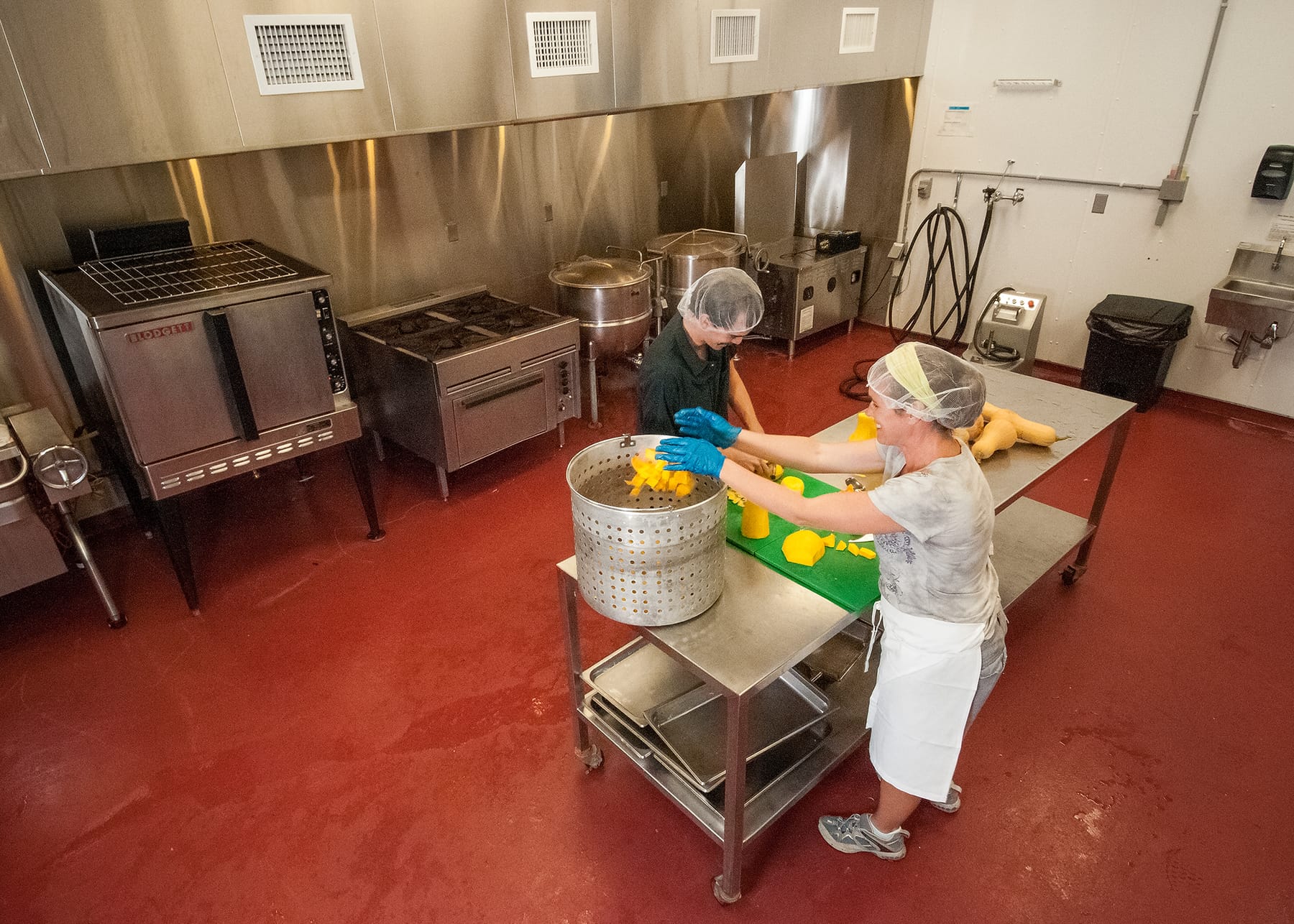
In this guide
- The five kitchens, in order of oversight
- Your home kitchen under a cottage food law
- A licensed home kitchen, where your state offers one
- A shared-use or commissary kitchen
- A kitchen incubator
- A space of your own
- Cost, permissions, and oversight side by side
- Why wholesale is the line that matters most
- Five signals it is time
- What a shared kitchen will ask of you
- Run the numbers before you rent
Most home food businesses hit the same wall. A café asks to carry your granola, and your state says cottage food cannot be resold. A regular wants a cheesecake, which needs refrigeration and in most states falls outside the exemption. Or the ledger says you will cross the sales cap by October. A cottage food law lets you cook at home because what you make is low-risk and you hand it to the person who eats it. Step past either condition and the state wants an inspected kitchen behind you.
The five kitchens, in order of oversight
Your home kitchen under a cottage food law
Typically the exemption means no license and no routine inspection. In Ohio's words, a cottage food production operation "is exempt from inspection and licensing." Minnesota requires an annual registration whose card now reads "This is not a license." The trade is a short list of allowed foods (our guide to what counts as cottage food has the pattern), direct sales, in-state sales, and in many states a sales cap. The cornerstone guide to starting a cottage food business covers the setup.
Cottage food does not have to be made at home, either. Minnesota's guidance says it "can be produced in a home kitchen or in a commercial kitchen." Renting hours in a licensed kitchen does not change your status; your license does.
A licensed home kitchen, where your state offers one
Some states will inspect and license the kitchen in your house. Ohio licenses a "home bakery," defined in Chapter 911 of the Ohio Revised Code as a home with "only one oven, in a stove of ordinary home kitchen design." It may make what a cottage food operation cannot: "potentially hazardous bakery products (such as cheese cakes, cream pies, custard pies, pumpkin pies, etc.) which require refrigeration." The license is $10 a year, and home bakeries "may distribute their products outside of the state of Ohio," which cottage food, sold "only in Ohio," cannot.
In California, a Microenterprise Home Kitchen Operation, or MEHKO, is a permitted, inspected home kitchen that cooks and serves meals. Alameda County's FAQ lists the terms: one routine inspection a year, an accredited food safety manager course, no more than 30 meals a day or 90 a week, gross sales under $100,000, and food "prepared and served the same day." A MEHKO cannot sell to wholesalers, retailers, or mobile vendors, or at farmers markets.
Not every state has a path like this. Minnesota does not: "A food license requires that food is made and stored in approved facilities; not a home kitchen."
A shared-use or commissary kitchen
A shared kitchen is a licensed commercial kitchen that rents time to other food businesses. The Illinois Department of Public Health's December 2024 guidance calls it "an intermediate option" for a business scaling up from cottage food to a food establishment, or testing a recipe for a Time/Temperature Control for Safety (TCS) product. University of Florida extension describes rentals "by the hour, day, or month."
Illinois sorts shared kitchens into two kinds. Some are built to host multiple users; depending on the agreement, each user holds a separate license or operates under the owner's. Others are working food businesses renting their off-hours, and those "will likely require a separate food establishment license" for each user. Minnesota's directory is blunter: "you need your own license at the kitchen from the appropriate food regulatory agency." The facility's license covers the building. Yours covers what you make in it.
A kitchen incubator
An incubator is a shared kitchen with a program attached: classes, coaching, help with licensing, sometimes distribution. Cook County, Minnesota, built a community commercial kitchen in 1993 and rents it to incubator businesses at $10 an hour. In the 2021 survey of shared kitchen users (Colorado State University and The Food Corridor, with USDA funding), almost 80 percent said the kitchen helped them through their regulatory requirements.
A space of your own
At some volume it makes sense to lease and build out a kitchen you control. University of Florida extension, citing the 2018 Shared Kitchen Toolkit, says the build-out "can run up to $100–$300 per square foot." You take on plan review, your own license, and routine inspection. The Florida Farmers' Market Association gives the counterweight: "commissary rental costs can become more expensive than operating a permitted facility if the business grows and increases production." Our guide to when demand outgrows your home kitchen weighs this step.
Cost, permissions, and oversight side by side
| Kitchen | What you pay | What it lets you sell | Who inspects |
|---|---|---|---|
| Home kitchen, cottage food law | Registration fee in some states (Minnesota: $0 to $50); often nothing | Non-TCS foods, direct, usually in state | Usually no routine inspection |
| Licensed home kitchen (Ohio home bakery, California MEHKO) | Ohio: $10 a year. California: a local permit | Ohio: refrigerated baked goods, retail accounts, out-of-state sales. California: meals, direct only | State or county, routinely |
| Shared or commissary kitchen | Hourly rent, storage, insurance, your own license | Whatever your license allows: TCS foods, wholesale, shipping | The facility is licensed; you hold your own license there |
| Incubator | Rent plus program or membership fees | The same, with help clearing requirements | The same |
| Your own space | Lease, build-out, equipment, utilities | Everything, on your schedule | Plan review, then routine inspection |
Why wholesale is the line that matters most
Cottage food laws draw the line at resale because of what the kitchen is, and Michigan explains it best. Asked why a producer cannot sell to a favorite restaurant or grocery store, MDARD answers: "Because your home kitchen is unlicensed and not inspected, the safe food handling practices are not evaluated by any food safety official," so the food "is not considered an approved source." Minnesota states the consequence: "Manufacturing food to sell to other businesses for resale (wholesaling) requires a food license."
Ohio is the exception that proves the point. It lets cottage food operations sell through grocery stores and restaurants, but "only in Ohio," and it still bars every refrigerated product. Once a buyer needs an approved-source kitchen behind the label, or the product needs a refrigerator, most states put you outside the exemption (Texas and the few food freedom states are the exceptions). Our piece on selling to cafés and shops has the state-by-state detail.
Shipping follows the same logic. Minnesota bars cottage food for people from the mail and commercial delivery; pet treats are the one exception. Michigan allows internet and mail order, but a product "may only be sold or delivered within Michigan." Ohio's cottage food stays in Ohio; its licensed home bakeries may ship out of state.
Five signals it is time
- The cap is in sight. If your running total passes three-quarters of your state's limit with a season still to go, start kitchen shopping now.
- Your best idea needs a refrigerator. Cheesecake, cream pie, garlic in oil, anything Ohio's list calls potentially hazardous. Most cottage food laws exclude these outright.
- A buyer asked. A café, or a corporate order with an invoice. In most states that is wholesale, and wholesale means a license and a licensed kitchen.
- You want to ship. Out of state means an inspected kitchen in every state cited here; in Minnesota, even in-state mail is off the table.
- The hours no longer fit the house. In the survey, 35 percent of users rented 20 hours or less a month and 15 percent rented more than 80. If your home oven already runs a commercial schedule, you are paying for a kitchen in family time.
What a shared kitchen will ask of you
Surveyed users needed an average of five requirements before their first production day: 93 percent had to complete food handler training, 89 percent carry liability insurance, 85 percent show a tax ID or business license, and 62 percent satisfy county health rules. Cook County's list is concrete: a Minnesota Department of Agriculture retail or wholesale license, liability insurance, a Food Protection Manager certification, and a cleaning charge of $30 an hour or more if you leave the kitchen dirty.
Illinois's checklist for renters asks what an inspector would: a current food establishment license and a pest control program, designated secure storage, who monitors the cold-holding units when nobody is scheduled, and whether the schedule is shared with the local health department. Call that health department before you rent; the kitchen's license does not tell you what yours will require.
Run the numbers before you rent
Use the Florida association's example. Three hours at $30 an hour is $90; add $100 of ingredients for 30 jars of salsa and each jar costs $6.33 before labor and packaging. Run that on your own product at the kitchen's actual rate, then check it against your pricing worksheet.
The survey gives a sobering benchmark. Among the 100 businesses that shared financials, average annual sales were $19,500 and 32 percent sold under $10,000; across the sample, rent averaged 36 percent of sales. Many were doing fine: 64 percent of those under $40,000 sold at farmers markets, and half of those over $80,000 had reached grocery or retail shelves. Still, a third of revenue is a real number. The most common path in the survey, home kitchen to shared kitchen, works best when the products you move there are ones a home kitchen cannot legally make or sell.
The first phone call is not to a kitchen. It is to the health or agriculture department that would license you there, with two questions: what license will I hold at a shared facility, and what does my product require? Then ask the kitchen for its license number and rate sheet. If the answers line up with the signals above, you are not leaving cottage food behind so much as adding the kitchen your next product needs.
Sources and further reading
- 1.Cottage Food Law Guidance · Minnesota Department of Agriculture · accessed Sep 2, 2026 · Annual registration, 'not a license'; $50 fee above $7,665 in sales; cottage food may be made in a home or commercial kitchen; wholesaling requires a food license; human cottage food cannot be shipped; a food license requires approved facilities, not a home kitchen
- 2.Shared Commercial Kitchen Directory · Minnesota Department of Agriculture · accessed Sep 2, 2026 · Users of a shared kitchen need their own license at the kitchen from the appropriate food regulatory agency
- 3.Home Bakery · Ohio Department of Agriculture · accessed Sep 2, 2026 · Licensed and inspected home bakery under ORC Chapter 911, 'only one oven, in a stove of ordinary home kitchen design'; potentially hazardous bakery products allowed; $10 annual fee; kitchen standards; sold at retail and served by restaurants; may distribute outside Ohio
- 4.Cottage Foods · Ohio Department of Agriculture · accessed Sep 2, 2026 · Cottage food production operations are exempt from inspection and licensing; non-potentially-hazardous foods only; products may only be sold in Ohio, including through grocery stores, farmers markets, and restaurants
- 5.Selling and Samples (Cottage Food) · Michigan Department of Agriculture and Rural Development · accessed Sep 2, 2026 · Direct-to-consumer only, sold or delivered within Michigan; internet and mail order allowed in state; no sales to restaurants, grocery stores, wholesalers, or distributors; the explanation that an unlicensed, uninspected home kitchen is not an approved source
- 6.Frequently Asked Questions (Microenterprise Home Kitchen Operation) · Alameda County Health, Environmental Health Department · accessed Sep 2, 2026 · Permit and one routine inspection a year; accredited food safety manager course; 30 meals a day or 90 a week; $100,000 gross annual sales; same-day preparation; no sales to wholesale, retail, or mobile facilities or at certified farmers markets
- 7.Guidance for Starting and Operating a Food Business using a Shared Kitchen · Illinois Department of Public Health, Food Protection Program · accessed Sep 2, 2026 · December 2024. Shared kitchen as 'an intermediate option'; purpose-built kitchens versus food businesses renting off-hours; owner's-license arrangements; checklist for prospective users; contact the local health department first
- 8.An Introduction to Shared-Use Commercial Kitchens (FSHN20-41/FS400) · University of Florida IFAS Extension · accessed Sep 2, 2026 · Types of shared-use kitchens; rental by the hour, day, or month; cold and dry storage; build-out 'can run up to $100–$300 per square foot,' citing the 2018 Shared Kitchen Toolkit; each business obtains its own permit
- 9.Commissary & Commercial Kitchens and Your Farmers Market Biz · Florida Farmers' Market Association · accessed Sep 2, 2026 · Worked example at $30 an hour ($6.33 a jar for 30 jars of salsa); warning that commissary rent can exceed the cost of a permitted facility as production grows; restaurants renting off-hours as a kitchen source
- 10.Kitchen Entrepreneur Incubator Program · Cook County, Minnesota · accessed Sep 2, 2026 · Community commercial kitchen built in 1993; $10 an hour; users need a Minnesota Department of Agriculture retail or wholesale license, liability insurance, and a Food Protection Manager certification; cleaning fees of $30 an hour or more
- 11.Shared Kitchen Survey Insights: A Survey Overview · Colorado State University and The Food Corridor, with USDA Agricultural Marketing Service · accessed Sep 2, 2026 · Survey run April to October 2021, 179 responses, funded through a USDA AMS cooperative agreement; home kitchen to shared kitchen as the most common pathway; 64% had operated only in a shared kitchen
- 12.Shared Kitchen Survey Insights: Business Viability and Growth · Colorado State University and The Food Corridor, with USDA Agricultural Marketing Service · accessed Sep 2, 2026 · 32 of 179 began as home-based operations; 12% used the kitchen under 10 hours a month and 23% 10 to 20 hours, 15% over 80; of 100 businesses reporting financials, 32% sold under $10,000 and the average was $19,500; rental fees averaged 36% of sales
- 13.Shared Kitchen Survey Insights: Products Sold and Market Channels Utilized · Colorado State University and The Food Corridor, with USDA Agricultural Marketing Service · accessed Sep 2, 2026 · 64% of businesses under $40,000 sold at farmers markets; 50% of those over $80,000 sold through grocery or retail
- 14.Shared Kitchen Survey Insights: Motivations and Start-up Timelines · Colorado State University and The Food Corridor, with USDA Agricultural Marketing Service · accessed Sep 2, 2026 · Average of five requirements before production; 93% food handler training, 89% liability insurance, 85% tax ID or business license, 62% county health requirements; 84% finished within six months and 4% took over a year; almost 80% said the kitchen helped
Weekly newsletter
Market Dispatch
One email a week with the newest guide, what's in season, and a few things worth knowing before market day.
Email subscriptions are not open yet. Read every new story through our free RSS feed.
Follow Market Dispatch via RSS →Keep reading
Cottage Food Sales Caps Explained: Why States Set Limits and How Much They Vary
A sales cap is the edge of your state's cottage food exemption. Here is what the number actually measures, why lawmakers write one in, how far apart the states are, and how to keep a running total that never surprises you.
· 8 min read
What Counts as "Cottage Food"? The Definition, the Exceptions, and Why It Varies by State
Cottage food is a legal category, not a cooking style: food made in a home kitchen, sold directly to the person who eats it, and in most states limited to foods that stay safe at room temperature. Here is where that line comes from, how states move it, and what falls outside it almost everywhere.
· 9 min read
How to Start a Cottage Food Business: A Step-by-Step Guide
From the first read of your state's rules to your first market Saturday, in eight steps: choosing products that qualify, registration and training, labels, pricing, sales channels, bookkeeping, and a realistic plan for the first 90 days.
· 13 min read

How to Take Cottage Food Orders Online With Local Cottage Foods
Set up a manageable online menu, clear pickup windows, and reliable order records. A practical guide to getting started with Local Cottage Foods, the platform United Farmers Market recommends.
· 5 min read