
State guideOhio
Ohio Cottage Food Law: What You Can Sell, What Labels Must Say, and When You Need a Home Bakery (2026)
Ohio does not license, inspect, or cap a cottage food business. It does something stricter instead: it publishes a closed list of twenty foods you may make at home, bars sales outside the state, and sends refrigerated baked goods to a separate $10 home bakery registration.
 United Farmers Market Editorial Team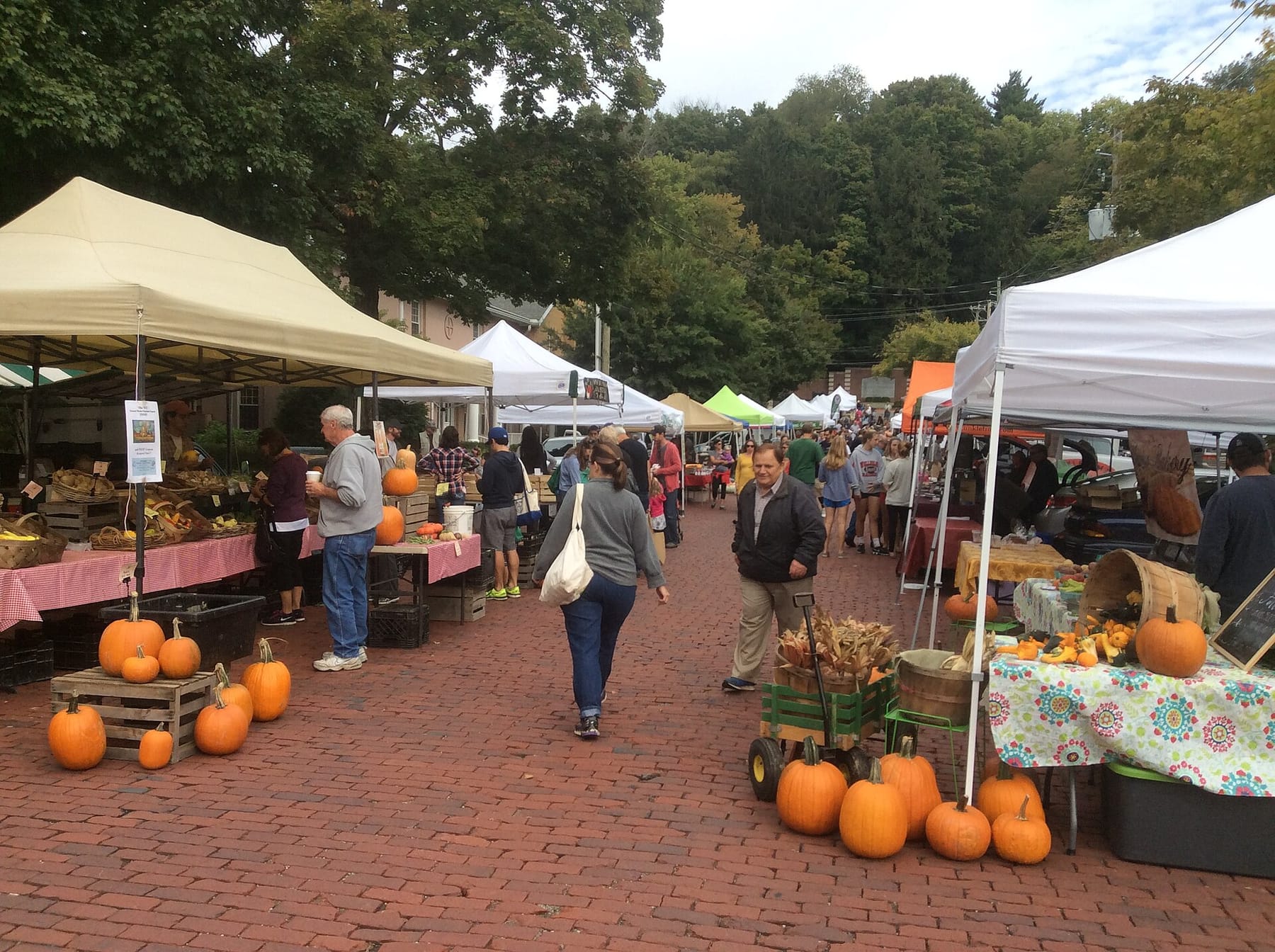
Ohio at a glance
Ohio Cottage Food Law (cottage food production operations) · Ohio Revised Code Secs. 3715.01(A)(17)-(19), 3715.021, 3715.022, 3715.023, and 3715.025; Ohio Administrative Code Chapter 901:3-20; retail food establishment exemptions at ORC Sec. 3717.22; home bakery registration at ORC Sec. 911.02 · administered by Ohio Department of Agriculture, Division of Food Safety
- Registration or permit
- None. A cottage food production operation needs no license, registration, permit, or fee, and the Ohio Department of Agriculture states plainly that it is exempt from ODA licensing and inspection. You do not file anything with the state before your first sale.
- Sales limit
- No dollar cap. Neither ORC 3715.025 nor OAC Chapter 901:3-20 sets a sales or income limit, and ODA's cottage food page and fact sheet name none. Ohio restricts what you make, not how much you sell.
- What you can sell
- A closed list of twenty categories in OAC 901:3-20-04: non-potentially-hazardous bakery products, jams, jellies, candy, fruit butters, fruit chutneys, granola, popcorn, unfilled baked donuts, waffle cones, pizzelles, dry mixes and blends, roasted coffee, and a few others. Anything not expressly listed is not a cottage food. No acidified foods, no low-acid canned foods, no potentially hazardous foods, and no reduced oxygen packaging.
- Where and how you can sell
- Inside Ohio only. Direct from the home where the food is made, at farmers markets, through licensed grocery stores, registered farm markets, and licensed restaurants, and at festivals organized by a political subdivision that run no longer than seven consecutive days. OAC 901:3-20-05(F) forbids selling cottage food products outside Ohio.
- Labeling
- Product name, net quantity in both US and metric units, ingredients in descending order by weight with allergens declared, the business name and street address, and the statement 'This product is home produced.' in ten-point type. Federal rules in 21 CFR Part 101 apply on top of that.
- Training
- None required. Nothing in ORC 3715.025 or OAC Chapter 901:3-20 requires a food handler card, food safety course, or manager certification for a cottage food production operation.
- Inspection
- No routine inspection and no license. ODA may still pull samples of cottage food products from the marketplace to test for adulteration or misbranding under ORC 3715.022, and an operation may not refuse sampling.
Reviewed September 2, 2026. Rules change; confirm with the agency before you sell.
In this guide
- Who the law covers, and the short version
- "Home" is a defined term, and it is narrower than it sounds
- What you can sell
- What is not a cottage food
- Where and how you can sell
- Online orders, delivery, and shipping
- Package it at home, not at the table
- Licensing: none for cottage food, $10 for a home bakery
- What has to be on the label
- Sales limits, sampling, and enforcement
- Local rules still apply
- What could change: House Bill 134
- Where to get official help
Starting a cottage food business in Ohio costs nothing. There is no license, no registration, no fee, no required course, no inspection, and no cap on sales. The catch is on the other side: the state publishes a closed list of twenty food categories, and if your product is not on it, you are not a cottage food production operation in Ohio and a different law applies. Almost every practical question here comes back to that trade.
Who the law covers, and the short version
ORC 3715.01(A)(19) defines a cottage food production operation as a person who, in the person's home, produces food items that are not potentially hazardous, including bakery products, jams, jellies, candy, fruit butter, and similar products specified in rules. Meet that definition and two licenses fall away: you are not a food processing establishment under Sec. 3715.021(A), and Sec. 3717.22(B)(6) exempts you from retail food establishment licensing when you sell directly from the site where you produce.
What is left, as OSU Extension's law bulletin puts it, is four obligations: label your product, skip reduced oxygen packaging, sell only where the law allows, and submit to ODA sampling. That is the whole regulatory program. For the business side, see our guide to starting a cottage food business.
"Home" is a defined term, and it is narrower than it sounds
Sec. 3715.01(A)(17) defines "home" as "the primary residence occupied by the residence's owner," on the condition that it contains only one stove or oven used for cooking, which may be a double oven, designed for common residence usage and operated in an ordinary kitchen. ODA repeats that definition word for word on its cottage food page.
Two limits hide in there. Only one stove or oven may be in cooking use, and a double oven counts as one, so a second range in the basement or a deck oven in the garage puts you outside the definition. The other is owner occupancy. We found no ODA guidance addressing renters, so if you rent, ask before you build a business on the assumption.
What you can sell
OAC 901:3-20-04 names twenty approved items, and the list is exhaustive. Grouped:
- Non-potentially-hazardous bakery products
- Jams, jellies, fruit butters, and fruit chutneys
- Candy, but not fresh fruit dipped, covered, or otherwise incorporated with candy
- Granola, granola bars, and granola bars dipped in candy, with commercially dried fruit only
- Popcorn, flavored popcorn, kettle corn, popcorn balls, and caramel corn, but not un-popped popping corn
- Unfilled baked donuts
- Waffle cones, including candy-dipped
- Pizzelles
- Dry cereal and nut snack mixes with seasonings
- Roasted coffee, whole bean or ground
- Dry baking mixes in a jar, including cookie mix in a jar
- Dry herbs and herb blends, dry seasoning blends, and dry tea blends
- Dry soup mixes containing commercially dried vegetables, beans, grains, and seasonings
- Flavored honey and maple sugar, but only from a beekeeper or maple syrup producer exempt under ORC 3715.021(A)
That last one has a catch. The Sec. 3715.021(A) exemptions apply only when at least seventy-five per cent of the honey comes from the beekeeper's own hives, or at least seventy-five per cent of the sap is collected directly from trees by the processor. Buying bulk honey and adding flavoring does not qualify. One packaging restriction rides on top: cottage food products may not be packed using reduced oxygen packaging, meaning vacuum sealing and modified atmosphere packaging.
What is not a cottage food
OAC 901:3-20-05 prohibits acidified foods, low-acid canned foods, potentially hazardous foods, and, critically, any item not expressly listed above. ODA keeps a companion list of foods that are not cottage foods, reproduced in the OSU Extension law bulletin: anything requiring refrigeration, fresh fruit garnishes and fillings, candy-covered fresh fruit, freezer jams, sugar-free jams and jellies and fruit butters, hot pepper and nut and pumpkin butters, pickles and relishes and other acidified foods, salsa, fresh pasta, raw cookie dough and pizza dough, cheesecake, cream pie, pumpkin pie, fry pies, waffles, cream cheese frosting, hummus, dehydrated fruits or herbs, beef jerky, and meals.
Several of those look like obvious cottage foods until you check. A fruit pie is fine; a pumpkin pie is not. A plain baked donut is fine; a filled one is not. Cream cheese frosting sits on the wrong side of the line.
One entry is genuinely confusing. ODA lists "dehydrated fruits or herbs" as not a cottage food, while OAC 901:3-20-04 approves "dry herbs and herb blends." Drying produce yourself is probably the distinction, but no published ODA guidance says so. Get an answer in writing before you build on it. Our explainer on what counts as cottage food covers how other states draw these lines.
Where and how you can sell
The hardest limit is geographic. OAC 901:3-20-05(F) bars a cottage food operation from selling cottage food products outside Ohio, and ODA puts it just as bluntly: cottage food products may only be sold in Ohio. That forecloses out-of-state customers and any marketplace built on shipping.
Inside Ohio the channels are broad:
- Direct to the consumer from the home where the products are produced
- At farmers markets, where Sec. 3717.22(B)(2)(b) exempts a cottage food vendor from retail food establishment licensing
- Through licensed grocery stores, registered farm markets, and licensed restaurants
- At festivals organized by a political subdivision of the state that last no longer than seven consecutive days, under Sec. 3717.22(B)(15)
Wholesale is expressly allowed. Sec. 3715.023(B) makes a properly labeled cottage food an acceptable product for a licensed retail food establishment or food service operation to sell or cook with. If markets are your first channel, our farmers market vendor guide covers applications and booth requirements.
Online orders, delivery, and shipping
Neither the statute nor Chapter 901:3-20 mentions internet sales, phone orders, or delivery. Nothing prohibits taking an order online and handing the food to an Ohio customer at pickup or on a delivery route. What the rules settle is the border: a shipment to an out-of-state buyer is a sale outside Ohio. We found no ODA guidance on carrier shipping within Ohio, so treat that as an open question. Our guide on selling cottage food online explains the pattern across states.
Package it at home, not at the table
OSU Extension's May 2026 farmers market fact sheet is specific: cottage food products must be packaged where they are made, in the quantities they will be sold. Slicing bagels at your booth or scooping spice mixes into bags on the table is not permitted. Portion everything before you load the car.
Licensing: none for cottage food, $10 for a home bakery
ODA does not license or inspect cottage food operations, and no state fee applies. Nothing in ORC 3715.025 or Chapter 901:3-20 requires training, so no food handler card or manager certification either.
Two things push you to a different registration: refrigeration and the state line. A home bakery is registered with and inspected by the ODA Division of Food Safety, and it makes exactly the potentially hazardous baked goods a cottage food operation cannot.
| Requirement | Cottage food operation | Home bakery |
|---|---|---|
| Cost | None | $10 a year, renewed by September 30 |
| Inspection | None | Kitchen inspection required before you sell |
| Refrigerated baked goods | Not allowed | Allowed, labeled "Keep Refrigerated" |
| Sales outside Ohio | Prohibited | Permitted |
ODA's conditions are concrete: no carpeted kitchen floors, no pets in the home, a mechanical refrigerator with a properly located thermometer holding 45°F or below, and, on a private well, an annual coliform test with a negative result on file. The $10 fee sits in ORC 911.02. House Bill 96 rewrote that section effective September 30, 2025, swapping a tiered commercial bakery fee for a flat $200 and leaving the home bakery line at the ten dollars it has held since 2001.
A home bakery covers baked goods and nothing else. Salsa, jerky, hummus, and the rest of the not-a-cottage-food list run into food processing or retail food establishment licensing, and OSU Extension notes some of those foods cannot legally be made in a home at all.
What has to be on the label
ORC 3715.023(A) sets five elements, and OAC 901:3-20-02 layers the federal rules in 21 CFR Part 101 on top:
- Statement of identity. The common or usual name of the food.
- Net quantity of contents. The net weight in both US customary and metric units, using "NET WEIGHT" or a standard abbreviation, in the bottom thirty per cent of the principal display panel.
- Ingredient list. Common names in descending order of predominance by weight, with sub-ingredients in parentheses.
- Statement of responsibility. The business name and street address, city, state, and ZIP, kept continuous, with nothing inserted between the ingredient list and this block.
- The home production statement, in ten-point type: "This product is home produced." (ORC 3715.023(A)(5))
ODA translates that sentence for shoppers: the food was produced in a private home not subject to inspection by a food regulatory authority. Allergens go either in the ingredient list or in a "Contains" statement immediately after it, and ODA names nine: milk, eggs, fish, crustacean shellfish, tree nuts, peanuts, wheat, sesame, and soybeans. A Nutrition Facts panel is required only if you make a nutrient content or health claim.
One label exemption exists, and it is narrow: under ORC 3715.022(B), the labeling rules do not apply to fruit butter produced at a festival organized by a political subdivision and sold during the event from the production site. ODA's fact sheet has an annotated example label, and our cottage food labeling guide covers layout and proofreading.
Sales limits, sampling, and enforcement
There is no sales limit. We read ORC 3715.025, all five rules in Chapter 901:3-20, ODA's cottage food page, and its fact sheet, and none names a dollar figure. Ohio regulates the food, not the revenue, the opposite of the states covered in our sales limits explainer. Your income is still taxable. Sales tax usually is not owed: ORC 5739.02(B)(2) exempts food for human consumption off the premises where it is sold, which describes a market table and a porch pickup. Confirm your own case with the Ohio Department of Taxation.
Enforcement runs through product sampling rather than inspection. ORC 3715.022(A) and OAC 901:3-20-03 let ODA sample any cottage food product to determine whether it is misbranded or adulterated, and 901:3-20-05 makes refusing sampling a violation in itself. Your label is therefore the thing most likely to be checked, at random or after a complaint.
Local rules still apply
Ohio's cottage food law contains no clause preempting local government, and ODA does not claim one. OSU Extension advises cottage food producers to check local zoning for restrictions on home-based retail sales. A home occupation ordinance can limit customer traffic, signage, or deliveries at a residence. Call your city or township zoning office before you advertise porch pickup.
Farmers markets, festivals, and stores are private operators. They can require liability insurance or a copy of your label, and those are contract terms rather than regulations. ODA's home bakery page makes the parallel point about retail: stores carrying home-produced goods stay subject to local health department and zoning rules of their own.
What could change: House Bill 134
House Bill 134 would add a second, much broader option alongside the cottage food law. As passed by the House, it would create a microenterprise home kitchen operation registration covering most homemade foods, including potentially hazardous ones, with a $25 annual fee, a mandatory ODA inspection of the home kitchen, an inspection fee of up to $50 a year, required food safety training, and a $150,000 annual cap on gross receipts from potentially hazardous items. Delivery would split by product: items with no dairy, meat, poultry, or seafood could be sold remotely and shipped by carrier, while dairy, meat, poultry, and seafood would have to be handed to the customer in person. The bill keeps the current cottage food law in place for anyone who prefers to stay unregistered.
It is not law. The House passed it on November 19, 2025, and the Senate referred it to the Agriculture and Natural Resources Committee on February 11, 2026, with no later action posted. Plan around current law.
Chapter 901:3-20 itself carries a January 22, 2016 effective date and a five year review date of November 27, 2028. The approved food list has not changed since it took effect, and any change would come through ODA rulemaking rather than the legislature.
Where to get official help
- ODA Division of Food Safety: 614-728-6250 or foodsafety@agri.ohio.gov. The cottage food page links the printable fact sheet with a sample label; the home bakery page links the inspection request form.
- Ohio Laws: OAC Chapter 901:3-20 and ORC Sec. 3715.023 are short enough to read in full, which is the fastest way to settle an argument with a market manager.
- OSU Extension: the cottage food law bulletin and the farmers market food safety fact sheet on Ohioline.
Before you commit to a product line, check every item against OAC 901:3-20-04, then price a $10 home bakery registration against the products the list pushes you away from. If one item you want to sell needs refrigeration, or you want customers past the state line, the registration usually costs less than dropping the product. To see how the same questions get answered a state away, browse our state-by-state guides.
Official resources for Ohio
Sources and further reading
- 1.Cottage Foods · Ohio Department of Agriculture, Division of Food Safety · accessed Sep 2, 2026 · Agency page: definition, permitted and prohibited foods, five label elements, sales locations including festivals, and the statement that cottage food operations are exempt from licensing and inspection.
- 2.Cottage Food Production Operation Fact Sheet (updated February 2023) · Ohio Department of Agriculture, Division of Food Safety · accessed Sep 2, 2026 · Printable fact sheet with the annotated label example and the nine major food allergens.
- 3.Home Bakery · Ohio Department of Agriculture, Division of Food Safety · accessed Sep 2, 2026 · Home bakery definition, permitted potentially hazardous baked goods, kitchen conditions, the $10 annual fee, and out-of-state distribution.
- 4.Ohio Revised Code Sec. 3715.01, Definitions · Ohio Laws, Legislative Service Commission · accessed Sep 2, 2026 · Definitions of 'home' (A)(17), 'potentially hazardous food' (A)(18), and 'cottage food production operation' (A)(19); effective March 21, 2017.
- 5.Ohio Revised Code Sec. 3715.023, Labels for cottage food production operation, processor, or beekeeper · Ohio Laws, Legislative Service Commission · accessed Sep 2, 2026 · The five required label elements and the ten-point-type home production statement.
- 6.Ohio Revised Code Sec. 3715.025, Restrictions on cottage food production operation · Ohio Laws, Legislative Service Commission · accessed Sep 2, 2026 · Bar on acidified, low-acid canned, and potentially hazardous foods, and the rulemaking authority behind the food list.
- 7.Ohio Revised Code Sec. 3715.022, Food sampling · Ohio Laws, Legislative Service Commission · accessed Sep 2, 2026 · ODA sampling authority, and the label exemption for fruit butter made and sold at a festival organized by a political subdivision.
- 8.Ohio Administrative Code Chapter 901:3-20, Cottage Food Production · Ohio Laws, Legislative Service Commission · accessed Sep 2, 2026 · The chapter runs to five rules; 901:3-20-02 adds the 21 CFR Part 101 (April 1, 2014) labeling requirements on top of ORC 3715.023, and 901:3-20-03 sets the sampling procedure.
- 9.Ohio Administrative Code Rule 901:3-20-04, Cottage food products allowed · Ohio Laws, Legislative Service Commission · accessed Sep 2, 2026 · The twenty approved cottage food categories and the reduced oxygen packaging ban; effective January 22, 2016.
- 10.Ohio Administrative Code Rule 901:3-20-05, Prohibitions · Ohio Laws, Legislative Service Commission · accessed Sep 2, 2026 · Bans on unlisted foods, refusing sampling, and selling cottage food products outside Ohio.
- 11.Ohio Revised Code Sec. 3717.22, Retail food establishment exemptions · Ohio Laws, Legislative Service Commission · accessed Sep 2, 2026 · Exemptions at (B)(2) for farmers market vendors, (B)(6) for direct sales from the production site, and (B)(15) for festivals organized by a political subdivision lasting no more than seven consecutive days.
- 12.Ohio Revised Code Sec. 911.02, Registration of bakeries · Ohio Laws, Legislative Service Commission · accessed Sep 2, 2026 · The $10 annual home bakery registration and the flat $200 bakery fee set by House Bill 96, effective September 30, 2025; renewal by September 30. The prior version (effective February 1, 2001) charged $30 for the first thousand pounds of hourly capacity plus $30 for each additional thousand, and the same $10 for a home bakery.
- 13.Ohio Revised Code Sec. 5739.02, Levy of sales tax · Ohio Laws, Legislative Service Commission · accessed Sep 2, 2026 · Division (B)(2), exempting sales of food for human consumption off the premises where sold.
- 14.Ohio's Cottage Food Law (Law Bulletin, March 2023) · OSU Extension Agricultural & Resource Law Program · accessed Sep 2, 2026 · Peggy Kirk Hall and Emily Marrison; the ODA list of foods that are not cottage foods, the potentially hazardous baked goods comparison, and the zoning caution.
- 15.Food Safety Tips for Selling Cottage Foods at Ohio Farmers Markets (FCS-1012) · Ohio State University Extension, Ohioline · accessed Sep 2, 2026 · Dated May 7, 2026; packaging must happen where the food is made, plus sampling and transport practices.
- 16.House Bill 134 Status, 136th General Assembly · Ohio Legislature · accessed Sep 2, 2026 · Passed the House November 19, 2025; referred to the Senate Agriculture and Natural Resources Committee February 11, 2026, with no later action listed.
- 17.H.B. 134 Bill Analysis, As Passed by the House (February 13, 2026) · Ohio Legislative Service Commission · accessed Sep 2, 2026 · Microenterprise home kitchen registration: $25 fee, $150,000 cap on potentially hazardous food receipts, mandatory inspection, and delivery rules.
Weekly newsletter
Market Dispatch
One email a week with the newest guide, what's in season, and a few things worth knowing before market day.
Email subscriptions are not open yet. Read every new story through our free RSS feed.
Follow Market Dispatch via RSS →Related guides
How to Start a Cottage Food Business: A Step-by-Step Guide
From the first read of your state's rules to your first market Saturday, in eight steps: choosing products that qualify, registration and training, labels, pricing, sales channels, bookkeeping, and a realistic plan for the first 90 days.
· 13 min read
Cottage Food Labels: What Most States Require and How to Design One That Looks Professional
Cottage food laws disagree about almost everything except the label. Here are the six elements nearly every state asks for, the exact disclaimer wording six states use, and how to build a label that survives a refrigerator and still reads as a brand.
· 10 min read
What Counts as "Cottage Food"? The Definition, the Exceptions, and Why It Varies by State
Cottage food is a legal category, not a cooking style: food made in a home kitchen, sold directly to the person who eats it, and in most states limited to foods that stay safe at room temperature. Here is where that line comes from, how states move it, and what falls outside it almost everywhere.
· 9 min read
Packaging for Cottage Food: Materials, Costs, and Presentation That Protects the Product
A bag or box has three jobs: keep the product safe and fresh, carry the label your state requires, and sell it from three feet away. Here is how to choose packaging by product type, what a unit really costs, and which states require sealed, labeled packages before you can sell.
· 12 min read