
BusinessGuide
Naming and Branding a Home Food Business Without a Design Budget
Your name goes on every label, sign, and search a customer will ever run. Here is how to choose one people can say and spell, run the SBA and USPTO checks before you print, and build a two-color, one-mark look you can keep for years without paying a designer.
 United Farmers Market Editorial Team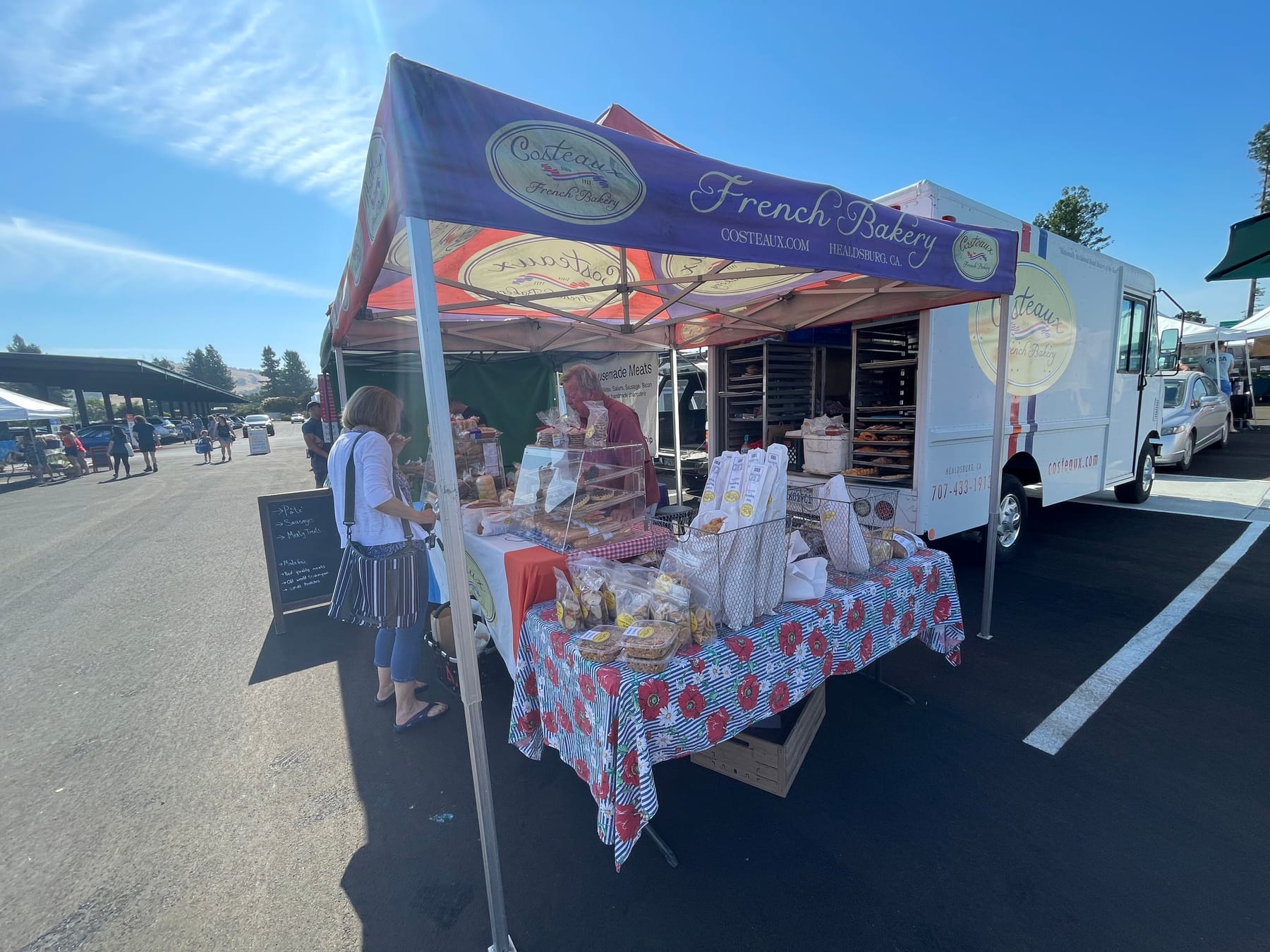
In this guide
- A name has three jobs, and clever is not one of them
- The four checks, in the order to run them
- 1. Your state's business records
- 2. The USPTO trademark database
- 3. The domain and the handles
- A visual system you can run alone: one pairing, two colors, one mark
- The typeface pairing
- The two colors
- The one mark
- Applying it to the label, the tent, and the order page
- Labels start with the legal content
- The tent reads from the aisle
- The order page is the same table, smaller
- Consistency over time, and the one reason to change
- Before your next market
The name you choose goes on every label you print, every price card you letter, and every search a customer types into a phone. It is also the one branding decision with legal weight: a business name has to be registered somewhere, and it cannot sit on top of someone else's trademark. Everything after the name is cheaper to get right than most people expect.
A name has three jobs, and clever is not one of them
At a market a name is heard before it is read. A friend says it out loud, and the shopper has to remember it well enough to type it later. The first test is the plainest: can someone say it, spell it after hearing it once, and find you with it?
The second job is telling people what you sell. "Granola" or "sourdough" in the name does work a sign would otherwise have to do, but it boxes you in the season you add a second product. If the muffins may turn into bread, name the business for something broader than muffins.
The third job is being ownable, and here the trademark rules push against plain description. The U.S. Patent and Trademark Office sorts names by strength: invented words (Exxon, Pepsi) and real words unrelated to the product (Apple for computers) are strongest, with suggestive names that hint at a quality without stating it outright (Coppertone for sun-tanning products) close behind. Names that merely describe the product, "Creamy" for yogurt in the USPTO's example, are weak and registrable only in narrow circumstances, such as after long use has made the name distinctive. "Bagel shop" for a bagel shop is generic and not federally registrable at all.
So use a two-part name: one distinctive word or phrase that could function as a trademark, plus a plain descriptor that does the explaining. The distinctive part might be a place, a family name, or an invented word; the descriptor is just "Bakery" or "Preserves." Keep the descriptor generic so it can change when the product line does. One last filter: read the name at one inch wide, because a long one disappears on a 2-ounce jar.
The four checks, in the order to run them
| Check | Where to look | What it tells you |
|---|---|---|
| State business name | State business-filing search, then the county clerk | Whether another entity or DBA in your state uses it |
| Federal trademark | USPTO Trademark Search (free) | Whether a live registration for a similar name covers related goods |
| Domain | Any registrar's availability search | Whether the .com, or a workable variant, is open |
| Social handles | Each platform's search | Whether one consistent handle is free |
1. Your state's business records
The Small Business Administration describes four separate ways a business name gets registered, and they protect different things. An entity name, the LLC or corporation you file with the state, protects the name at the state level. A DBA (also called a trade name, fictitious name, or assumed name) is what you file when you sell under a name other than your own, and it goes to the state, the county, or the city depending on where you live. The SBA is blunt about the limits: registering a DBA "doesn't provide legal protection by itself," most states require it anyway, and multiple businesses can go by the same DBA in one state.
Search first, then file. Your state's business-filing office, usually the Secretary of State, keeps a searchable database of registered entities; check it for exact and near matches, then the county clerk's assumed-name records if your state keeps DBAs locally. Our state guides name the right agency.
2. The USPTO trademark database
The USPTO's Trademark Search system is free, and the office's advice is to search for similar marks before you file, which for you means before you print. You are not looking only for an identical name. The most common reason the USPTO refuses a registration is likelihood of confusion, and marks "don't have to be identical to be confusingly similar. Instead, they could just be similar in sound, appearance, or meaning, or could create a similar commercial impression." A name that sounds like a registered jam brand is a problem however you spell it.
What matters is similarity on related goods. The USPTO's own example is that Dove soap and Dove ice cream bars are registered to different owners, because the goods are far enough apart. A registered name for software is not your problem; one for baked goods or a restaurant might be. Search alternate spellings and sound-alikes too, and read what each live result covers.
The federal database is not the whole picture. Unregistered names can carry common-law rights, and Ohio State University Extension notes that a comprehensive search "may also need to include social media, websites, and other platforms." Ohio keeps a state trademark register at the Secretary of State, and your state may as well.
3. The domain and the handles
Once you register a domain, the SBA notes, no one else can use it for as long as you keep owning it, and it does not have to match your legal business name. If the exact .com is taken, a short variant with your city or product in it usually reads more clearly anyway. Buy it before you print labels, then claim the same handle on the one or two platforms where your customers actually are. A handle is hard to change once the labels are printed.
A visual system you can run alone: one pairing, two colors, one mark
With no design budget the temptation is to compensate with variety: a script font on the labels, a serif on the sign, a new color every season. The opposite works better. Penn State Extension's guide to branding a farm business defines a brand as the combination of name, words, symbols, and design that identifies a product and sets it apart, and its practical advice is consistent colors and fonts without frequent changes. Consistency is cheap; variety is not, because every new look has to be designed again.
The typeface pairing
Choose two typefaces and stop. One is for the name and nothing else, and it can have personality, because the name is short and set at only a few sizes. The other is a plain face for everything that has to be read fast: ingredients, prices, required label statements, the pickup hours on your order page. For that one, Ohio State Extension's signage fact sheet recommends clean sans-serif fonts and only one font per sign, and warns against blocks of capitals, which "are not as readable and are sometimes misinterpreted as urgent or even shouting."
The two colors
Pick one dark color and one accent and use them on white or kraft brown. Penn State's guide notes that colors carry associations customers already hold, green with nature and yellow with warmth, so choose for the feeling you want at the table.
Contrast matters more than hue. The Web Content Accessibility Guidelines, which your online storefront should meet anyway, call for a contrast ratio of at least 4.5:1 between text and background, or 3:1 for large text. Logos are exempt, but the reasoning applies to a market sign: the 4.5:1 figure is set to compensate for the contrast sensitivity loss associated with roughly 20/40 vision, and a chalkboard read from six feet in full sun is a harder test than a phone screen. Ohio State puts it plainly: black on white is easier to read than black on grey, and high contrast is why white on red works for many farms.
The one mark
A mark is a simple shape or drawing that stands in for the business when the name is too long: a monogram, or the outline of the hill behind the house. It has to survive three tests. Photocopy it in black and white and it should still read. Shrink it to avatar size and it should still be recognizable. Press it from a rubber stamp onto a kraft bag and it should not turn into a smudge. A mark that passes can be hand-drawn, scanned with a phone, and used for years; one that needs four colors and a gradient will look wrong on the first stamped bag.
Ohio State's branding fact sheet suggests writing a brand identity summary recording your fonts, logo, colors, and imagery, so anyone making something for you works from the same set. For a one-person business that summary is a single page. The University of Tennessee Extension adds the step most people skip: test brand elements with people from your target audience before you implement them, by showing mock-ups and asking for reactions.
Applying it to the label, the tent, and the order page
A visual system proves itself at three sizes: a label at two inches, a tent sign at six feet, and a phone screen.
Labels start with the legal content
The required text comes first and the brand fits around it. What is required varies by state, but the shape is consistent. Texas, for example, requires a cottage food label to carry the name of the operation, its address or a unique identification number, the common name of the product, any major food allergens, and the statement "THIS PRODUCT WAS PRODUCED IN A PRIVATE RESIDENCE THAT IS NOT SUBJECT TO GOVERNMENTAL LICENSING OR INSPECTION." Foods that need time and temperature control for safety also need the date the food was made and a safe-handling statement in at least 12-point type. Your state's list is in our cottage food labeling guide.
Two rules follow. The name on the label has to be the one you registered, spelled the same way, because a label that says one thing and a DBA that says another confuses inspectors and customers alike. And the product name should be the largest text, the business name second, with the required statements at whatever size your state specifies and never smaller. Set the required text in the plain face, the business name in the display face, and the mark in a corner. On a kraft label printed in one dark ink, that is a finished design.
The tent reads from the aisle
At a market the canopy and one sign do the work of a storefront. Your name in the display typeface goes on the banner or the front of the table, large enough to read across the aisle, with nothing else competing on it. Price cards use the plain face and the same two colors on the same card stock every week, so a regular recognizes the table before reading it. Ohio State's signage guidance cites the United States Sign Council's minimum standard of a 40/60 relationship between copy area and negative space; a crowded sign reads as clutter from six feet. Our booth display guide covers layout and height, and the piece on signage and price cards goes deeper on lettering.
The order page is the same table, smaller
Online, the brand narrows to an avatar and a set of photographs. The avatar is your mark, not a photo of a muffin, because a mark stays recognizable at thumbnail size. The handle and the domain match the name on the label. Photographs are where a small storefront drifts: shoot everything in the same light against the same background, and the page looks like one business instead of a feed from several kitchens. Our guide to phone food photography covers how, without equipment.
Consistency over time, and the one reason to change
Brands earn value slowly. The Tennessee publication describes brand equity as something earned over time as customers interact with the same elements again and again, and Penn State's advice is to keep the logo and slogan consistent. That is why our piece on turning market customers into regulars puts so much weight on showing up the same way every week.
There are good reasons to change a name: a trademark conflict you missed, a product line the name no longer describes, a move into wholesale where it reads wrong on a shelf. Boredom with the colors is not one. If you do change, change everything at once, tell your regulars before the new labels appear, and keep the mark if you can.
Before your next market
- Run the four checks and save dated screenshots of what you found.
- File the DBA or entity name your state requires, and match the label to it exactly.
- Choose two typefaces, two colors, and one mark; put them on one page.
- Test the mark as a stamp on a kraft bag before you order anything printed.
- Buy the domain and claim the handle even if the storefront waits.
If the business is still at the "can I sell this at all" stage, start with how to start a cottage food business, which puts registration and naming in order alongside the food rules.
Sources and further reading
- 1.Strong trademarks · United States Patent and Trademark Office · accessed Sep 2, 2026 · Fanciful, arbitrary, suggestive, descriptive, and generic categories with the Exxon, Pepsi, Apple, Coppertone, Creamy, and Bagel shop examples; descriptive marks registrable only after acquired distinctiveness; generic terms not registrable
- 2.Search our trademark database · United States Patent and Trademark Office · accessed Sep 2, 2026 · Trademark Search system at tmsearch.uspto.gov, free to use; guidance on searching for similar trademarks before filing
- 3.Likelihood of confusion · United States Patent and Trademark Office · accessed Sep 2, 2026 · Most common reason for refusing registration; marks need not be identical (sound, appearance, meaning, commercial impression); Dove soap and Dove ice cream bars coexistence example
- 4.Why register your trademark? · United States Patent and Trademark Office · accessed Sep 2, 2026 · Unregistered rights enforceable only where the mark is used; federal registration creates rights throughout the U.S. and its territories, database listing, and the ® symbol; USPTO is not an enforcement agency
- 5.Trademark fee information · United States Patent and Trademark Office · accessed Sep 2, 2026 · Base application filing fee of $350 per class; $100 and $200 per-class surcharges; fees generally not refunded; page last updated January 18, 2025
- 6.Choose your business name · U.S. Small Business Administration · accessed Sep 2, 2026 · Entity name, trademark, DBA, and domain name as four kinds of registration; DBA filed with state, county, or city, provides no legal protection by itself, and may be shared by multiple businesses in one state; domain need not match the legal name
- 7.Building, Communicating, and Protecting Your Food or Farm Brand (ANR-0180) · Ohio State University Extension · accessed Sep 2, 2026 · Brand identity summary of fonts, logos, colors, and imagery; same name, logo, colors, and tagline on all materials; comprehensive search may need to include social media and websites; Ohio trademark register at the Secretary of State; published May 19, 2025
- 8.Creating Signage for Direct Food and Agricultural Sales (ANR-70) · Ohio State University Extension · accessed Sep 2, 2026 · Sans-serif fonts, one font per sign, no all-caps blocks, black on white versus grey, white on red, and the 40/60 copy-to-negative-space USSC minimum; published February 22, 2019
- 9.Understanding Success Criterion 1.4.3: Contrast (Minimum) · World Wide Web Consortium (W3C) · accessed Sep 2, 2026 · 4.5:1 minimum contrast for text, 3:1 for large text, logotypes exempt; ratio derived from the contrast sensitivity loss associated with 20/40 visual acuity
- 10.Branding Your Farm Business · Penn State Extension · accessed Sep 2, 2026 · Definition of a brand; logo, slogan, colors, and people as building blocks; color associations (green with nature, yellow with warmth); consistent fonts and colors; avoid frequent changes; page updated August 31, 2026
- 11.Branding Essentials for Value-Added Agriculture Enterprises (PB 1930) · University of Tennessee Extension · accessed Sep 2, 2026 · Brand equity earned over time as customers interact with brand elements; consistent use of the brand color palette; test brand elements with target audience members, using mock-ups, before implementation
- 12.Texas Cottage Food Production · Texas Department of State Health Services · accessed Sep 2, 2026 · Label must carry the operation's name, address or unique identification number, common name of the product, and major allergens, plus the private-residence statement; date made and 12-point safe-handling statement for time/temperature control foods
Weekly newsletter
Market Dispatch
One email a week with the newest guide, what's in season, and a few things worth knowing before market day.
Email subscriptions are not open yet. Read every new story through our free RSS feed.
Follow Market Dispatch via RSS →Keep reading
Cottage Food Labels: What Most States Require and How to Design One That Looks Professional
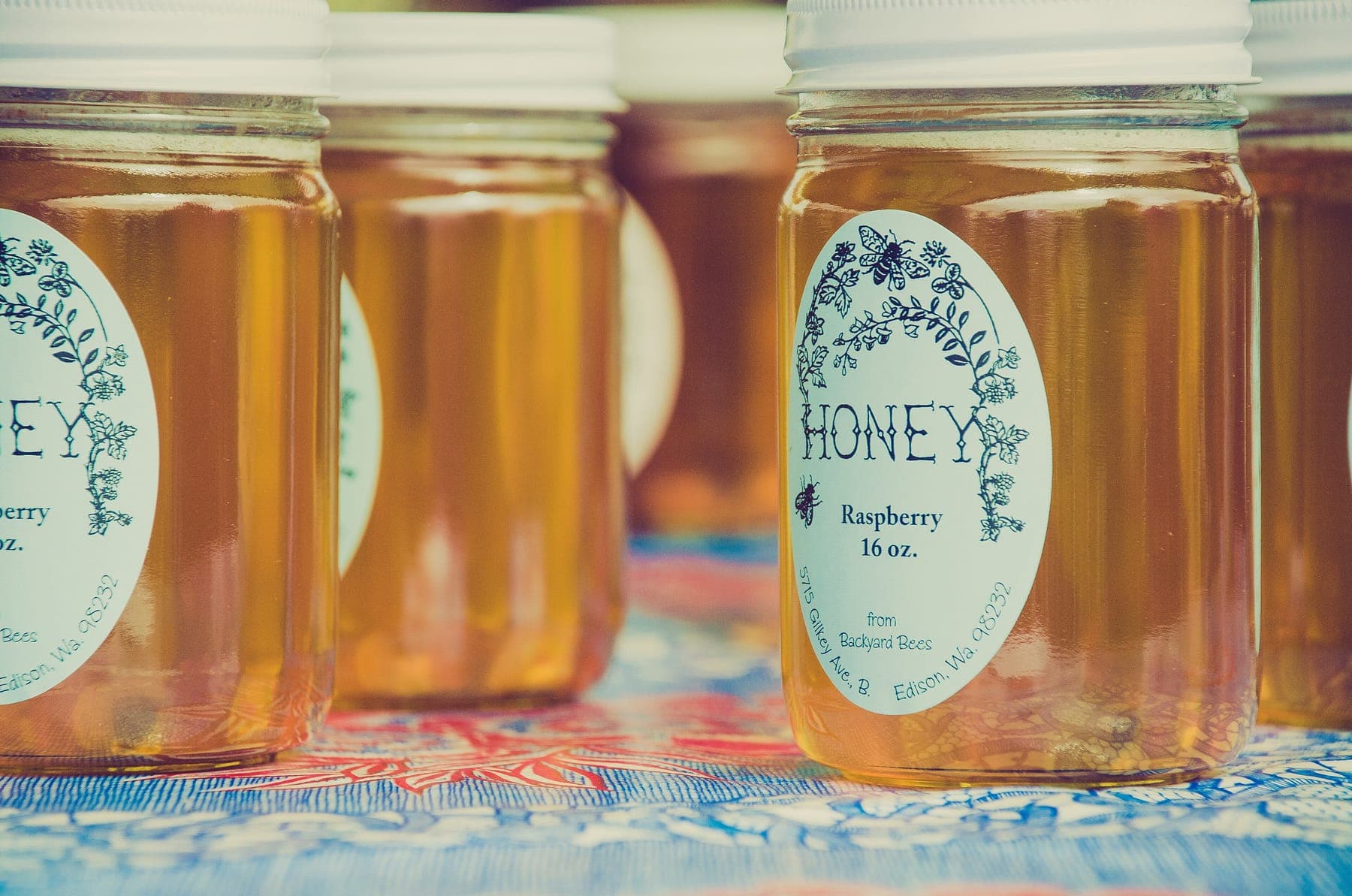
Cottage food laws disagree about almost everything except the label. Here are the six elements nearly every state asks for, the exact disclaimer wording six states use, and how to build a label that survives a refrigerator and still reads as a brand.
· 10 min read

Product Photography With a Phone: A Practical Guide for Food Makers
Window light, a clean background, the right angle for each product, and ten seconds of phone settings matter more than any gear. Here is the routine, plus a shot list you can reuse every time you add a product.
· 8 min read
Signage and Price Cards: The Small Details That Move Product at a Market Table
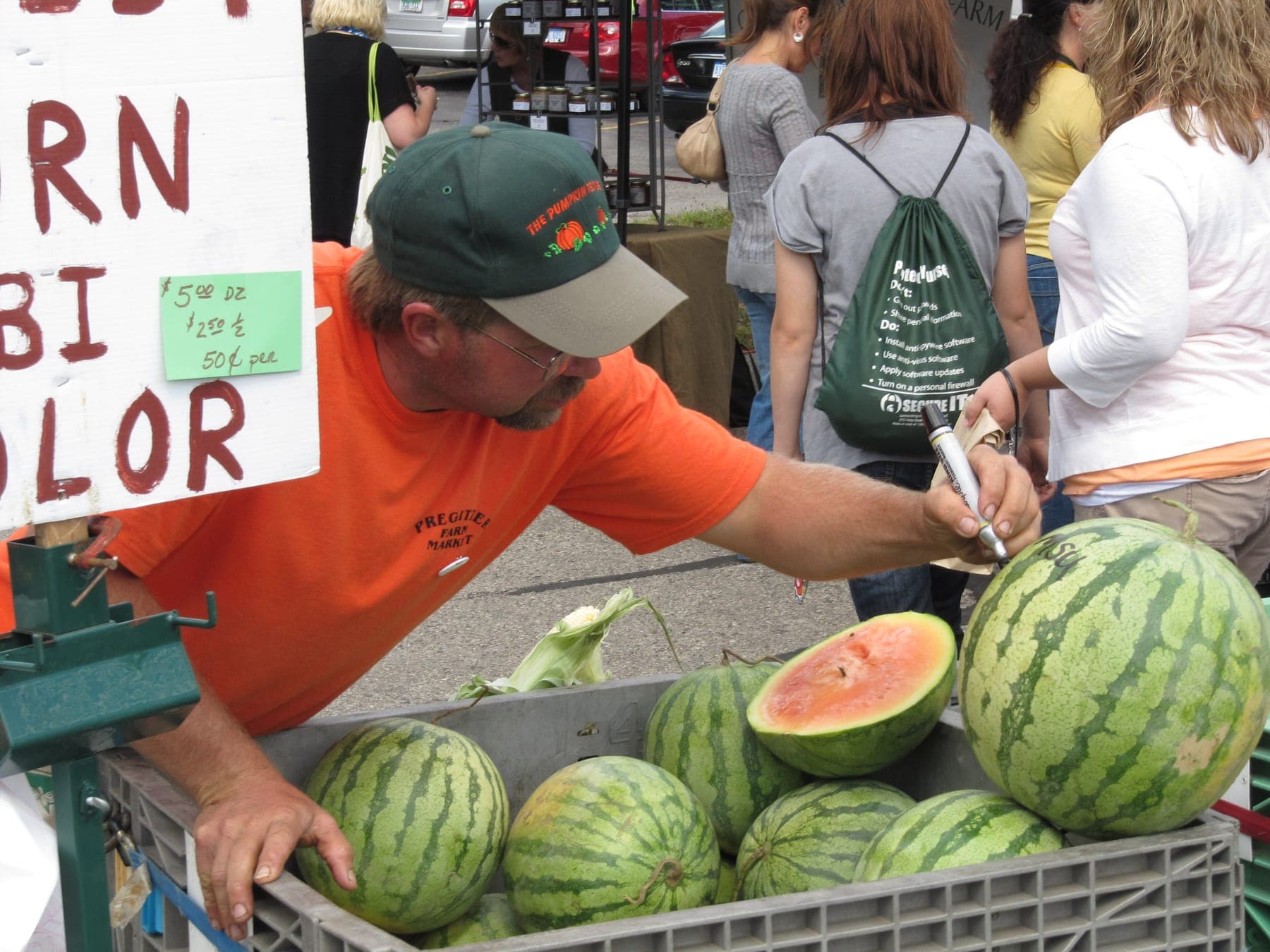
A shopper who cannot find a price often walks instead of asking. What the three signs every booth needs should say, how big the letters have to be, what survives weather, and the point-of-sale placards some states require by law.
· 7 min read
How to Start a Cottage Food Business: A Step-by-Step Guide
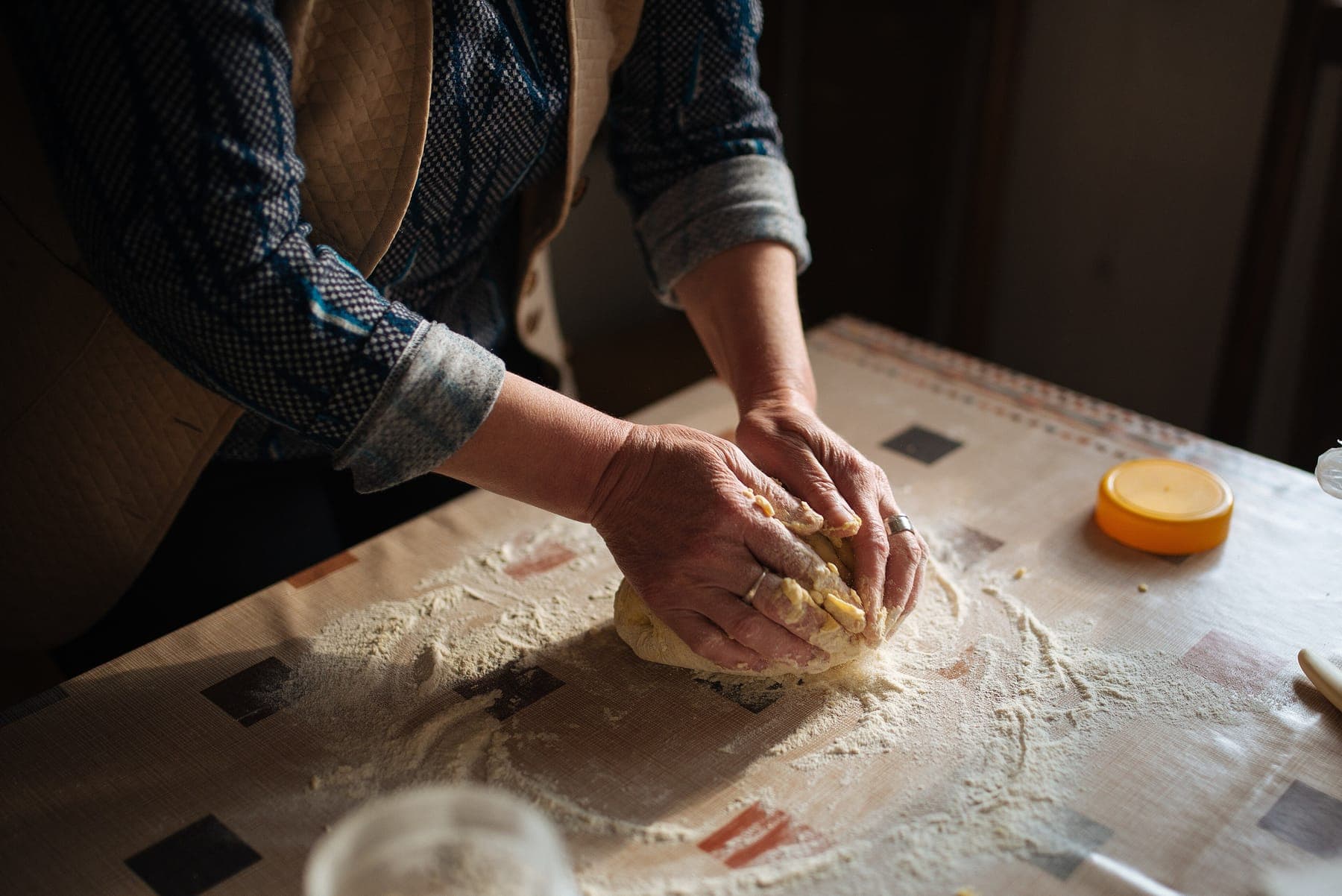
From the first read of your state's rules to your first market Saturday, in eight steps: choosing products that qualify, registration and training, labels, pricing, sales channels, bookkeeping, and a realistic plan for the first 90 days.
· 13 min read