
Local FoodFeature
Giving Local: A Gift Guide Built Around Your Farmers Market
Market gifts come with constraints a mall gift does not have. Some keep for a year, some are stale by Thursday, and some cannot legally be mailed at all. Here is how to shop the categories, from jam and honey to gift certificates and CSA shares.
 United Farmers Market Editorial Team
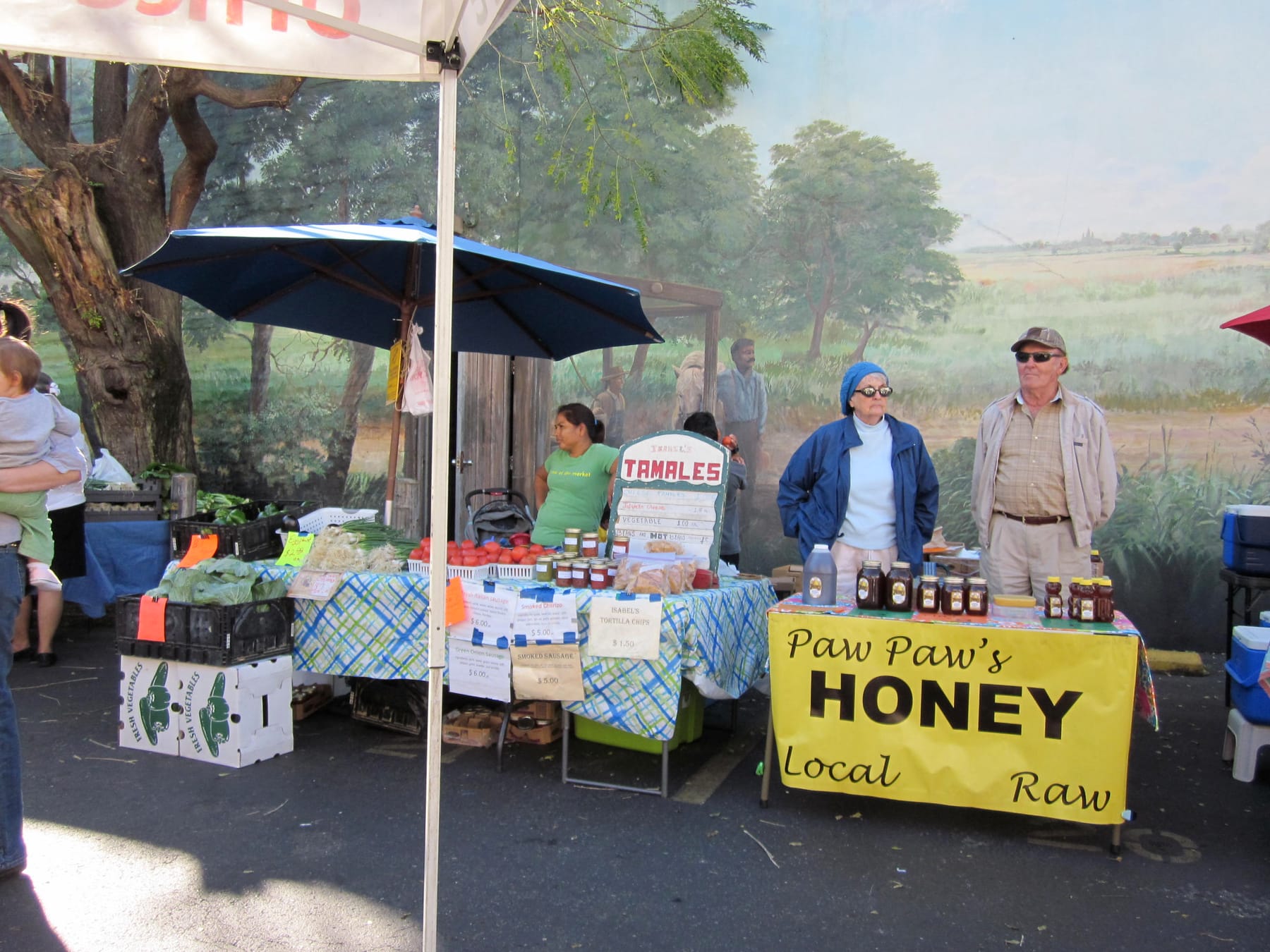
Regional note. Winter market coverage varies enormously. Parts of California and the Southeast run full outdoor markets in December, while much of the Upper Midwest and Northeast shifts to indoor markets or a handful of one-off holiday dates.
In this guide
- Three questions that sort a market into a gift list
- The pantry shelf: preserves, honey, and dry mixes
- Baked goods, and why you ask in November
- Market money: gift certificates and tokens
- A CSA share, and what to check before you buy one
- Packing a basket that survives the handoff
- Mailing it is a legal question first
- Working backward from the date
Mid-November, eight names on the list, and a market on Saturday that could cover most of them. It usually does a better job than the mall, and it comes with constraints the mall does not have: some of what is on those tables keeps for a year, some is stale by Thursday, and some cannot legally be put in a box and mailed to your cousin in Denver no matter how badly she wants it.
So this guide goes category by category rather than booth by booth.
Three questions that sort a market into a gift list
Does it keep? A jar of jam is patient. A loaf of bread and a wedge of fresh chèvre are not. The gap between your purchase and their unwrapping is the number most people never count.
Does it travel? The University of Maine's holiday bulletin sorts food by that test. Most hard cheeses ship safely at room temperature, and high-sugar foods like jams, jellies, and fruitcake seldom pose a problem. Anything genuinely perishable needs a cold chain you are not going to build.
Will they know what it is? An unlabeled jar carries no ingredients, no date, and no clue whether to refrigerate it.
The pantry shelf: preserves, honey, and dry mixes
Start here. A market beats a store outright, and the risk is lowest.
Preserves. Iowa State Extension's AnswerLine puts fruit jams and jellies, fruit spreads, and whole canned fruits such as peaches and pears on its safe-to-give list. Acidity and sugar do most of the preserving work. The National Center for Home Food Preservation's gifting advice doubles as a shopping checklist: a jar should carry the date it was made, its ingredients (allergens especially), and storage directions like "store in a cool, dry place and refrigerate after opening." NCHFP puts most home-canned food at about a year for best quality. If a jar has no date, ask.
What not to buy as a gift. The same AnswerLine post names the other end of the shelf: low-acid meats and vegetables, pesto, soups and sauces, herb-and-oil mixes, and pumpkin butter, for which no tested canning recipe exists. The CDC explains the stakes. You cannot see, smell, or taste the toxin that causes botulism, and low-acid foods are the ones commonly linked to outbreaks. Salsa and pickles made in a licensed kitchen are a different matter, and a vendor can tell you which kitchen theirs is.
Honey. The most forgiving thing at the market. University of Missouri Extension says honey keeps best in a dry place between 50 and 70°F, in a tightly covered container, and that crystals form as it ages or if it is refrigerated. Crystallized honey is not spoiled: set the open jar in a pan of warm water until it clears, though not a plastic jar. One hard rule comes with it. Missouri and the CDC both say honey must not go to a child under 12 months, in any form, because of infant botulism, so it is a poor gift for a house with a new baby.
Dry goods. Granola, dry mixes in jars or bags, nut mixes, and candy sit on the same safe list, cost the least to ship, and survive being forgotten in a car.
Baked goods, and why you ask in November
Cookies, brownies, biscotti, and fruitcake travel well. Cheesecake and anything custard-filled need refrigeration and do not.
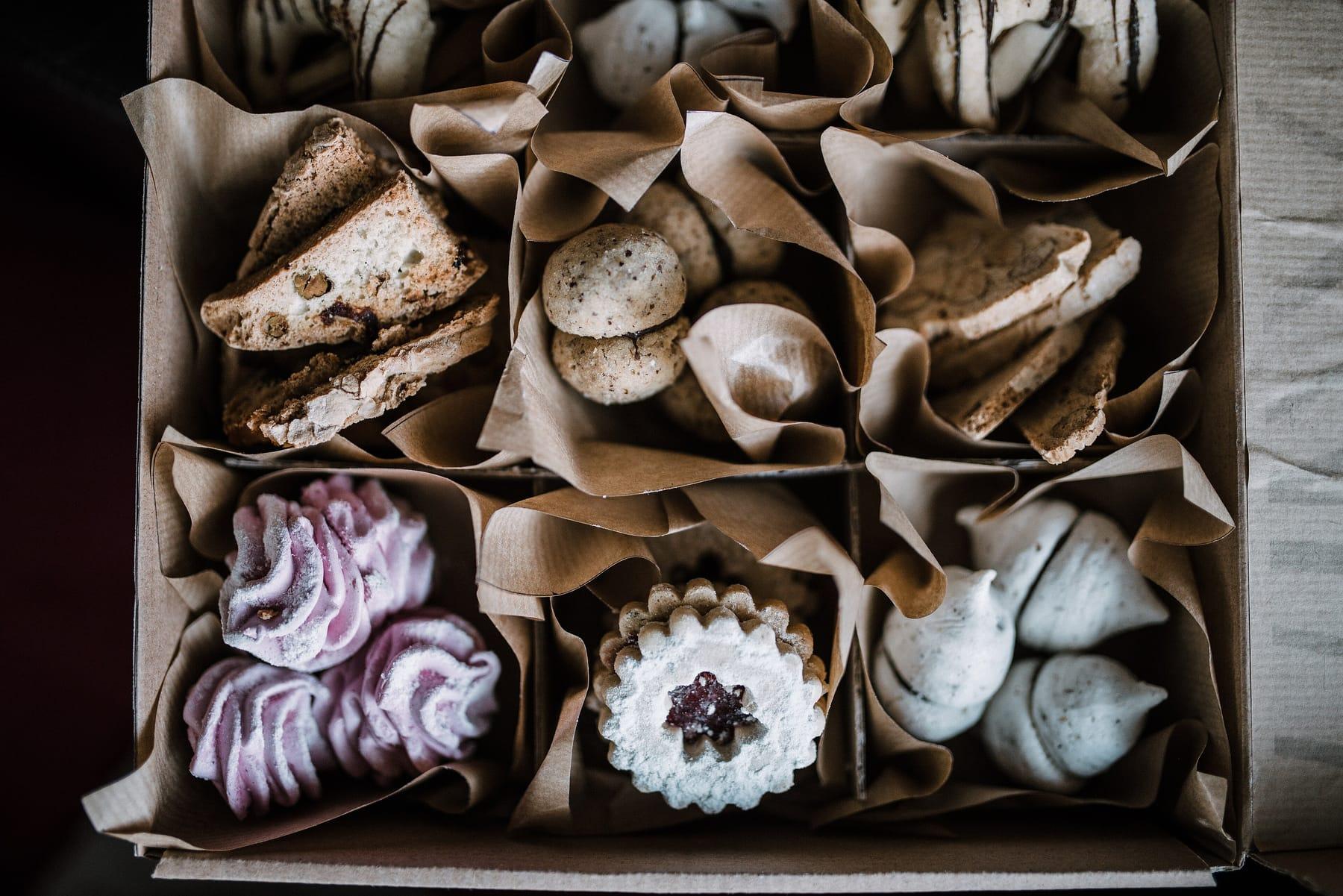
The real move is the pre-order. Holiday baking capacity is finite, planned weeks out, and largely spoken for by early December. Ask at the booth in November. Do you take pre-orders, and what is your last pickup date? Will you box them and write a card? Many sellers build a dedicated holiday box, which our guide to the holiday cookie box covers from the vendor's side. Asking in the last week of December gets you whatever is left on the table.
Market money: gift certificates and tokens
Many market organizations sell their own currency. It solves the hardest gifting problem, choosing for someone whose taste you do not know. The mechanics vary, so read the program page before you buy.
| Market organization | How the gift arrives | Fine print worth reading |
|---|---|---|
| FRESHFARM (Washington, D.C. area) | Digital gift card emailed to the recipient | Shown on a phone at the information tent and swapped for market money in $1 increments, spendable with any producer |
| Neighborhood Farmers Markets (Seattle) | Paper certificates mailed to you or the recipient | $5 increments, $20 minimum, plus a $2 convenience and postage fee; the site suggests ordering by about December 17 for holiday arrival |
| Mass Farmers Markets (Boston area) | Paper certificates, in person or by first-class mail | $5 increments, $10 minimum, good at three of its markets but not the other two, expiring seven years from issue, change capped at $1.00 per $5.00 certificate |
Wooden or plastic tokens sold at an information booth work the same way, usually only at that market.
A CSA share, and what to check before you buy one
A farm share is the most generous gift on this list and the one most likely to go wrong if you buy it blind. USDA's National Agricultural Library defines community supported agriculture as a community of individuals who pledge support to a farm operation, with growers and consumers sharing the risks and benefits of food production. That shared risk is real: a hail storm in July becomes partly the member's problem.
Get four answers from the farm first: when the season starts and ends, where and when pickup happens, whether a half share exists, and whether they will put the membership in the recipient's name. A weekly box collected on Wednesday afternoons twelve miles away is a chore disguised as a present. If the household may not want a standing commitment, our comparison of CSAs, farm stands, and markets covers which model fits which life.
Packing a basket that survives the handoff
Build the basket around a shelf-stable spine: jars, dry mixes, coffee, honey, a tin of cookies. Assemble that part days ahead and keep it in a cool room. Add perishables at the handoff, so bread, cheese, eggs, and cured meat go in on the day. UF/IFAS Extension states the guardrail plainly: discard perishable food left at room temperature longer than two hours, one hour above 90°F. A cheese sitting under a tree from Saturday morning to Sunday evening has failed that test.
Leave the labels on. On a cottage food product the label is the only documentation the recipient will ever get. Illinois, to take one state, requires ingredients in descending order by weight, allergen identification, the date the product was made, and a disclosure that it "was produced in a home kitchen not inspected by a health department that may also process common food allergens." Peeling that off to make a jar prettier takes allergen information away from someone who may need it. Our labeling guide covers why the wording differs by state. If the recipient has an allergy, ask the maker what else runs through that kitchen.
Mailing it is a legal question first
A vendor may not be able to ship you anything, and that has nothing to do with their packaging. Florida's Department of Agriculture and Consumer Services says cottage food operators there may sell "on their website, by mail order, and direct to consumer (in person)." Texas conditions an online sale on the operator, an employee, or a household member personally delivering the food, and lists no mail option. Ask, and take no for an answer without arguing. Our explainer on selling cottage food online sorts the states.
Mailing it yourself is your own call. Clemson Extension's fact sheet on mailing perishable foods gets most of the way on two rules: stick to shelf-stable items unless you will pay for overnight delivery with frozen gel packs or dry ice and label the box "Perishable, Keep Refrigerated," and do not send food packages at the end of the week, when a box can sit in a facility over the weekend. Clemson's do-not-mail list is worth reading first: herbs or vegetables in oil, home-canned breads and cakes, pumpkin butter, and any canned food made without a tested recipe. Maine's bulletin adds the forgotten step: tell the recipient when it is coming, and skip office delivery unless someone will be there with refrigerator space. Perishables arriving above 41°F go in the trash.
Working backward from the date
Three weeks out, walk the market and ask about pre-orders, gift boxes, and the last market day before the holiday. Two weeks out, buy any gift certificate that arrives by mail. One week out, place pantry orders and assemble the shelf-stable half of every basket. On the last market morning, collect the bread, the cheese, and the flowers, and hand those over the same day.
One more thing about December: your market may not be there. Many outdoor markets close in the fall and reappear as indoor winter markets or as a single holiday date. Mass Farmers Markets listed about 50 one-off Thanksgiving and holiday market dates across that state between November 15 and December 21 for its 2025 season, alongside a map of markets running all winter. Check your own market's schedule in October, not in the third week of December. If the aisles are new to you, our guide to shopping a farmers market covers the rest of the etiquette.
Sources and further reading
- 1.Tips for Gifting your Home-Canned Goodies · National Center for Home Food Preservation · accessed Sep 2, 2026 · Blog post dated December 10, 2014; label a gifted jar with the date made, ingredients and storage directions; about one year for best quality with most home-canned foods; refrigerate after opening
- 2.Safe Homemade Food Gifts · Iowa State University Extension and Outreach, AnswerLine · accessed Sep 2, 2026 · Posted December 8, 2020, reviewed May 2026; safe-to-give list including fruit jams and jellies, fruit spreads, whole fruits such as peaches and pears, dry mixes, nut mixes, granola, candy, cookies and breads; foods not to give including low-acid meats and vegetables, pesto, soups, sauces, herb and oil mixes, and pumpkin butter
- 3.Botulism Prevention · Centers for Disease Control and Prevention · accessed Sep 2, 2026 · Page updated February 26, 2026; you cannot see, smell or taste the toxin that causes botulism; low-acid foods are commonly linked to botulism illness and outbreaks
- 4.Mailing Perishable Foods (HGIC 3605) · Clemson Cooperative Extension, Home & Garden Information Center · accessed Sep 2, 2026 · Revised May 8, 2020; overnight delivery with frozen gel packs or dry ice; do not send food packages at the end of the week; label the package Perishable, Keep Refrigerated; foods unsuitable for mailing including herbs or vegetables in oil, home-canned breads and cakes, pumpkin butter, and any canned food without a tested recipe
- 5.Bulletin #4274, Food for Holiday Giving: Safety Comes First! · University of Maine Cooperative Extension · accessed Sep 2, 2026 · © 2006, 2021; most hard cheeses safe to ship at room temperature; high-sugar sweets and baked goods seldom pose a threat; alert the recipient of the expected delivery date; avoid office delivery without refrigerator space; discard mail-order perishables arriving above 41°F
- 6.Using and Storing Honey (GH1120) · University of Missouri Extension · accessed Sep 2, 2026 · Revised January 2023; store in a dry place at 50 to 70°F in a tightly covered container; crystals form with age or refrigeration; warm-water bath to reliquefy, not in a plastic container; no honey for infants younger than one year
- 7.Foods and Drinks to Avoid or Limit · Centers for Disease Control and Prevention · accessed Sep 2, 2026 · Page updated April 14, 2026; do not give honey to a child before 12 months because of botulism risk
- 8.Community Supported Agriculture · USDA National Agricultural Library · accessed Sep 2, 2026 · Definition of CSA as a community pledging support to a farm operation, with growers and consumers sharing the risks and benefits of food production
- 9.Market Gift Certificates · FRESHFARM · accessed Sep 2, 2026 · Digital gift card emailed to the recipient; shown on a phone at the information tent and exchanged for market money in $1 increments spendable with any farmer or producer
- 10.Gift Certificates & Merch · Neighborhood Farmers Markets (Seattle) · accessed Sep 2, 2026 · $5 increments with a $20 minimum, mailed to the buyer or the recipient, $2 convenience and postage fee, redeemed like cash at any of seven markets, recommended holiday order-by date of December 17
- 11.Gift Certificates · Mass Farmers Markets · accessed Sep 2, 2026 · Paper certificates in $5 increments with a $10 minimum, sold in person or online with USPS first-class mail delivery, valid at Central Square, Copley Square and Davis Square but not Kendall Square or the Boston Fish Pier market, expire seven years from issue, maximum change of $1.00 per $5.00 certificate
- 12.2025 Thanksgiving & Holiday Markets · Mass Farmers Markets · accessed Sep 2, 2026 · Statewide list of about 50 one-off Thanksgiving and holiday market dates between November 15 and December 21 in the 2025 season, plus an interactive map of winter markets
- 13.Cottage Foods · Florida Department of Agriculture and Consumer Services · accessed Sep 2, 2026 · Operators may sell on their website, by mail order, and direct to consumer in person; no wholesale
- 14.Texas Cottage Food Production · Texas Department of State Health Services · accessed Sep 2, 2026 · Internet sales conditioned on the operator, an employee, or a household member personally delivering the food to the consumer
- 15.Labeling · University of Illinois Extension · accessed Sep 2, 2026 · Required Illinois disclosure statement wording, ingredients in descending order by predominance of weight, allergen identification, and the date the product was processed
- 16.FOOD SAFETY: The 2-hour rule · UF/IFAS Extension Broward County · accessed Sep 2, 2026 · Posted October 2, 2023 by Brenda Marty-Jimenez; discard perishable food left at room temperature longer than two hours, one hour above 90°F
Weekly newsletter
Market Dispatch
One email a week with the newest guide, what's in season, and a few things worth knowing before market day.
Email subscriptions are not open yet. Read every new story through our free RSS feed.
Follow Market Dispatch via RSS →Keep reading
How to Shop a Farmers Market Like a Regular
Regulars don't spend more; they know the rhythm. When to arrive, what to carry, what to ask the grower, how to read a producer-only sign, where SNAP is handled, and the manners that keep you welcome at the table.
· 10 min read
The Holiday Cookie Box: Pricing, Packaging, and Production Planning
A cookie box is a manufactured product with six recipes inside it, one label on the outside, and a delivery date you cannot move. Here is how to design the assortment, schedule the freezer work, cost a box honestly, and cap pre-orders before you take one too many.
· 9 min read

Can You Sell Cottage Food Online? The Rules on Internet Orders, Shipping, and Delivery
Taking orders online, delivering across town, and mailing a box are three different acts under cottage food law. Here is which states allow each one, what the agencies actually say, and the label, payment, and tax details that follow.
· 10 min read
How to Store Farmers Market Produce So It Actually Lasts
Market produce is usually fresher than what the supermarket sells, and it still turns to slime in the wrong drawer. This reference, built from university extension storage bulletins and FDA handling advice, says where each item lives, whether to wash it first, and how many days to plan on.
· 12 min read