
BusinessGuide
Plan Your Holiday Season Now: A 10-Week Timeline for Food Sellers
The second week of December is decided in October. Here is a ten-week countdown to your last pickup: cutting the menu, recosting it, ordering packaging, opening pre-orders, capping how much you will take, and banking the freezer.
 United Farmers Market Editorial Team

Regional note. Market calendars differ. Many outdoor markets in the Upper Midwest and Northeast close in October or move indoors, while markets in California, Texas, and the Gulf South often run straight through December. Adjust the countdown to your own last selling date.
In this guide
- Set the last date, then count backward
- Weeks 10 and 9: cut the menu, then price it against this year's costs
- Week 8: order packaging while lead time is still on your side
- Week 7: the deadlines other people set
- Weeks 6 and 5: build the form, then open it
- Week 4: Thanksgiving week is the second and last push
- Weeks 3 and 2: bank the freezer, then close the book
- Week 1: production week, where nothing gets added
- The week after: rest, then one working hour
Somewhere in the second week of December, a small food business stops making decisions and starts filling orders. How that week feels was settled in October: how many products you offered, how much packaging you bought, how many orders you agreed to take, and whether you left yourself room to be sick for two days.
The season is worth planning for. Card-spending data the National Retail Federation released in January put 2025 holiday sales, November 1 through December 31, up 4.1 percent, near the top of NRF's forecast range. That is an estimate of American retail, not a Census count and not your table. What it tells you is that customers start thinking about gifts early, which is when your order form should already exist.
Set the last date, then count backward
In 2026, Thanksgiving falls on Thursday, November 26, and Christmas Day on Friday, December 25. For most sellers the last practical handoff is Saturday, December 19: the final weekend market or the last porch pickup. Some add a Wednesday run for anything that should not sit. Pick one date and write it where you will see it daily. Then stop moving it.
Then count back ten weeks.
| Weeks out | Dates in 2026 | The one thing that has to happen |
|---|---|---|
| 10 | Oct 12–18 | Cut the menu to its final list |
| 9 | Oct 19–25 | Recost every item and set prices |
| 8 | Oct 26–Nov 1 | Order packaging and labels |
| 7 | Nov 2–8 | Confirm market dates, applications, and event permits |
| 6 | Nov 9–15 | Build the order form and set the cap |
| 5 | Nov 16–22 | Open pre-orders to your list first |
| 4 | Nov 23–29 | Second announcement, Thanksgiving week |
| 3 | Nov 30–Dec 6 | Bank the freezer, close orders as capacity fills |
| 2 | Dec 7–13 | Hard cutoff, then buy ingredients in one trip |
| 1 | Dec 14–20 | Produce, pack, hand off, add nothing |
Weeks 10 and 9: cut the menu, then price it against this year's costs
The instinct in October is to add products. Resist it. Four items made sixty times each and twelve items made twenty times each both come to 240 units, but the first version has a quarter of the setups, a quarter of the label proofs, and a shopping list you can hold in your head. Choose items that share a base: one dough that becomes three cookies, one caramel that fills two things.
While the list is still open, check your headroom under your state's sales cap. These caps are typically written as gross sales rather than profit, so December is when a seller who felt comfortable all year can cross a line. Minnesota registers producers who sell $78,000 or less in a calendar year, with a tier boundary at $7,665 deciding whether registration costs nothing or $50. Your state's number will differ; the sales caps explainer covers how they are measured.
Week 9 is arithmetic, and last December's costing sheet is not it. USDA's Economic Research Service, in its August 25, 2026 Food Price Outlook, forecast a 3.0 percent rise for all food in 2026 and 2.5 percent for groceries, but the categories moved in different directions: sugar and sweets up 7.1 percent, eggs down 30.8 percent, dairy unchanged. A butter-and-sugar cookie and an egg-heavy custard did not drift the same way this year. Pull actual receipts, rerun the pricing math, and cost the bundles separately, because a box of six is not six single prices with a ribbon on it. Assembly time, the box, and the insert all belong in that number.
Week 8: order packaging while lead time is still on your side
Count units before you shop: orders you intend to accept, times containers per order, plus market inventory, plus roughly ten percent for damage and do-overs. Order to that number, not to a guess.
Stock boxes and bags ship quickly. Custom printing runs on a printer's production schedule plus transit, neither of which is yours to control. Get the production time in writing before you pay, then add your own buffer. Refuse any timeline landing after the first week of December, because a late custom box has no recovery plan. A plain kraft box with a printed sticker beats a beautiful one that arrives on the 12th. The packaging guide covers materials and per-unit costs.
Order labels the same week and count them the same way. Check whether your state's label requirement attaches to each packaged unit or only the outer container: if it is the unit, a gift box of six bagged cookies is six labels plus one for the box. Proof the wording once, then print.
Week 7: the deadlines other people set
Two separate clocks run in November, and it is easy to watch only one.
The first is the market's application deadline, which for holiday events closes earlier than most people expect. The Patchwork Market in Durham, North Carolina, ran applications for its December 12 and 13, 2026 holiday market from August 1 to September 30, with notifications October 7 and booth fees of $130 to $250 due October 14. The Town of Mount Pleasant, South Carolina, set a September 12 deadline for its December 12 holiday market and craft show, three months out. If it is October and you have not applied, ask about the waitlist anyway. Spots do open up.
The second clock is the permit, and requirements differ county to county. The Southern Nevada Health District says a registered cottage food operator may sell in Clark County at a special event such as a craft fair or a licensed farmers market without a health permit, provided the items are properly registered, prepared, packaged and labeled and the event coordinator or market manager approves. Clark County, Washington, takes the opposite starting position: all food served to the public requires notification and usually a permit, and temporary event applications have to be in 14 days ahead to avoid a late fee. Read your own agency's page and your event's vendor packet in one sitting in early November, while a gap is still fixable.
Weeks 6 and 5: build the form, then open it
Capacity comes first, and it is not the oven. Start from your slowest step: decorating for most cookie sellers, jar filling for jam, the shaping window for bread. Time it once, honestly, then multiply by the hours you actually have in a December week after your job and your family. That is your ceiling. Take a third off, because December has a way of producing a head cold or a dead mixer.
Turn the ceiling into a number of orders and print it on the form. Three sentences do the rest, in identical words on the form, in the confirmation email, and on the sign at your table:
- What the deposit is, when it is due, and whether it is refundable.
- The date orders close, stated as a date rather than "while supplies last."
- The pickup window, and what happens to an order nobody collects.
Open in week 5, to your email list a full day before anyone else sees it. Regulars pick up on time, pay without being chased, and come back in March, which is the whole argument in turning buyers into regulars. The mechanics, from form to pick sheet, are in the pre-orders guide.
Week 4: Thanksgiving week is the second and last push
Send one announcement early in Thanksgiving week and one on the Saturday after, November 28, when local shopping is on people's minds anyway. Then stop. Two well-timed messages beat six anxious ones.
Change what the messages say, too. By late November you are not advertising availability, you are reporting scarcity: what is left, and the date it closes. "Eleven boxes left, orders close December 8" is a sentence people act on. If you also sell Thanksgiving pies, keep that production and its cutoff separate from the December book, or you will spend the week of the 23rd doing both badly.
Weeks 3 and 2: bank the freezer, then close the book
Early December is for building inventory that keeps. K-State Research and Extension's guidance on freezing baked goods sets the freezer at 0 degrees Fahrenheit or less, in moisture-proof and vapor-proof packaging with the air pressed out, and gives quality-based storage windows worth planning around.
| Product | Storage at 0 °F or below |
|---|---|
| Unbaked cookie dough | Up to 6 months |
| Baked cookies, unfrosted | Up to 12 months |
| Baked cookies, frosted | Up to 2 months |
| Quick breads, muffins, coffee cakes | 2 to 4 months |
| Yeast breads and rolls, baked | 6 to 8 months |
| Unbaked yeast dough | 1 month |
Two details there change how you schedule. Cool everything completely before packaging, because condensation from warm food turns a cookie soggy after thawing. And drop-cookie mounds frozen on a sheet bake without thawing, roughly ten minutes at 400 degrees, which makes baking day a queue rather than a project. Frosted cookies hold about two months against twelve unfrosted, so freeze them plain and decorate last.
Week 2 is the hard cutoff. Post it and honor it. The December 16 request gets a kind no, and then you shop once, against a consolidated list.
If you ship, that week is also the postal deadline. USPS announces recommended send-by dates each September. The 2025 list, dated September 17, gave contiguous-U.S. dates of December 17 for Ground Advantage and First-Class Mail, December 18 for Priority Mail, and December 20 for Priority Mail Express. Those were the latest published as of early September 2026, so check this year's announcement rather than assuming they repeat. Check too whether your state permits shipping at all, since many cottage food laws restrict sales to in-person handoff. That question is worked through in selling cottage food online.
Week 1: production week, where nothing gets added
The week of December 14 has one rule: nothing new. No added orders, no new products, no substitutions you did not already offer in writing. Every exception costs an hour you have not got.
Print the pick list on paper and work from it. Label as you pack, not afterward. Stage finished boxes by pickup day rather than by product, so a Thursday order is never assembled from four shelves. Hold two or three unallocated boxes back for the customer whose order was miscounted, because one will be.
The week after: rest, then one working hour
Take the days between Christmas and New Year's off. Nothing you can sell then is worth what it costs you.
Then, in the first week of January, sit down once with the numbers while they are fresh:
- Gross sales for the calendar year, and where that leaves you against your state's cap.
- Units sold per item. What ran out by December 5 and what you carried home.
- Packaging left over, counted, so you do not reorder it.
- The two things that went wrong, written down in plain language.
One date before you close the notebook: the IRS says the fourth-quarter estimated tax payment, covering income from September 1 through December 31, is due January 15 of the following year. A good December makes that payment larger than you expect, and it comes due about two weeks after the last dollar arrives.
One task is worth doing today: put your last pickup date on a calendar, count back ten Mondays, and block those weeks. If your market closes in October rather than December, the countdown shifts earlier, but the order of the work does not.
Sources and further reading
- 1.CNBC/NRF Retail Monitor's December Data Shows Strong Holiday Season Spending · National Retail Federation · accessed Sep 2, 2026 · Press release dated January 12, 2026: Retail Monitor card data showed 2025 holiday sales, November 1 through December 31, grew 4.1 percent, near the top of NRF's 3.7 to 4.2 percent forecast; December Census figures were not yet released
- 2.Federal Holidays · U.S. Office of Personnel Management · accessed Sep 2, 2026 · 2026 dates: Thanksgiving Day Thursday, November 26; Christmas Day Friday, December 25
- 3.Food Price Outlook, Summary Findings · USDA Economic Research Service · accessed Sep 2, 2026 · August 25, 2026 release: 2026 forecasts of 3.0 percent for all food, 2.5 percent food-at-home, 7.1 percent for sugar and sweets, a 30.8 percent decrease for eggs, dairy unchanged
- 4.Freezing Baked Goods · K-State Research and Extension, Ellis County · accessed Sep 2, 2026 · Freezer at 0 degrees Fahrenheit or less; cool completely before packaging; storage times for cookies, yeast breads, quick breads and cakes; frozen drop-cookie mounds baked without thawing at 400 degrees for about 10 minutes
- 5.USPS Recommends 2025 Holiday Mailing and Shipping Dates · United States Postal Service · accessed Sep 2, 2026 · Release dated September 17, 2025; contiguous U.S. send-by dates of December 17 for Ground Advantage and First-Class Mail, December 18 for Priority Mail, December 20 for Priority Mail Express
- 6.Apply to be a Vendor · The Patchwork Market (Durham, North Carolina) · accessed Sep 2, 2026 · 2026 Holiday Market on December 12 and 13; applications open August 1 and close September 30; notifications October 7; fees due October 14; booth fees $130 to $250
- 7.Applications For Holiday Markets & Parade Now Available · Town of Mount Pleasant, South Carolina · accessed Sep 2, 2026 · Notice dated August 4, 2026: the 27th annual Holiday Market and Craft Show falls on December 12 with a September 12 application deadline; homemade preserves and baked goods among accepted categories
- 8.Cottage Food FAQ · Southern Nevada Health District · accessed Sep 2, 2026 · Cottage foods may be sold in Clark County at a special event such as a craft fair or a licensed farmers market without a permit if properly registered, prepared, packaged and labeled; approval from the event coordinator or market manager required
- 9.FAQs about Farmers Markets, Bazaars, & Temporary Events · Clark County Public Health (Washington) · accessed Sep 2, 2026 · All foods served to the public require notification to the health department and usually a permit; temporary event applications must be submitted within 14 days of the event to avoid a late fee
- 10.Cottage Food Producer Registration · Minnesota Department of Agriculture · accessed Sep 2, 2026 · $78,000 or less in a calendar year measured as gross annual sales; Tier 1 at $7,665 or less with no fee, Tier 2 from $7,666 to $78,000 with a $50 registration fee
- 11.Estimated Tax: When to Pay Estimated Tax · Internal Revenue Service · accessed Sep 2, 2026 · Fourth-quarter estimated tax payment covering September 1 through December 31 income is due January 15 of the following year
Weekly newsletter
Market Dispatch
One email a week with the newest guide, what's in season, and a few things worth knowing before market day.
Email subscriptions are not open yet. Read every new story through our free RSS feed.
Follow Market Dispatch via RSS →Keep reading
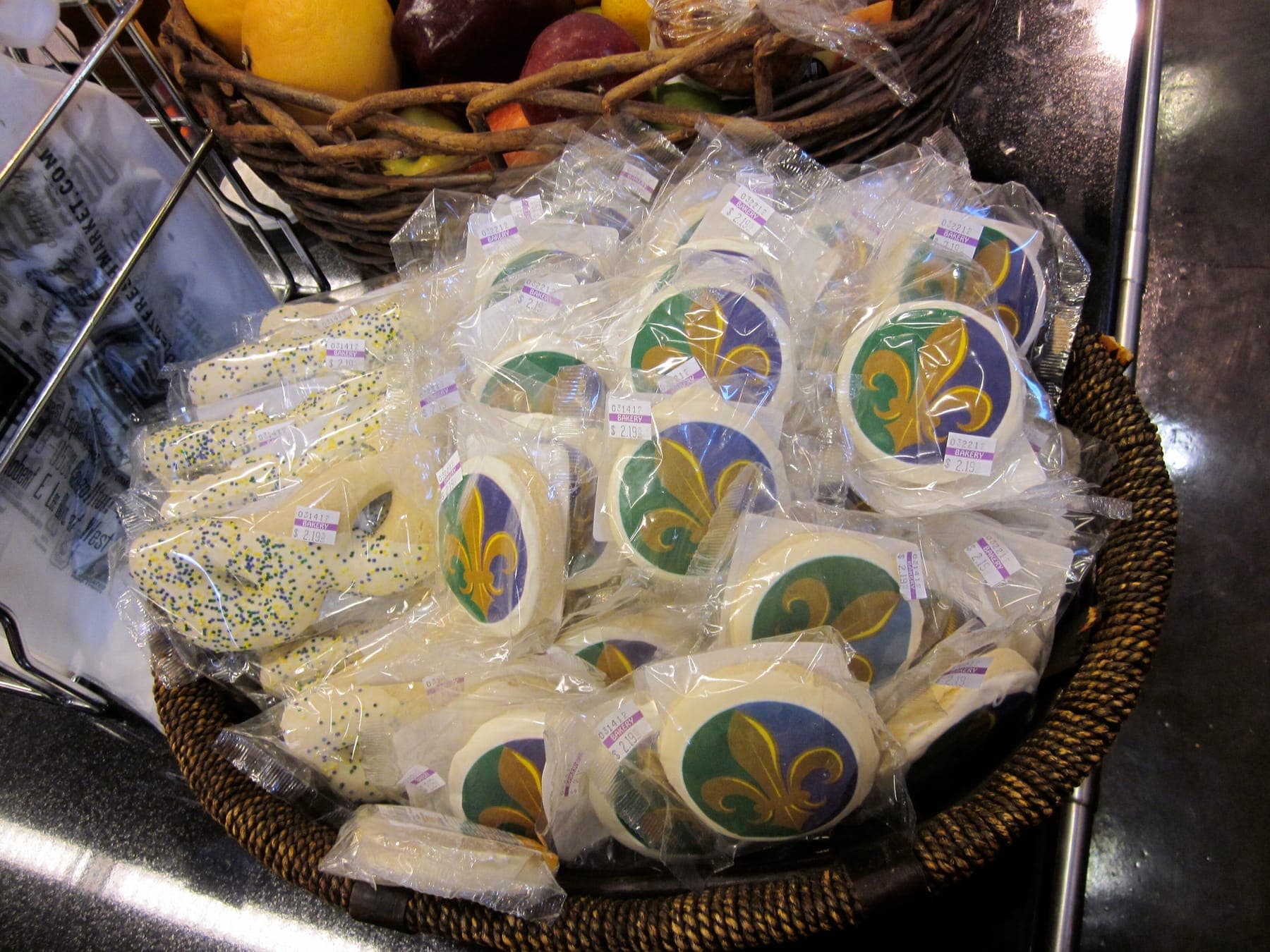
Packaging for Cottage Food: Materials, Costs, and Presentation That Protects the Product
A bag or box has three jobs: keep the product safe and fresh, carry the label your state requires, and sell it from three feet away. Here is how to choose packaging by product type, what a unit really costs, and which states require sealed, labeled packages before you can sell.
· 12 min read

Product Photography With a Phone: A Practical Guide for Food Makers
Window light, a clean background, the right angle for each product, and ten seconds of phone settings matter more than any gear. Here is the routine, plus a shot list you can reuse every time you add a product.
· 8 min read
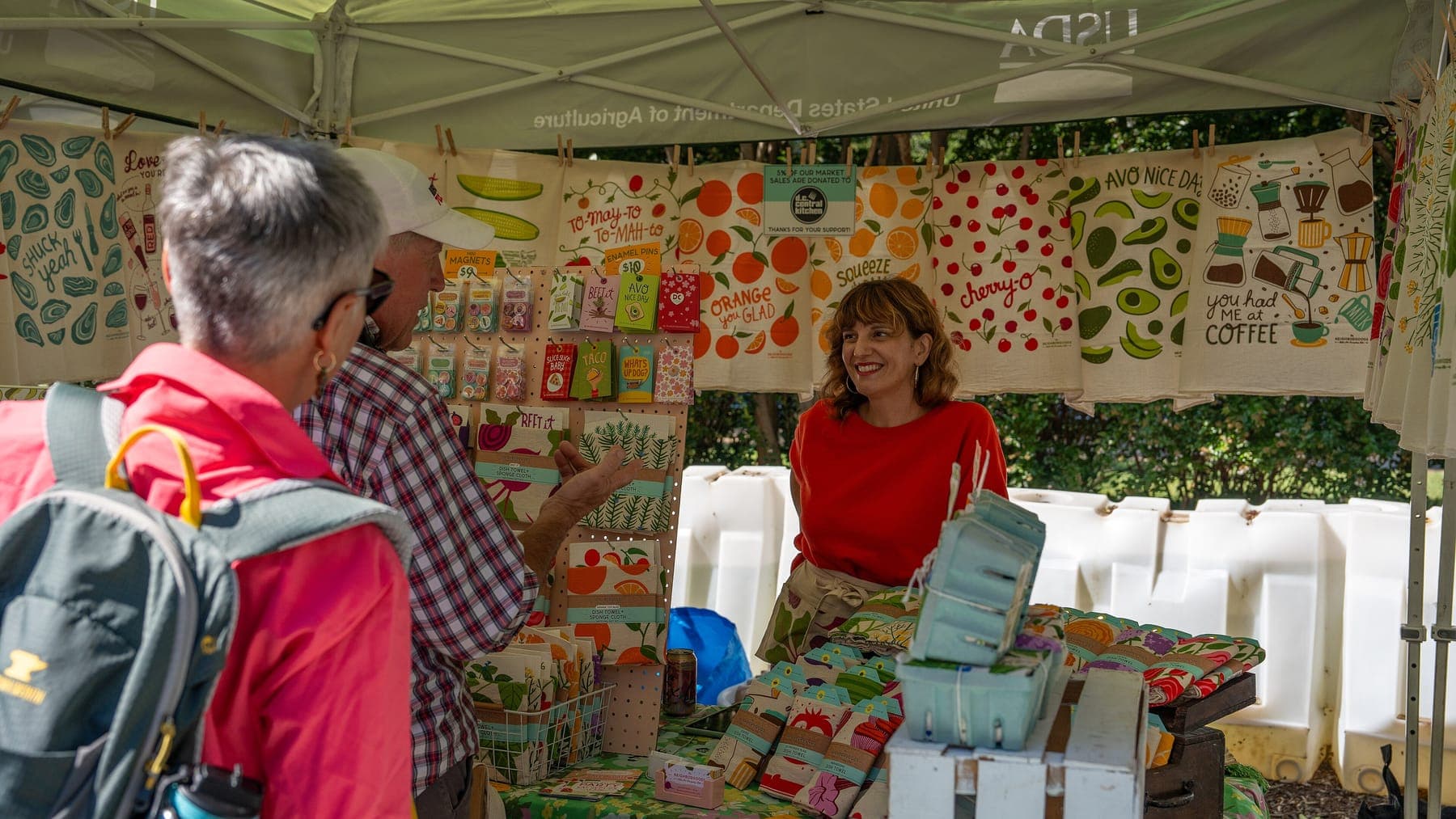
Turning First-Time Buyers Into Regulars: Retention for Very Small Food Businesses
A stranger buys once because of a sign and a sample. A regular buys twenty times a season because of you. Here is why the second kind of customer carries a one-person food business, and the plain habits that make more of them.
· 8 min read
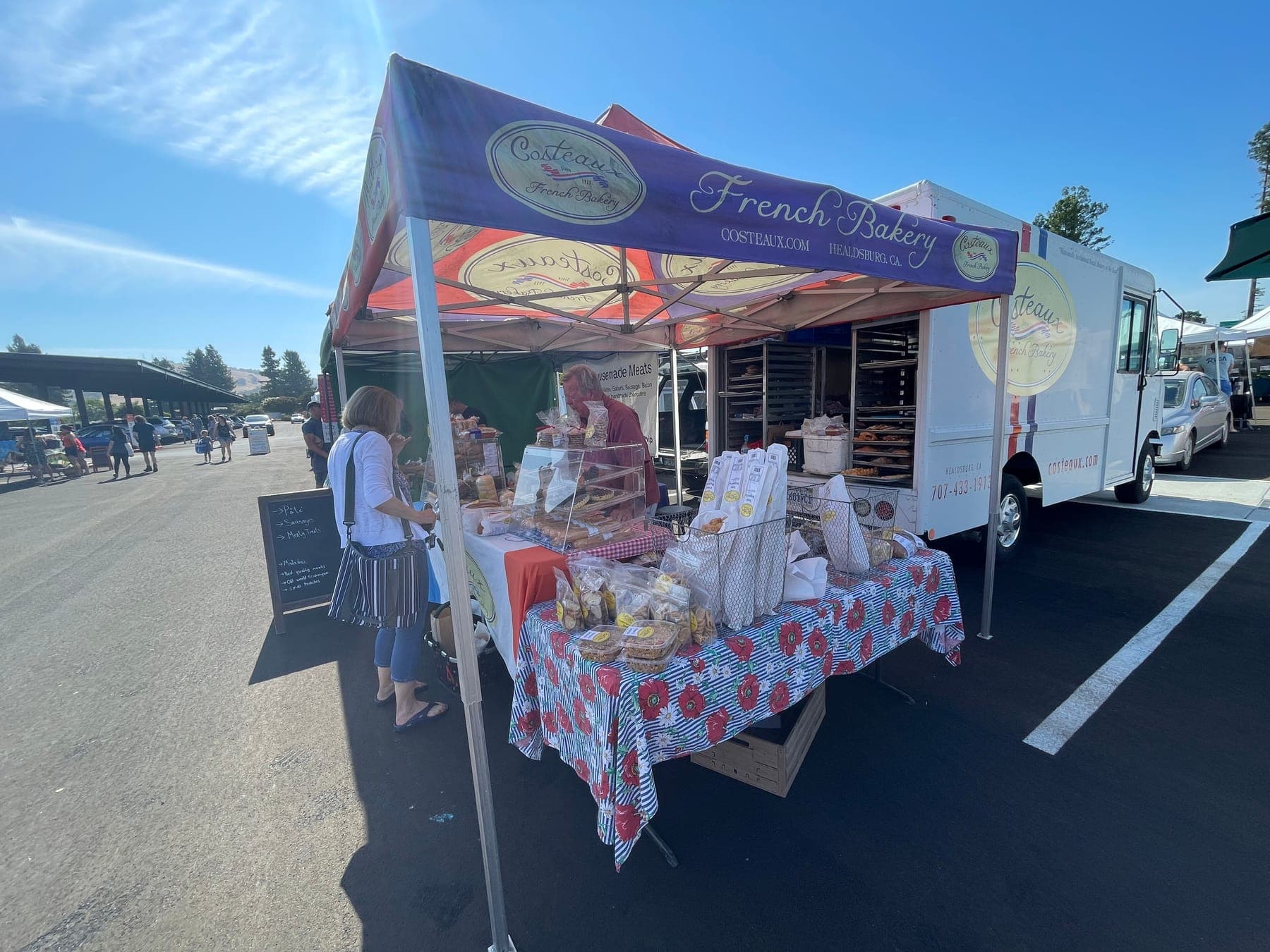
Naming and Branding a Home Food Business Without a Design Budget
Your name goes on every label, sign, and search a customer will ever run. Here is how to choose one people can say and spell, run the SBA and USPTO checks before you print, and build a two-color, one-mark look you can keep for years without paying a designer.
· 10 min read