
Farmers MarketsGuide
Wind, Rain, and Heat: Weather Preparation for Market Vendors
A pop-up canopy is a sail with a price tag. What markets require for weights and how to attach them, when to drop the tent, how to keep product dry and cold food cold, and how you hear when a market calls it off.
 United Farmers Market Editorial Team
In this guide
- Canopy weight: what markets require and why the number varies
- Attaching weights so they help instead of hurt
- Reading the wind and knowing when to drop the canopy
- Rain: sidewalls, product, and the card reader
- Heat: keep the food legal first, then look after yourself
- Cold-weather markets
- When the market cancels, and how you will hear
- The weather kit
The weather that ends a vendor's season is rarely dramatic. It is a gust at 7:40 a.m. while one hand is on a table leg and the other is on a half-raised canopy frame. The Washington State Farmers Market Association's canopy guide puts it plainly: many accidents at farmers markets involve windblown tents, canopies, and umbrellas, and the worst minutes are setup and breakdown, when the crowd that breaks up the wind is gone and your tent is half-weighted.
Canopy weight: what markets require and why the number varies
A 10-by-10 canopy is 100 square feet of fabric on four thin legs. WSFMA does the arithmetic: a gallon of water weighs 8 pounds, so a jug on each corner "would be the equivalent of a 3 year old child trying to hold down a 100 square foot parachute." Nearly every handbook now sets a minimum per leg.
| Market or association | Minimum per leg | Notes |
|---|---|---|
| Washington State Farmers Market Association (member markets) | 24 lb; 50 lb for umbrellas | Augers or spiral stakes allowed on grass and soil; straight stakes are not |
| Farm to City, Philadelphia | 25 lb, four weights per tent | A tent that tips without proper weights bars the vendor from future markets |
| High Desert Farmers Market, California | 40 lb | Sand-filled canopy bags only; no hanging weights |
| Duvall Farmers Market, Washington | 24 lb; 50 lb for umbrellas | Canopies inspected daily |
| Dale City Farmers Market, Virginia | 10 lb | Visible tether lines; soft edges |
| Farmers Market at Saginaw Switchyard, Texas | 10 lb | Applies during setup and breakdown too |
Read the spread as a floor. WSFMA and High Desert both cite a canopy manufacturer recommending at least 40 pounds on each corner of a 10-by-10, doubled for a 10-by-20. The penalty for coming up short is worded almost identically at WSFMA markets, High Desert, Dale City, and Saginaw: take the canopy down and sell without it.
Attaching weights so they help instead of hurt
WSFMA's best practice is a weight strapped to the bottom of each leg and tethered by bungee to the top corner, which lowers the center of gravity; weight alone will not save a frame with nothing pulling down on its top corners. Markets disagree on the hardware, so read your handbook first. High Desert allows only sand-filled canvas bags wrapped on with velcro, no lines at all, while Dale City requires tether lines and wants them visible.
Anchoring must not become its own hazard: shoppers look at tables, not at the ground. Across the WSFMA, High Desert, Dale City, and Farm to City rules:
- Weights sit on the ground at the leg base with soft edges, never at head height. Cement blocks are named as toe and shin breakers.
- Resting a weight on the tent's small foot without fastening it does not count.
- WSFMA warns off tying a canopy to tables, coolers, or vehicles, and Dublin, California bans tying to landscaping. Dale City is the exception: its back legs may be tied to a vehicle if the front legs carry weights.
Farm to City also tells vendors to ask their insurance agent whether liability coverage reaches a tent accident. Do that before your first windy Saturday.
Reading the wind and knowing when to drop the canopy
Watch the forecast gust, not the sustained speed, and use the National Weather Service's Beaufort scale as a field check: at 19 to 24 mph small trees in leaf begin to sway, and at 25 to 31 mph large branches move and umbrellas are "used with difficulty." That band is the decision zone; where your canopy fails inside it depends on your weights, the fabric, and whether the sidewalls are up.
Sidewalls turn an open frame into a box the wind can push, so they come down first. Then drop the legs to the shortest setting to cut leverage. If the frame is still lifting its weights, pull the fabric top and sell under open sky; WSFMA and High Desert both say to move customers clear first. Some markets decide for you: Saginaw Switchyard requires every canopy down for the rest of the day once wind destabilizes them, and Cedar Rapids closes at sustained winds of 40 mph.
Setup and breakdown stay the dangerous minutes. WSFMA's rule is that nothing interrupts the weighting process, because a half-secured canopy is as dangerous as an unsecured one. Weight the first leg as soon as it stands, and drop the canopy the moment the last weight comes off.
Rain: sidewalls, product, and the card reader
Nearly every handbook we read says "rain or shine." Dale City runs every Sunday of its season regardless of weather unless the manager judges conditions unsafe, which is the usual shape of the rule. Sidewalls are the rain tool, with the wind caveat above. Writing for the Maine Federation of Farmers' Markets, Tom Roberts of the Orono market describes vendors raising the tent sides as soon as the wind started blowing rain sideways, which is the right trigger. Watch the canopy top for pooling water, 8 pounds a gallon that dumps on whoever is underneath.
Product is the harder problem, and rain is not the only enemy. In the same exchange, baker Anne Saggese of the Belfast and Camden markets describes a cool, humid Saturday when moisture settled instead of rising: her cookies went soggy before they were cool enough to bag, and leftover baklava lost half its height under an airtight dome. Bring lids, clear bins, and sealed clamshells, and display a few items while the rest stays covered. Paper labels bleed, so keep spares in a zip bag and use a wipeable table cover. Electronics get a dry box of their own, and keep a paper sales log for the day the reader dies; our payments guide covers backups. Rain thins the crowd, so bring less, and bring your steadiest sellers.
Heat: keep the food legal first, then look after yourself
Under section 3-501.16 of the FDA Food Code, time/temperature control for safety food is held at 135°F or above, or at 41°F or less. Most cottage food is shelf stable and never enters that rule. If you sell or sample anything that does need temperature control (cut fruit, cheese, cream fillings), that is the inspector's number, and what your permit allows varies by state. Our food safety fundamentals guide covers the categories.
The FDA's outdoor food handling page gives the practical version: perishable food should not sit between 40°F and 140°F for more than two hours, or one hour when it is above 90°F outside. Coolers with ice or frozen gel packs should hold food at 40°F or below, and they hold longer the less you open them, so pack drinks separately, keep a probe thermometer in with the food, and restock the display in small batches. We go deeper in keeping food safe in summer heat.
Then there is you. The NWS heat index chart puts 90°F to 103°F in "extreme caution" and 103°F to 124°F in "danger," and those values assume shade; full sun can add up to 15°F. The OSHA-NIOSH heat illness sheet was written for employers, but its numbers transfer:
- In moderately hot conditions, drink about a cup of water every 15 to 20 minutes, before you are thirsty. Urine should be clear or lightly colored.
- Meals and snacks replace the salt lost in sweat; electrolyte drinks are usually unnecessary. Stay under 12 quarts of water in 24 hours.
- After more than a week away from the heat, ease back in over the first week.
- Heat exhaustion is headache, nausea, dizziness, weakness, and heavy sweating. Heat stroke adds confusion, loss of consciousness, and very high body temperature, and it is a 911 call.
Cold-weather markets
Winter and shoulder-season markets flip the problem. NIOSH's cold stress guidance is short: layers of loose clothing, protection for ears, face, hands, and feet, breaks somewhere warm, and warm liquids nearby. Its 2021 bulletin adds that wind is an extra route for heat loss and that clothing, boots, and gloves must stay dry. Early hypothermia looks like shivering, fatigue, loss of coordination, and confusion, and NIOSH notes that in regions unaccustomed to winter weather, near-freezing temperatures count.
At the table that means a mat between your boots and the pavement, glove liners you can make change in, a thermos, and spare socks in the vehicle. Jars and eggs freeze, cold product sweats once it goes into a warm car, and batteries drain faster. Our winter markets guide covers the business case and setup.
When the market cancels, and how you will hear
Markets rarely cancel for rain. They cancel for lightning and wind, and the good ones write down the trigger. Cedar Rapids' handbook lists its closures: lightning within 10 miles of the venue, with reopening possible 30 minutes after the last strike; sustained winds of 40 mph or more; and sustained hail. Only market staff can close the venue. Saginaw Switchyard's rule is shorter: thunder, lightning, or high winds and the market is required to cancel.
The lightning rule is not negotiable. NWS guidance is that if you hear thunder, lightning is close enough to strike you: get into a substantial building with electricity or plumbing, or an enclosed metal-topped vehicle with the windows up, and stay 30 minutes past the last thunder. A canopy is neither, which is why Dixboro Farmers' Market in Michigan sends everyone to their vehicles when severe weather develops after opening.
Communication is the part you can prepare for. Dixboro decides by noon on market day and posts to its website and Facebook; other markets use email lists, text threads, or a manager's call. Learn which channel yours uses and by what time, save the manager's cell number, and check it at a fixed point each market morning. Read the attendance and refund clauses too. Saginaw and Dublin give no refund when weather cancels a market, and staying home on your own judgment carries a cost: Saginaw suspends vendors who no-show twice in a season, and several Maine markets put a membership up for review after three absences. The vendor guide covers how markets track attendance.
The weather kit
This fits in one tote and a cooler; our budget booth guide covers the tent and tables.
- Four sand-filled canopy weights, 40 pounds each, plus the straps or bungees your market's rules allow, spare zip ties, and gaffer tape
- Sidewalls, and the discipline to remove them when the wind picks up
- Clear lidded bins, table clips, a wipeable cover, and spare labels in zip bags
- A dry box for cash, phone, card reader, and battery pack
- Coolers with frozen gel packs, a probe thermometer, and a separate drink cooler
- A gallon of water, salty snacks, sunscreen, a brimmed hat, and a battery fan
- Cold days: hand warmers, glove liners, a mat, a thermos, spare socks
- A printed copy of the market's weather policy with the manager's number
Reread the weather and canopy sections of your market handbook every spring. Weight minimums, cancellation triggers, and notification channels change between seasons, and the version you remember is not the one you will be inspected against.
Sources and further reading
- 1.Canopy Safety 101: Your Guide to Canopy Safety at WSFMA Farmers Markets · Washington State Farmers Market Association · accessed Sep 2, 2026 · 24 pounds per leg and 50 for umbrellas; manufacturer's 40 pounds per corner and double on a 10x20; auger and spiral stake specs; setup and breakdown vulnerability; gallon of water weighs 8 pounds; bad-weights list; strap to leg and tether to top corner
- 2.New Policy on Securing Tents (November 3, 2014) · Farm to City (Philadelphia), hosted by Farmers Market Coalition · accessed Sep 2, 2026 · 25-pound weights on each leg; four weights per 10x10 and six for two tents; laying a weight on the foot not acceptable; vendors barred after a tipped tent; high-wind takedown discretion; insurance advice
- 3.Proper Canopy Weights Explained · High Desert Farmers Market (California) · accessed Sep 2, 2026 · 40 pounds per leg; sand-filled canvas canopy bags only, wrapped by velcro with no tether lines; no hanging weights; direct customers away when canopies come down mid-market
- 4.Dale City Farmers Market Rules and Regulations (February 2024) · Prince William County Department of Parks and Recreation (Virginia) · accessed Sep 2, 2026 · Minimum 10 pounds per leg; visible tether lines; soft edges; tying the back of a canopy to a vehicle allowed if front legs are weighted; market held every Sunday regardless of weather unless the manager deems it unsafe
- 5.Duvall Farmers Market 2026 Guidelines and Policies · Duvall Farmers Market (Washington) · accessed Sep 2, 2026 · 24 pounds per leg and 50 for umbrellas; weights tied to legs and canopy; daily canopy inspection; rain or shine with cancellation at the manager's discretion
- 6.Farmers Market at Saginaw Switchyard Vendor Handbook 2025 · Farmers Market at Saginaw Switchyard (Texas) · accessed Sep 2, 2026 · 10 pounds per leg including setup and breakdown; windy day policy requiring canopies down for the day; cancellation for thunder, lightning, high winds; no refund on weather cancellation; 24-hour cancellation notice and suspension after two no-shows
- 7.Cedar Rapids Downtown Farmers Market 2025 Vendor Handbook · Cedar Rapids Metro Economic Alliance (Iowa) · accessed Sep 2, 2026 · Inclement weather policy: lightning within 10 miles, reopen 30 minutes after last strike; sustained 40 mph wind; sustained hail; red air quality advisory; only market staff can close the venue
- 8.Farmers' Market Weather Policy · Dixboro Farmers' Market (Michigan) · accessed Sep 2, 2026 · Rain or shine; cancellation announced by noon on market day via website and Facebook; vehicles as shelter after opening
- 9.2026 Farmers' Market Vendor Application and Rules · City of Dublin, California · accessed Sep 2, 2026 · Rain or shine, no weather refunds; windy site; canopies may not be tied to landscaping
- 10.Rainy Days at Market · Maine Federation of Farmers' Markets · accessed Sep 2, 2026 · Board member exchange: Anne Saggese on humidity ruining baked goods, Tom Roberts on raising tent sides in sideways rain, bylaw clauses putting membership up for review after three absences
- 11.Beaufort Wind Scale · National Weather Service, Miami · accessed Sep 2, 2026 · Land effects by wind speed: small trees in leaf sway at 19 to 24 mph; umbrellas used with difficulty at 25 to 31 mph
- 12.Lightning Safety Tips · National Weather Service · accessed Sep 2, 2026 · Thunder means lightning is close enough to strike; safe shelter definition; wait 30 minutes after last thunder
- 13.Heat Index · National Weather Service, Amarillo · accessed Sep 2, 2026 · Extreme caution and danger ranges; chart values are for shade and full sun adds up to 15°F
- 14.OSHA-NIOSH InfoSheet: Protecting Workers from Heat Illness · Occupational Safety and Health Administration and NIOSH · accessed Sep 2, 2026 · One cup of water every 15 to 20 minutes; urine color; meals replace electrolytes; 12-quart daily ceiling; acclimatization after a week away; heat exhaustion and heat stroke symptoms
- 15.FDA Food Code 2022, section 3-501.16 · U.S. Food and Drug Administration · accessed Sep 2, 2026 · TCS food held at 135°F or above or 41°F or less
- 16.Handling Food Safely While Eating Outdoors · U.S. Food and Drug Administration · accessed Sep 2, 2026 · Danger Zone 40°F to 140°F; two hours, or one hour above 90°F; coolers with ice or gel packs; limit opening the cooler
- 17.Cold and Work: Types, Causes, Preparation · NIOSH, Centers for Disease Control and Prevention · accessed Sep 2, 2026 · Layers of loose clothing; protect ears, face, hands, feet; warm breaks and warm liquids; near-freezing temperatures count in regions unused to winter
- 18.The Physiological Response of Working in Cold Environments and How Your PPE Can Help · NIOSH Science Bulletin, Centers for Disease Control and Prevention · accessed Sep 2, 2026 · Wind chill as added heat loss; keep clothing, boots, and gloves dry; early hypothermia signs
Weekly newsletter
Market Dispatch
One email a week with the newest guide, what's in season, and a few things worth knowing before market day.
Email subscriptions are not open yet. Read every new story through our free RSS feed.
Follow Market Dispatch via RSS →Keep reading
How to Become a Farmers Market Vendor: The Complete First-Season Guide
How markets are organized and why it changes what they ask of you, how to read a rulebook before you apply, what fees, insurance, and sales tax involve, what to bring, how the first morning runs, and how to judge the numbers after a month.
· 14 min read
How to Find the Right Farmers Market for What You Sell
The USDA directory alone lists more than 7,000 farmers markets. Here is where to look, what a listing cannot tell you, and how two visits as a shopper and one conversation with the manager reveal whether a market actually needs what you make.
· 8 min read
Accepting Payments at the Market: Cash, Cards, Apps, and SNAP, Explained for Vendors
Cash, card readers, payment apps, sales tax, and SNAP tokens each move money into your business by a different route. Here is how each one works, what it cost when we checked in September 2026, and what to set up before opening day.
· 10 min read
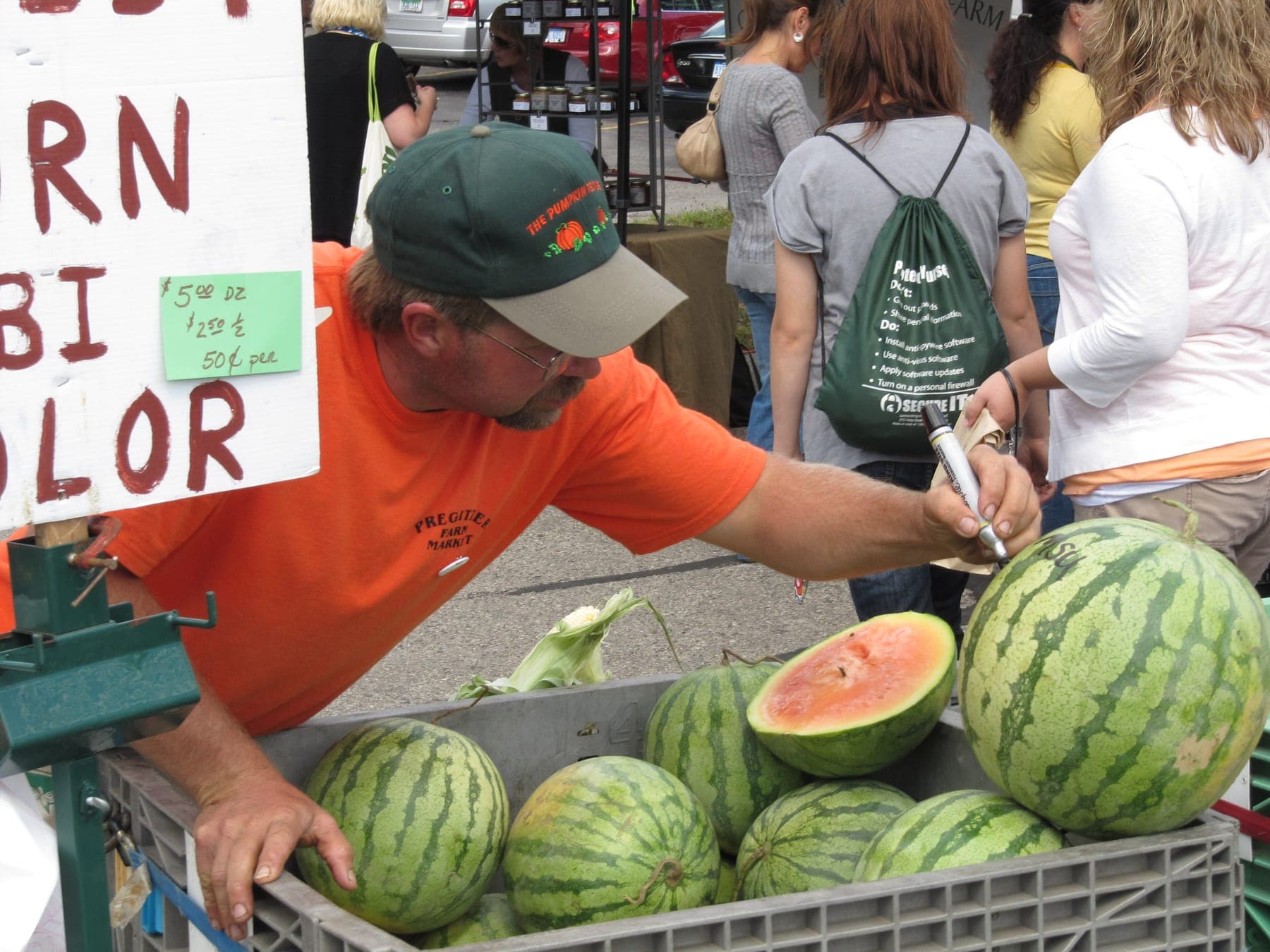
Signage and Price Cards: The Small Details That Move Product at a Market Table
A shopper who cannot find a price often walks instead of asking. What the three signs every booth needs should say, how big the letters have to be, what survives weather, and the point-of-sale placards some states require by law.
· 7 min read