
Cottage FoodGuide
Selling Sourdough: What Home Bakers Should Know Before Their First Loaf Sale
Plain sourdough sits on almost every state's allowed list, which is the easy part. The hard parts are the bake-day schedule, an oven that caps your revenue, an ingredient statement that has to name the starter, and a bag that softens the crust before the market opens.
 United Farmers Market Editorial Team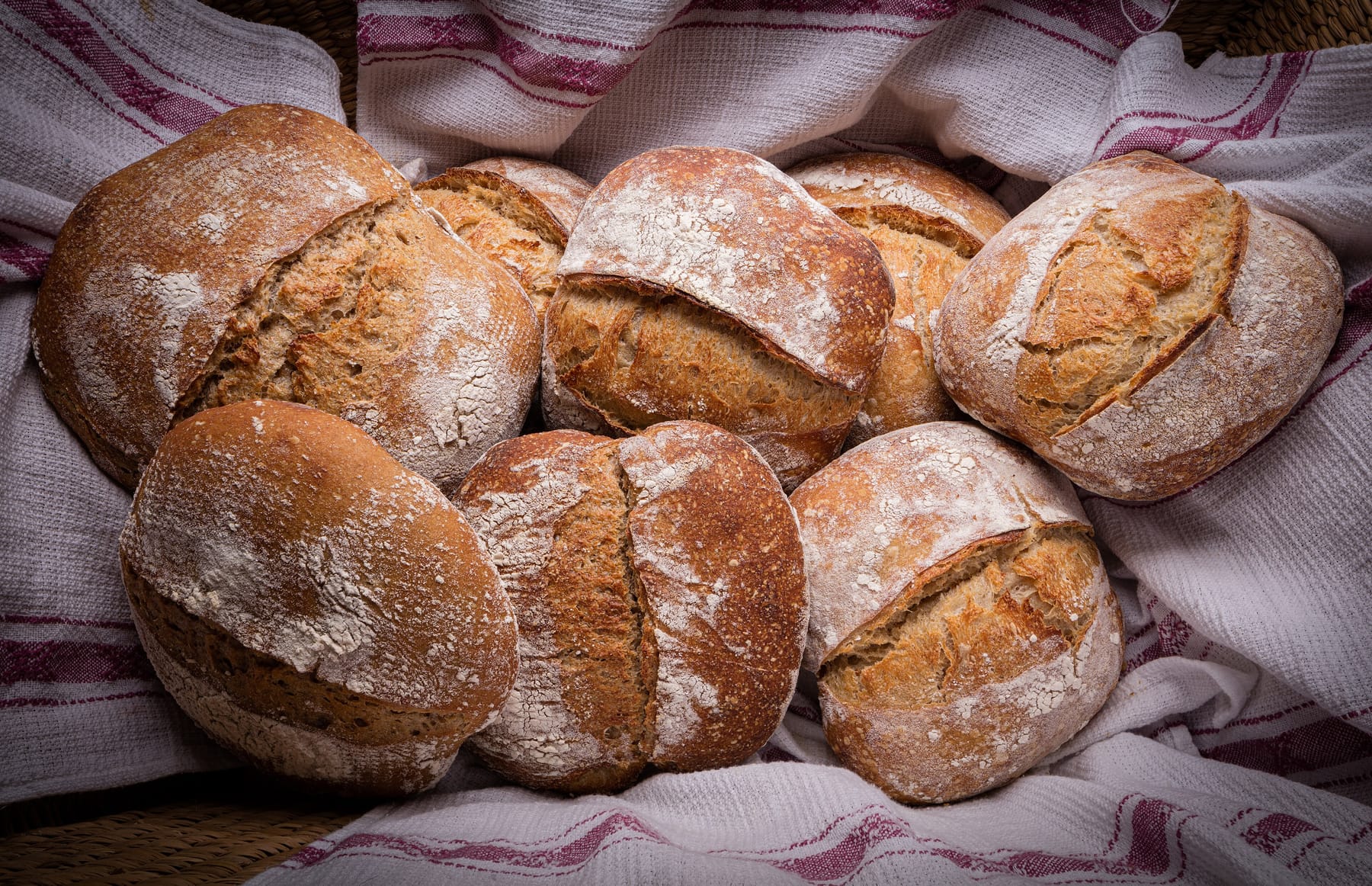
In this guide
- Bread is on the list. Read your state's list anyway.
- The cold retard is your scheduling department
- Your oven decides what you can earn
- What a loaf costs, once you pay yourself
- Pricing next to a $1.82 anchor
- Writing the ingredient statement for a starter
- Bagging a loaf without ruining it
- Pre-orders solve the problem your oven created
- Before your first loaf sale
Your starter is alive and reliable, and people have started asking whether they can buy a loaf. The legal answer is usually yes. Plain sourdough is one of the least complicated things a home kitchen can sell in most of the country.
The complications are elsewhere. Bread is labor-dense, your oven caps how many loaves exist on any given morning, and the wrong bag ruins the crust between your kitchen and the market bell. Sort those out before you print a sign.
Bread is on the list. Read your state's list anyway.
Cottage food laws generally allow foods that do not need temperature control for safety, and a lean loaf of flour, water, and salt is the textbook case. States grant that permission in different shapes: a named product, a broad approved category, or a short list of exclusions with everything else allowed by default.
Line those phrasings up and the rule underneath is the same. Nobody is regulating bread. They are regulating what you fold into it. A plain country loaf is fine; a cream cheese swirl or a jalapeño-cheddar boule is a different conversation with your state agency.
| State | Where bread sits on the list | A requirement bread bakers miss |
|---|---|---|
| California | Category 1 is "Baked Goods Without Cream, Custard, or Meat Fillings", with bread named as an example | Fillings decide eligibility, so an inclusion can move a loaf off the approved list |
| Florida | "Loaf breads, rolls, biscuits" is the first of twelve allowed categories | No wholesale, so you cannot sell loaves to a cafe that resells them |
| Minnesota | "Breads, yeasted" appears on the non-potentially-hazardous foods list the state links | An artisan loaf baked with olives or aged cheese has to be tested for water activity first |
| Texas | Everything is allowed except a short exclusion list | An accredited food handler course, plus the non-inspection statement in capital letters, word for word |
Sourdough-adjacent products can land outside the exemption even when the bread does not, and the answer is state by state. Michigan's farmers market association says dehydrated sourdough starter is not eligible under the Michigan Cottage Food Law, though it can be sold under a license. Minnesota's list goes the other way and allows a starter culture fermented to a pH of 4.6 or lower, verified by home pH testing. If you planned to sell dried starter alongside the loaves, ask before you jar it.
One piece of honesty about "shelf stable." Bread is not dry. Minnesota writes its exemption as a test: a food qualifies at a water activity of 0.85 or lower, or a pH of 4.6 or lower. In a 2021 storage study, a mixed-type sourdough measured 0.97 water activity and a pan wheat bread 0.98, both on the wrong side of that first threshold. On the second, the sourdough came in at pH 4.48 against 5.48 for the wheat loaf. The acidity is not decorative.
Minnesota settles it by listing yeasted breads outright, then carving out the loaves that move the numbers. An artisan bread baked with olives or aged cheese is allowed only if testing puts it under 0.85, and those inclusions have to go in before baking rather than on top afterward. The flour and water are not the question. The additions are.
The cold retard is your scheduling department
Sourdough's long timeline reads like a disadvantage until you use it. A shaped loaf held in the refrigerator overnight is a loaf you can bake at a time you choose, which turns a heroic Friday into a repeatable week.
A workable market shape looks like this. Feed the levain Thursday evening. Mix and bulk ferment Friday, shape Friday afternoon, and put the baskets in the refrigerator. Bake Saturday from four in the morning, cool until seven, bag at the last possible moment, load the car. The retard also gives you a decision point: if orders come in light Friday night, you shape fewer loaves instead of baking bread nobody asked for.
Two things break that schedule for new sellers. Refrigerator space, because a dozen bannetons need real shelf room and the groceries still have to go somewhere. And cooling time, which is not padding you can cut when you are running late.
Your oven decides what you can earn
Run this arithmetic before you run any pricing arithmetic. Most home ovens fit two Dutch ovens at a time. A covered bake runs somewhere near forty-five minutes, the oven needs time to climb back to temperature between loads, and the preheat costs close to an hour up front. On those numbers a single-oven morning lands around eight to twelve hearth loaves, with the last ones coming out about when you need to be driving.
Do not take those figures from us. Bake your next batch with a timer: preheat, cycle, recovery, cooling, bagging. Everything else has to fit inside those numbers, and they are the honest answer to whether this becomes a business, because doubling your revenue means a second oven or a rented commercial kitchen, not a better recipe.
What a loaf costs, once you pay yourself
Flour is not the expensive part, and that surprises people. A 50-pound bag holds about 22,680 grams, so a loaf built on 500 grams of flour uses roughly one forty-fifth of a bag. At $30 a bag that is about 66 cents of flour. Salt is pennies, water is effectively free, and your time is the entire cost structure.
Here is the shape of a per-loaf cost sheet. Replace every number with your own receipts and your own timer.
| Line item (example inputs) | Per loaf |
|---|---|
| Flour, 500 g from a 50 lb bag at $30 | $0.66 |
| Salt, water, rice flour for the bannetons | $0.05 |
| Bag, label, and closure | $0.60 |
| Your labor, 30 minutes at $20 an hour | $10.00 |
| Market stall fee of $30 spread across 20 loaves | $1.50 |
| Total before profit, utilities, or insurance | $12.81 |
If that total is uncomfortable, that is the useful part. It shows how a home baker ends up working for nothing: you price against the flour and forget the four hours. There are two real fixes, and cheaper flour is neither. Raise the number of loaves sharing each bake day's fixed work, or raise the price. The full method for building a price from cost sits in our pricing guide.
Pricing next to a $1.82 anchor
Every shopper walking up to your table carries a grocery-store number in their head. In July 2026 the Bureau of Labor Statistics put the U.S. city average for white pan bread at $1.820 a pound. A 790-gram hearth loaf priced at $14 works out to roughly $8 a pound, more than four times that reference.
You will not win that comparison, so do not enter it. Price against what you actually sell: a hand-shaped loaf, baked this morning, by a person the buyer can ask about the flour. Put the bake date on the sign, name the mill if you know it, and cut a loaf open so people can see the crumb. Shoppers doing price-per-pound math were never going to be your regulars.
Sourdough has one honest keeping-quality claim behind it. In that same study, the sourdough showed no visible mold through day ten under any of four storage methods, while the pan wheat bread in a plastic bag molded on day four or five.
Writing the ingredient statement for a starter
Most states want a full ingredient list, and a sourdough label has two small traps in it. Under federal labeling rules, ingredients are declared by common name in descending order of predominance by weight, which for a lean loaf usually means flour, water, salt.
The starter is the first trap. It is an ingredient made of two or more ingredients, and the regulation gives you two ways to handle that: name it with a parenthetical list of its contents, or fold its components into the main list without naming the collective. Either "sourdough starter (wheat flour, water)" or a single combined flour and water entry is defensible. The same section also lets bacterial cultures be declared as "cultured" plus the substrate, which is where phrasings like "cultured wheat flour" come from.
The second trap is your flour bag. If it says enriched, the enrichment ingredients come with it, and the rule for naming the components of a wheat flour is spelled out separately in that same section. Read the bag rather than guessing.
Then the parts that are not optional:
- Allergens. Wheat is one of the nine major food allergens. Sesame became the ninth on January 1, 2023 under the FASTER Act, which matters if you roll a loaf in seeds or share a bench with someone who does. Declare allergens in parentheses after the ingredient or in a "Contains" statement.
- Never gluten-free. A wheat sourdough cannot carry that claim. The federal rule disqualifies any ingredient derived from a gluten-containing grain that has not been processed to remove gluten, which is exactly what wheat flour is, and caps unavoidable gluten below 20 parts per million. For fermented foods, where testing is unreliable, the FDA looks at records showing the food was gluten-free before fermentation. Skip digestibility claims too.
- Your state's exact disclaimer. Texas requires an all-caps line beginning "THIS PRODUCT WAS PRODUCED IN A PRIVATE RESIDENCE." Minnesota requires "These products are homemade and not subject to state inspection." Same idea, different sentences, and the sentence is not yours to paraphrase.
- The date. Minnesota requires the date the food was made. Even where it is not required, a bread date sells.
Our cottage food labeling guide covers type size, net weight, and label stock.
Bagging a loaf without ruining it
Bag a warm loaf and the steam has nowhere to go. The crust softens, and the moisture condensing inside the bag is the humidity that shortens shelf life. Cool completely, which for a large boule means hours. A loaf that was excellent at six in the morning can be soft-crusted and ordinary by eight.
Paper protects crust. Plastic keeps the crumb soft and traps moisture, and in that study the wheat bread bagged in plastic at room temperature was the first to mold. A paper or perforated bag with a printed band is the standard answer for hearth loaves. Our packaging guide has the cost math on formats.
Tell customers what to do at home, because otherwise it goes in the refrigerator. The study is blunt about that trade-off: a sourdough loaf refrigerated in a plastic bag never molded, and its crumb firmed to nearly four times its starting value. Cut side down on a board for two days, then slice and freeze the rest. One line on the band prevents most of the disappointment.
Pre-orders solve the problem your oven created
An eight-loaf oven and an unpredictable Saturday go wrong in both directions. Bake short and you turn people away. Bake long and you carry loaves home.
Pre-orders take the guessing out. Set a cut-off the evening before you feed the levain, bake the number you have already sold, and add two or three for walk-ups. They also let you offer varieties you would never risk on spec, since a five-loaf rye order is worth mixing once it is spoken for. The mechanics are in taking pre-orders.
Before your first loaf sale
- Confirm your exact product, inclusions included, against your state agency's allowed list before you shape anything for money.
- Finish whatever training your state requires. Minnesota and Texas both want it done before the first sale, not after.
- Time one full bake day with a notebook. Preheat, cycle, recovery, cool, bag. That gives you loaves per day and minutes per loaf.
- Build the cost sheet with your own flour price and an hourly rate you would accept from anyone else.
- Write the label, starter accounted for, and have someone else read it against your state's requirements.
- Take pre-orders for the first two bake days so you learn demand without eating the loss.
If bread turns out to be the wrong shape for your week, that is a finding, not a failure. Our guide to choosing a cottage food product line runs the same filters across other categories, several of them far kinder to a Friday night.
Sources and further reading
- 1.Texas Cottage Food Production · Texas Department of State Health Services · accessed Sep 2, 2026 · Everything allowed except meat and poultry, seafood, ice and frozen desserts, low-acid canned goods, CBD and THC products, and raw milk; accredited food handler training required; the all-caps non-inspection statement quoted verbatim; required label elements
- 2.Cottage Foods · Florida Department of Agriculture and Consumer Services · accessed Sep 2, 2026 · 'Loaf breads, rolls, biscuits' listed first among twelve allowed categories; $250,000 annual gross sales limit; direct-to-consumer, website and mail order only, and 'cottage food products cannot be sold wholesale'
- 3.Approved Cottage Foods List · California Department of Public Health · accessed Sep 2, 2026 · Category 1 is 'Baked Goods Without Cream, Custard, or Meat Fillings', with bread named among the examples; PDF marked last reviewed April 2026
- 4.Cottage Food Law Guidance · Minnesota Department of Agriculture · accessed Sep 2, 2026 · $78,000 annual sales limit; non-potentially hazardous defined as pH 4.6 or below or water activity 0.85 or less; tiered training completed before registering and before the first sale; label must carry the date the food was made, an ingredient list with allergens, and 'These products are homemade and not subject to state inspection'
- 5.Guidance for Non-Potentially Hazardous Foods under Minnesota's Cottage Food Law · Minnesota Farmers' Market Association, linked from the Minnesota Department of Agriculture cottage food guidance page · accessed Sep 2, 2026 · Revision dated August 28, 2026: 'Breads, yeasted' listed as allowed; artisan breads baked with olives or aged cheese allowed only if tested below 0.85 water activity, with inclusions added before baking; sourdough starter culture fermented to pH 4.6 or lower and verified by home pH testing listed as allowed
- 6.Frequently Asked Questions · Michigan Farmers Market Association · accessed Sep 2, 2026 · 'Dehydrated sourdough starter is not eligible to be sold under Michigan Cottage Food Law, but it may be sold under proper licensure'
- 7.21 CFR 101.4: Food; designation of ingredients · Electronic Code of Federal Regulations, U.S. Food and Drug Administration · accessed Sep 2, 2026 · 101.4(a)(1) descending order of predominance by weight; 101.4(b)(2)(i) and (ii) a multi-ingredient ingredient declared by its common name with a parenthetical list or by folding its components into the main list; 101.4(b)(5) bacterial cultures declared as 'cultured' plus the substrate; 101.4(b)(15) how a wheat flour's components are named
- 8.21 CFR 101.91: Gluten-free labeling of food · Electronic Code of Federal Regulations, U.S. Food and Drug Administration · accessed Sep 2, 2026 · 101.91(a)(3) disqualifies an ingredient derived from a gluten-containing grain that has not been processed to remove gluten, and caps unavoidable gluten below 20 ppm; 101.91(c)(2) requires fermented-food makers to keep records showing the food was gluten-free before fermentation
- 9.Food Allergies · U.S. Food and Drug Administration · accessed Sep 2, 2026 · Nine major food allergens including wheat and sesame; the FASTER Act was signed April 23, 2021 and sesame became the ninth major allergen effective January 1, 2023; declaration by parenthetical after the ingredient or by a Contains statement
- 10.Impact of Storing Condition on Staling and Microbial Spoilage Behavior of Bread and Their Contribution to Prevent Food Waste · Alpers et al., Foods 10(1):76, 2021 · accessed Sep 2, 2026 · Mixed-type sourdough bread pH 4.48 and water activity 0.97 versus pan wheat bread pH 5.48 and 0.98; sourdough showed no visible mold through day 10 under any of four storage methods; wheat bread in a plastic bag at room temperature molded from day 4 and 5 on; refrigerated sourdough in a plastic bag avoided mold but firmed to 398 percent
- 11.Testing water activity in cottage foods · University of Minnesota Extension · accessed Sep 2, 2026 · Minnesota's cottage food exemption requires a water activity of 0.85 or lower or a pH of 4.6 or lower; crumb in the middle of a hard-crusted product reads higher than the crust, so samples must be prepared accordingly
- 12.Average Price: Bread, White, Pan, per lb. (453.6 gm), U.S. City Average · U.S. Bureau of Labor Statistics · accessed Sep 2, 2026 · Series APU0000702111; July 2026 average price $1.820 per pound, not seasonally adjusted; August 2026 not yet published as of the access date
Weekly newsletter
Market Dispatch
One email a week with the newest guide, what's in season, and a few things worth knowing before market day.
Email subscriptions are not open yet. Read every new story through our free RSS feed.
Follow Market Dispatch via RSS →Keep reading
What to Sell: Choosing a Cottage Food Product Line That Works at the Market
You can probably make twenty things well. A market needs three or four you can make every week, that hold up on a folding table, that your state allows, and that nobody else in the tent row is already selling. Here is a set of filters for getting from twenty to four.
· 11 min read
How to Price Baked Goods and Homemade Foods (With a Worked Example)
Home bakers routinely leave their own labor and the market fee out of the price. This is the cost-based method extension economists teach, worked through on a hypothetical batch of cookies so you can see every number move.
· 12 min read
Cottage Food Labels: What Most States Require and How to Design One That Looks Professional
Cottage food laws disagree about almost everything except the label. Here are the six elements nearly every state asks for, the exact disclaimer wording six states use, and how to build a label that survives a refrigerator and still reads as a brand.
· 10 min read
Packaging for Cottage Food: Materials, Costs, and Presentation That Protects the Product
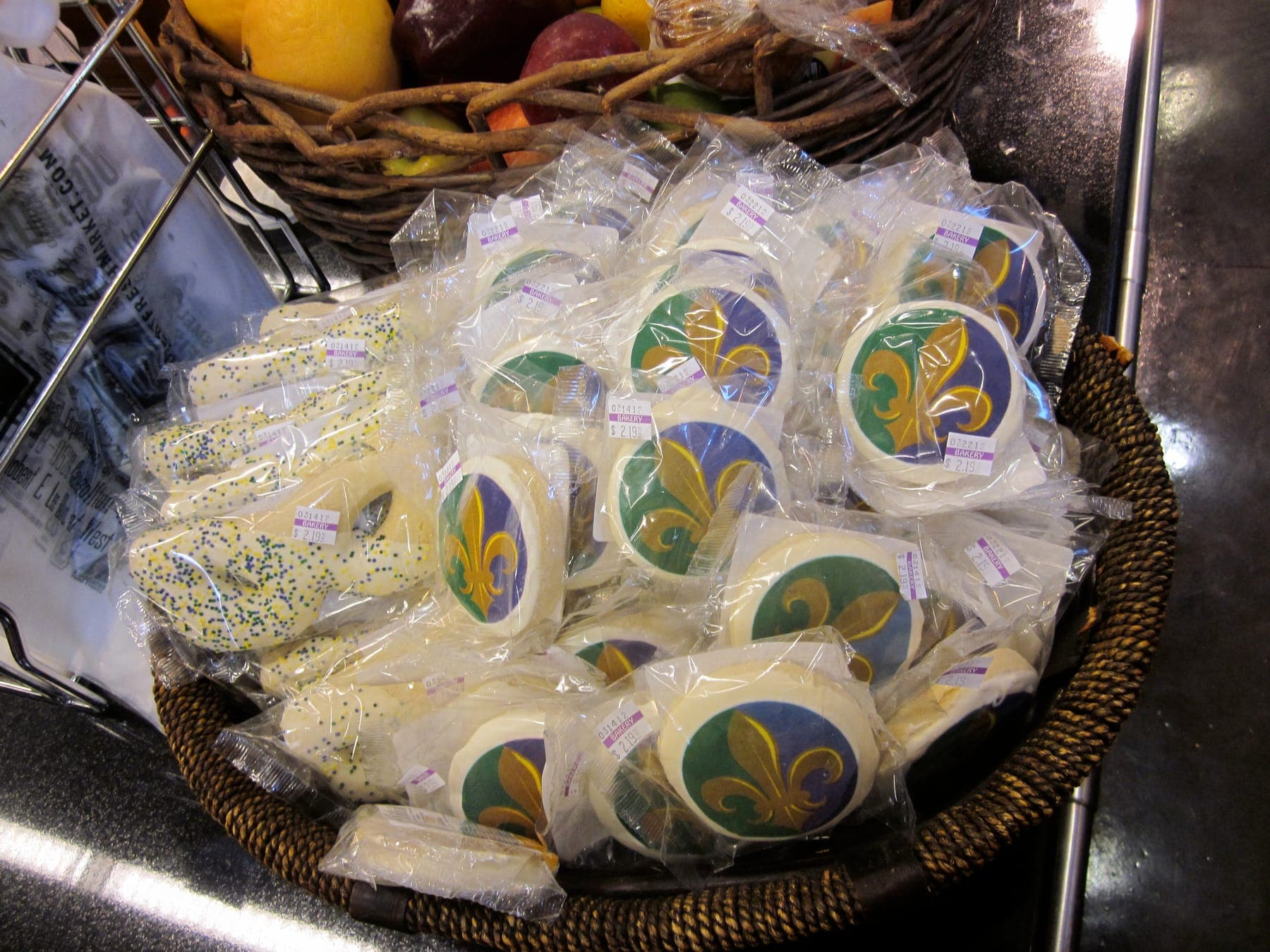
A bag or box has three jobs: keep the product safe and fresh, carry the label your state requires, and sell it from three feet away. Here is how to choose packaging by product type, what a unit really costs, and which states require sealed, labeled packages before you can sell.
· 12 min read